Philosophical reflections on perfume and perfumery: An exploration of aesthetic, epistemological, metaphysical, moral, ontological, and phenomenological issues. Relevant comments are most welcome—whether you agree or disagree!
Showing posts with label consumables. Show all posts
Sunday, December 20, 2015
Sunday, June 9, 2013
El perfume no te salvará—Ni siquiera un perfume de violetas...
Muchisísimas Gracias
a Gabriela Cortés por esta traducción de mi ensayo en inglés,
Reflexiones sobre
La Historia
Perfume de Violetas está ambientada en la actual Ciudad de México en donde dos chicas adolescentes, Yessica y Miriam se vuelven amigas en cuanto Yessica llega a su nueva escuela. Ella había sido expulsada de su escuela anterior debido a mala conducta. Yessica es una chica decidida, pero sus conflictos con la autoridad parecen surgir con bastante frecuencia debido a un exceso de energía, además de su rechazo a someterse dócilmente a sus abusadores.
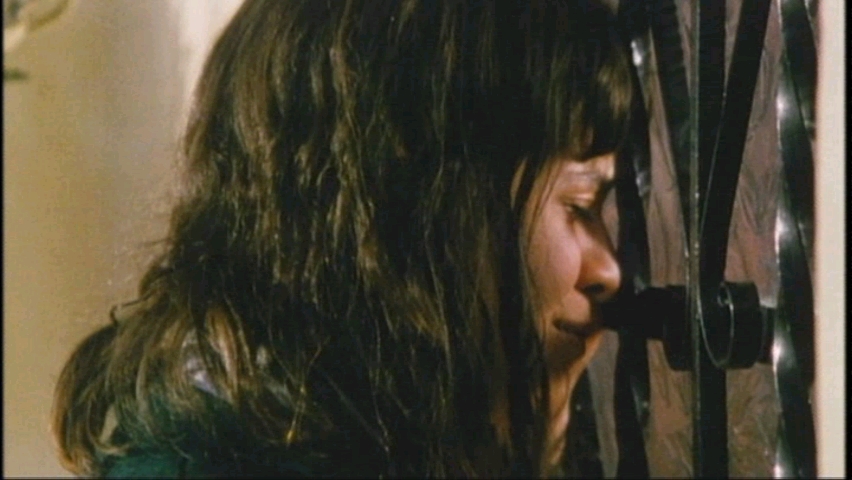
Yessica es una chica sensible con una gran alegría por vivir y esto es evidente en su amistad con Miriam. Lo primero que Yessica nota en cuanto se sienta en la silla detrás de Miriam es que su largo cabello negro huele maravillosamente bien. Ella admira a Miriam desde el momento en que se conocen y de ahí en adelante se convierten en mejores amigas.
Yessica vive en un sector pobre de la Ciudad de México, tan pobre que las puertas de su casa que se encuentran por debajo del nivel de la calle son solamente cortinas, una clara indicación de que su familia no posee nada de valor para proteger del robo. Su madre trabaja muy duro lavando ropa ajena y cuando Yessica está en casa, también tiene que trabajar, ya sea lavando ropa o trastes o cuidando a los hijos más pequeños de su madre. Su padrastro y su hermanastro son los estereotípicos machos latinos y ambos parecen apreciar muy poco a Yessica o a su madre.
Mientras la amistad entre Yessica y Miriam se va desarrollando, la diferencia de clases entre las dos chicas se vuelve más gráfica. Miriam vive en un departamento de dos pisos con ventanas y puertas protegidas con barrotes—algo usual en los vecindarios de clase media en Latinoamérica. Al principio, todos los barrotes pueden llegar a impactar a los visitantes de países prósperos donde el nivel de seguridad en general no requiere de tales medidas. En los vecindarios de clase media alta en Latinoamérica, hay guardias de seguridad vigilando en las esquinas y en áreas de mucha afluencia y también es común que vigilen cada casa individualmente.
El estándar de vida de Miriam podría considerarse parecido al de los trabajadores pobres de los Estados Unidos, ya que su madre tiene largas jornadas de trabajo vendiendo zapatos en tiendas como Payless, sin embargo desde la perspectiva de Yessica, Miriam vive en el lujo.
La primera vez que la chica va a la casa de Miriam, Yessica admira la opulencia de tales "lujos" como un refrigerador y una tina de baño. Las dos chicas se dan el gusto de bañarse juntas, jugando con burbujas y pasando tiempo juntas. Además de tener en común el amor al maquillaje y al perfume, Miriam y Yessica sienten una conexión por el hecho de que ninguna de las dos conoció a su padre, siendo las dos hijas de madres solteras, aunque la madre de Yessica se haya vuelto a casar.
Mientras se va desarrollando su amistad, el aroma de las violetas se vuelve un vínculo que las une. Miriam le lleva una barra de jabón a la escuela a Yessica para que lo huela, confirmando que es el mismo aroma que ella olió en su cabello el día en que se conocieron.
En la casa de Miriam, Yessica constantemente está rociándose con los atomizadores que encuentra. Parecen perfumes baratos o rocíos corporales de perfumes que se venden en farmacias, pero para Yessica son un néctar de los dioses. Las chicas también juegan con maquillaje y bailan cuando están juntas en la escuela, pero la historia toma un giro inesperado y negativo un día en el que Yessica va caminando sola de regreso a su casa después de haber ido a casa de Miriam.
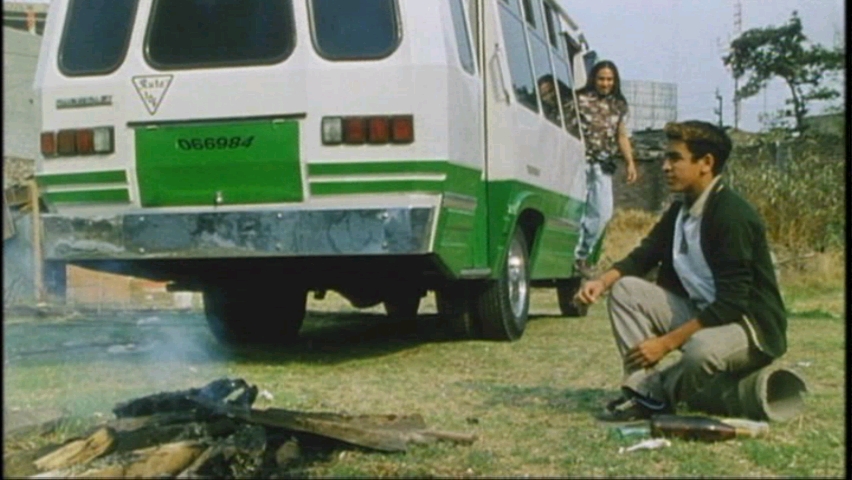
De forma escandalosa, el chofer del autobús sorprende a la chica cuando va caminando por la calle y la obliga a subir al autobús que se encuentra estacionado en un terreno baldío. Mientras tanto, el hermanastro de Yessica se sienta afuera del autobús para vigilar que nadie se acerque y se percate de lo que está sucediendo.
La violación deja a Yessica muy lastimada. Cuando regresa a la escuela, otros estudiantes se dan cuenta de la mancha de sangre en la parte de atrás de su falda durante la clase de deportes. La maestra la lleva a la oficina de la directora, en donde la regañan ambas mujeres y Yessica es incapaz de explicarles lo que acaba de ocurrirle. La directora se parece de forma escalofriante a Condoleezza Rice, recordándonos aquella frase que dijo: "No queremos que la evidencia irrefutable sea un hongo nuclear" y se comporta de manera hostil, abusando verbalmente de Yessica y lastimándola todavía más.
A pesar de todo lo que le ha sucedido, Yessica se tranquiliza y sigue adelante, negándose a permitir que la intimiden.
Miriam y Yessica continúan pasando tiempo juntas y un día que están viendo ligas para el cabello en un quiosco, Yessica roba una pequeña botella de perfume de violetas al que no puede resistirse. La chica corre con la botella, dejando atrás a Miriam, quien tiene que enfrentarse a la ira de la dueña de la tienda.
Miriam paga por el perfume y queda en estado de shock al ver que su mejor amiga fue capaz de hacerle tal cosa, va a la tienda donde trabaja su madre y le cuenta lo que sucedió.
La madre de Miriam ya estaba preocupada por la amistad de Miriam y Yessica, ya que anteriormente se dió cuenta entre otras cosas, de que fumaron en el departamento, lo que la enfurece ya que para ella fue muy difícil dejar de fumar.
Después de que su amigo, el chofer del autobús violó a Yessica, su hermanastro a quien el incidente le parece cómico, le advierte que no le diga nada a nadie acerca de lo que sucedió "o si no..." Él acepta el dinero que le da el violador como pago por hacer guardia durante la violación y usa este dinero para comprarse un par de tenis nuevos.
Durante la película, la fascinación que sienten los personajes relativamente pobres con objetos comerciales como objetos del deseo se muestra una y otra vez. Simbólicamente es la madre de Miriam quien le vende los zapatos al joven, ignorando por completo su conexión con Yessica.
Las chicas sienten alivio al reunirse de nuevo y Miriam desobedece el consejo de su madre de alejarse de Yessica. También le permite entrar a la casa en contra de las órdenes de su madre
En una de estas visitas, Yessica roba un fajo de dinero escondido dentro del joyero de la madre de Yessica, el cual le da a su propia madre, quien se ha quejado en reiteradas ocasiones de sus problemas económicos. El dinero robado son los ahorros de la madre de Miriam para comprar una televisión y cuando descubre que el dinero no está se enfurece. Acusa a Yessica e insiste en que no es solamente una ratera, sino una golfa. Básicamente, su explicación acerca de lo que le sucedió a Yessica (la violación) es que "ella se lo buscó."
Increíblemente, el chofer del autobús y el hermanastro de Yessica la vuelven a interceptar de nuevo para violarla en el autobús (al parecer se trata de violaciones seriales, aunque en la película solamente se muestran dos incidentes explícitos). Esta vez Yessica está aturdida y confundida, encuentra la manera de ir a la casa de Miriam pero no hay nadie.
Todas las puertas y ventanas están cerradas con cadenas y candados para evitar que alguien entre. Cuando comienza a llover, Yessica se esconde bajo la escalera y se queda dormida.
Al día siguiente, Yessica logra llegar a la escuela, donde la madre de Miriam ya ha hablado con la directora acerca de los robos que ha cometido Yessica—el perfume de violetas y el dinero—y mandan llamar a Yessica a la dirección, pero dos de los miembros del personal se percatan de lo que le ha sucedido (sus rodillas tienen moretones y su cuello está sangrando).
Por fin alguien en la escuela admite lo que ha sucedido y le dice a Yessica "Nadie tiene el derecho de hacerte eso." Mientras que la chica está en la enfermería de la escuela, Miriam le avienta un avión de papel por la ventana con una nota que dice que se reúnan en el baño.
Yessica va al baño esperando una reunión con su amiga. En vez de eso, Miriam la insulta verbalmente repitiendo las palabras con las que se expresó su madre acerca de Yessica: ¡ratera, traidora, puta! Las dos chicas están muy enojadas y comienzan a pelear, culminando trágicamente en la muerte de Miriam cuando se cae y se golpea la cabeza con la taza del baño.
Yessica se escapa y se dirige a la casa de Miriam donde se acuesta en su cama.
Cuando la madre de Miriam regresa a casa esa noche, encuentra la puerta entreabierta y se preocupa por su hija hasta que ve que su cama está ocupada. Se acuesta al lado de Yessica, quien está completamente cubierta con una cobija en la oscuridad. La madre se siente aliviada de ver que su hija está en casa, sana y salva porque piensa que la persona en la cama es Miriam. La película termina con el teléfono timbrando, es la llamada de alguien en la escuela para darle la noticia acerca de la horrible muerte de su hija.
Discusión
Perfume de Violetas es un filme depresivo y casi nihilista. Ciertamente es un ejemplo extremo del cine negro, si bien se sitúa en la Ciudad de México, donde la corrupción cubre la historia por completo. La única persona entre todos los personajes que es completamente inocente es Miriam, quien muere asesinada como resultado de todas las fuerzas malignas que la rodean.
¿Cómo se hubiera podido prevenir esta tragedia? Tal vez si Yessica hubiera denunciado la primera violación tan pronto como sucedió. No lo hizo porque vivía en una cultura donde se asume que la culpa es de las mujeres quienes deben aceptar cualquier cosa de parte de los hombres. El comportamiento de las mujeres hacia otras mujeres a través de la película nos revela que ellas también han sido infectadas con el insidioso sexismo.
Mi reacción inicial a este filme fue que el final es exagerado e incluso siniestro, estirando nuestra credulidad más allá del punto de ruptura. El desenlace de hecho me recordó mucho al que es probablemente mi filme noir favorito (¡también en centelleante tecnicolor!): Plein Soleil [Purple Noon] (1960), dirigido por René Clément.
El trauma que experimentará la madre de Miriam al darse cuenta que la chica en la cama de su hija no es Miriam, quien de hecho está muerta, es verdaderamente difícil de imaginar.
La película está bien hecha y tiene un buen ritmo, cubriendo una impresionante cantidad de temas en tan solo 90 minutos. Claramente es una producción de bajo presupuesto pero está bien dirigida y las actuaciones también son muy buenas. También quedé impresionada con la ingeniosa selección de música. Mi queja principal acerca del filme fue solamente que la trama es tan terrible que es poco realista. Me quedé en estado de shock al enterarme en IMDB.com (la base de datos de películas en internet) que Perfume de Violetas está basada en una historia real. Así que aunque la historia sea poco realista, resulta que los eventos que nos presenta realmente sucedieron, lo que hace que sea todavía más horrible.
Perfume de Violetas es una obra importante. Resalta las condiciones de vida de los pobres y de la clase trabajadora en la Ciudad de México y sigue la tradición de los autores de filmes en español como Luis Buñuel, quien durante su estancia en México dirigió Los Olvidados (1950), un filme crudo en blanco y negro que también trata acerca de la situación apremiante de los pobres en la Ciudad de México pero se trata de gente en peores condiciones que Miriam o Yessica (y sin acceso al conocimiento o a los perfumes). Las Hurdes (1933), dirigida por Buñuel en España también trata sobre un nivel de pobreza más bajo que el que se presenta en Perfume de Violetas.
En esta película el perfume juega un rol importante. El perfume es lo primero que atrae a Yessica de Miriam—o más bien el aroma de su cabello, que ella se lavaba con jabón de violetas. El perfume sirve como un medio a través de la historia por el cual Yessica escapa de su condición sórdida a un mundo de delicias olfativas.
El perfume representa la promesa y la esperanza. También mitiga el dolor de la chica violada. Después de haber sido violada, Yessica intenta reponerse y se niega a derrumbarse, acercándose al perfume para escapar a un mundo de fantasía en donde la maldad de la gente que la maltrata no existe.
Miriam acepta a Yessica como es, sin cuestionarse si ella está "del lado equivocado," por así decirlo. Incluso cuando Yessica lastima a Miriam en varias ocasiones, ella la perdona. Pero al final, no solamente pierde su amistad con ella y es por esto que este fime es tan nihilista. La esperanza y la belleza quedan destruídas, como cuando la madre enojada de Yessica rompe la botella de perfume, tirándolo al suelo en un despliegue de ira sin sentido. Prácticamente a través de esta acción le dice a su hija que no tiene derecho a tener un perfume porque ellos son pobres.
¿Cuál es el punto de este filme, para los perfumistas privilegiados como nosotros para quienes la única preocupación monetaria risible es si podemos comprar el último lanzamiento super nicho? ¿Cómo debemos interpretar esta historia tan perturbadora?
Para ser honesta, a veces me pregunto si no estamos viviendo en una gran burbuja perfumada. Cuando nos quejamos acerca del precio de un perfume o cuando discutimos entre nosotros sobre si la perfumería es un arte, estamos concediéndonos un lujo que está más allá de la realidad de la mayoría de la gente en el planeta y el de algunas personas cuyas condiciones se presentan en este filme que raya en lo obsceno.
A pesar de nuestro elevado estatus socioeconómico—como se puede evidenciar por el hecho de que podemos comprar perfumes y apreciarlos como un pasatiempo—nos parecemos a Yessica en nuestra fascinación con los perfumes. Estamos dispuestos a abstenernos de otras cosas, para poder comprar nuestros perfumes tan codiciados. Pero también hay un mensaje positivo.
Realmente, disfrutamos el perfume precisamente de la misma manera en que Yessica lo hace. El perfume es una fuente de placer para nosotros, como lo es para ella. ¿Importa que describamos esa fuente de placer de una manera u otra? ¿Por qué no podemos simplemente aceptar que el perfume nos produce placer? ¿Por qué tendría que haber algo más acerca de los perfumes? ¿Le tememos a nuestro propio hedonismo?
¿Cambiaría nuestra propia apreciación del perfume si lo describiéramos en los términos idealistas de alguna teoría difícil de comprender? Yo creo que no. Aún amaríamos a los perfumes precisamente por la misma razón y precisamente de la misma manera en que Yessica lo hace. ¿Por qué? Porque huele bien.
Thursday, January 31, 2013
Crítica de Perfume de Violetas en Español
Saturday, January 12, 2013
Perfume Will Not Save You—Not Even Violet Perfume...
Ahora en español gracias a Gabriela Cortés!
Throughout the development of their friendship, the scent of violets becomes a bind that ties the girls together. Miriam brings a bar of soap to school to let Yessica smell, indicating that it is the same scent which she noticed in her hair on the day they first met.
This harrowing scene, in which Yessica is brutally
raped, was presaged by earlier conflicts. First, the girls had
resisted the advances of Yessica's stepbrother and his friend, a bus
driver, earlier in the week. In addition, Yessica and her stepbrother
are in constant conflict back home, engaged in a relentless power
struggle.
Shockingly, the bus driver grabs the girl as she is walking down the street and forcibly drags her to and throws her into his bus, which is parked in an empty lot. Meanwhile Yessica's stepbrother sits outside the bus, essentially guarding against any passersby who might approach and take note of what is transpiring inside.
Miriam and Yessica continue to pal around and at one point they are looking at hair ties at a kiosk when Yessica steals a small bottle of violet perfume which she seems to find irresistible. The girl runs away with the bottle, leaving Miriam behind to contend with the wrath of the shop clerk.
After his friend the bus driver raped Yessica, her stepbrother, who appears to regard the incident as having been humorous, warns her not to tell anyone what happened “or else...” He was offered and accepted money by the rapist for having stood guard during the violation, and he uses the money to buy himself a pair of fancy new athletic shoes.
Throughout the film, the fascination which these relatively poor people have with commodified objects of desire is illustrated over and over again. Symbolically, it is Miriam's mother who sells the shoes to the young man, entirely unaware of his connection to Yessica.
The
friendship between Miriam and Yessica has suffered a severe rupture
because of Yessica's theft of the violet perfume, and the humiliation
and shame it caused to Miriam. It seems as though there is no way to
repair the damage done, but Yessica creates a collage of pictures of
her and Miriam and returns to her house, expressing sorrow and regret at what happened.
The girls are relieved to be reunited once again, and Miriam flouts her mother's counsel to have nothing to do with Yessica. She also lets her into the house, against her mother's prohibition.
Unbelievably, the bus driver and Yessica's stepbrother abduct her yet again for yet another rape in the bus (and it appears that this has become a serial event, although only two of the incidents are shown explicitly in the film). This time, Yessica is dazed and confused and manages to make her way back to Miriam's house but finds no one there.
All of the doors and windows have been chained shut to prevent anyone's entrance. When it starts to rain, Yessica hides under the stairwell, where she falls asleep.
Perfume
also serves as a temptation. Yessica steals the small bottle of
violet perfume from the kiosk because she wants it so badly but has
no money to buy it for herself. In this way, the perfume serves as a
potential source of danger, for it causes Yessica to act in ways
which disrupt the best thing she has ever had up until then: a
friendship with a loving and kind girl who is so innocent that she
does not yet make social and economic class divisions between
different people.
reflections on
Nadie te oye: Perfume
de Violetas (2001),
a film by Maryse Sistach*
The Story
Perfume
de Violetas is set in
modern-day Mexico City, where two adolescent girls, Yessica and
Miriam, strike up an immediate friendship upon Yessica's arrival at
her new school. She was expelled from her previous school for bad
behavior and is generally strong willed, but her conflicts
with authority seem to arise more often than not out of an abundance
of energy conjoined with her refusal to docilely submit to bullies.
Yessica
is a sensitive girl with a great joie de vivre and this is
illustrated especially in the development of her friendship with
Miriam. The first thing that Yessica notices upon sitting in the
chair directly behind Miriam is that her long black hair smells
wonderful. She looks at Miriam in awe from the moment of their first
encounter, and from there on they become the best of friends.
Yessica
lives in a poor part of Mexico City, so poor that the doors on her
house, located below street level, are but hanging sheets, a clear
indication that the family has nothing of value to protect from
theft. Her mother toils her days away doing other people's laundry,
and whenever Yessica is home, she is working too, either washing
clothes or dishes, or caring for her mother's younger children. Her
stepfather and stepbrother are stereotypical Latin macho males, and
both seem to have little esteem for either Yessica or her mother.
As the
friendship between Yessica and Miriam develops, the class distinction
between the two girls becomes quite graphic. Miriam lives in a
second-floor flat protected by barred windows and doors—what is
typical for middle-class neighborhoods throughout Latin America. All
of the bars may at first seem shocking to visitors from more
prosperous countries where the general level of security obviates the
need for such means. In upper-middle-class neighborhoods in Latin
America, there are typically security guards stationed at street
corners, and in especially affluent areas, each house may be
individually guarded.
Miriam's standard of living would be considered closer to the working poor in the United States, as her mother works long days selling shoes at a Payless-type store, but from Yessica's perspective, Miriam lives in the lap of luxury.
The first time that the girls go to Miriam's home, Yessica is filled with delight at the opulent sights of such “luxuries” as a refrigerator and a bathtub. The two girls indulge in a bath together, playing with bubbles and generally palling around. Aside from their mutual love of makeup and perfume, Miriam and Yessica are connected by the fact that neither has ever met her own father, having been raised by single mothers, although Yessica's is now remarried.
Throughout the development of their friendship, the scent of violets becomes a bind that ties the girls together. Miriam brings a bar of soap to school to let Yessica smell, indicating that it is the same scent which she noticed in her hair on the day they first met.
At Miriam's
house, Yessica is constantly spritzing herself with the liquids she
finds in spray bottles. They look to be cheap drugstore-type perfumes
or body sprays, but to Yessica they may as well be the nectar of the
gods. The girls also play with makeup, and dance around when they are together after school, but the story takes a lurching turn for the worse one day when Yessica is walking back home alone after having spent time at Miriam's.
Shockingly, the bus driver grabs the girl as she is walking down the street and forcibly drags her to and throws her into his bus, which is parked in an empty lot. Meanwhile Yessica's stepbrother sits outside the bus, essentially guarding against any passersby who might approach and take note of what is transpiring inside.
The
rape leaves Yessica badly bruised and battered. When she returns to
school, the blood on her backside is noticed by some of the students
during gym class. She is taken by the teacher to the school
principal's office, where she is upbraided by both women, incapable
as she evidently is of explaining what has happened to her. The
principal looks eerily like Condoleezza “We don't want the smoking
gun to be a mushroom cloud” Rice, and she conducts herself with
great hostility, verbally abusing Yessica and thus adding insult to
her horrific injuries.
Despite all that she has been through, Yessica pulls herself together and manages to continue on, refusing to let her spirit be daunted.
But
the rape has taken its toll on the girl, and when she goes with her
boyfriend to La Fuente,
a sort of lovers' lane where couples apparently often meet to make
out, she abruptly pushes him away when he attempts to touch her. She
jumps up and runs off, leaving the boy behind puzzled by her
behavior. Of course, it all makes perfect sense, given what recently
happened to her.
Miriam and Yessica continue to pal around and at one point they are looking at hair ties at a kiosk when Yessica steals a small bottle of violet perfume which she seems to find irresistible. The girl runs away with the bottle, leaving Miriam behind to contend with the wrath of the shop clerk.
Miriam pays for the perfume and, in a state of shock that her best friend could have done such a thing, she goes to the store where her mother works to tell her what happened.
Miriam's
mother has been worried about the friendship from the beginning,
having noticed among other things that the two girls were smoking
in the apartment, which incenses her, given the difficulty she had in kicking the habit.
After his friend the bus driver raped Yessica, her stepbrother, who appears to regard the incident as having been humorous, warns her not to tell anyone what happened “or else...” He was offered and accepted money by the rapist for having stood guard during the violation, and he uses the money to buy himself a pair of fancy new athletic shoes.
Throughout the film, the fascination which these relatively poor people have with commodified objects of desire is illustrated over and over again. Symbolically, it is Miriam's mother who sells the shoes to the young man, entirely unaware of his connection to Yessica.
The girls are relieved to be reunited once again, and Miriam flouts her mother's counsel to have nothing to do with Yessica. She also lets her into the house, against her mother's prohibition.
While
visiting this time, Yessica steals a roll of money hidden in Miriam's
mother's jewelry box, which she gives to her own mother, who has
complained over and over again about the family's financial woes. The
stolen money had been saved up slowly by Miriam's mother from her
low-paying shoe store job to buy a new television, and when she
discovers that it is missing she becomes irate. At one point she
launches into a tirade about Yessica, insisting that she is not only
a thief and a traitor but also a tramp. Basically, her explanation of
what happened to Yessica (the rape) is that “she asked for it.”
Unbelievably, the bus driver and Yessica's stepbrother abduct her yet again for yet another rape in the bus (and it appears that this has become a serial event, although only two of the incidents are shown explicitly in the film). This time, Yessica is dazed and confused and manages to make her way back to Miriam's house but finds no one there.
All of the doors and windows have been chained shut to prevent anyone's entrance. When it starts to rain, Yessica hides under the stairwell, where she falls asleep.
The
next day, Yessica manages to drag herself to school, where Miriam's
mother has been meeting with the principal to discuss the thefts
committed by Yessica—both the violet perfume and the money—and
Yessica is summoned to the office, but two of the school staff
members recognize what has happened to her (her knees are badly
bruised and her neck is bleeding).
At last, someone at the school acknowledges to Yessica that “No one has the right to do that to you.” While the girl is in the school infirmary, Miriam shoots a paper airplane through the window with a note telling her to meet her in the bathroom.
Yessica
goes to the bathroom expecting a reunion with her friend. Instead,
Miriam assaults her verbally, repeating the words applied to Yessica
by Miriam's mother: thief, traitor,
tramp!
The two girls, both angry, get in a shoving match, culminating
tragically with Miriam's death when she falls backwards and bangs her
head on the porcelain toilet.
Yessica runs away from the scene and heads back to Miriam's house where she lays down on Miriam's bed.
When
Miriam's mother returns home that night, she finds the door ajar and
is visibly worried about her daughter until she sees that her bed is
occupied. She lays down next to Yessica, who is completely covered
with a blanket in the darkness. Thinking that the person in the bed
is Miriam, the mother is deeply relieved to have found her back home,
safe and sound. The film ends with the phone ringing, a call from
someone at the school bearing the horrific news of her daughter's
death.
Discussion
Perfume
de Violetas is a
depressing, almost nihilistic film. It is certainly an extreme
example of film noir, albeit set in Mexico City, in that corruption
suffuses the entire story. The only person among all of the various
characters who appears to be entirely innocent is Miriam, who is
killed as a result of all of the evil forces acting around her.
How
might this tragedy have been averted? Perhaps only if Yessica had
felt it possible to report the first rape as soon as it happened. She
did not do so because she was living in a culture where the
presumption was against females, who were to accept whatever was
dished out to them. The behavior of females toward females throughout
the film reveals that they, too, have been infected by insidious
sexism.
My
initial reaction to this film was that the ending was unduly and even gratuitously sinister, stretching credulity past its breaking point.
The dénouement in fact reminded me a lot of what is probably my favorite
film noir (also in blazing technicolor!): Plein Soleil [Purple Noon] (1960), directed by René Clément. The trauma which Miriam's mother will experience upon realizing that the
girl in her daughter's bed is not Miriam, who is in fact dead, is
truly painful to imagine.
The
film is well made and well paced, covering an amazing amount of ground in only 90 minutes. It is clearly a low-budget
production but is well directed, and the acting is also quite good. I was equally impressed by the artful selection and use of music. My primary gripe with the film was only that the plot was so
horrible as to be too unrealistic. To my shock, I learned upon
visiting IMDB.com (the Internet Movie Database) that Perfume de Violetas is
based on a true story. So as unrealistically awful as the story was,
it turns out that the events which it depicts really happened, which in some ways makes the
whole thing even worse.
Perfume de Violetas is an important work. It highlights the living conditions of the poor and working poor in Mexico City and follows in a tradition of Spanish language film auteurs, including Luis Buñuel, who during his years in Mexico directed Los Olvidados [The Young and the Damned] (1950), a gritty black-and-white film also concerned with the plight of the poor of Mexico City, but people much worse off than either Miriam or Yessica (and with no access to or knowledge of perfume). Las Hurdes [Land without Bread] (1933), directed by Buñuel in Spain, also dealt with a much lower level of poverty than that depicted in Perfume de Violetas.
In this film, perfume plays an important role. Perfume is what first attracts Yessica to Miriam—or rather the scent of her hair, which has been washed with violet soap. Perfume serves throughout the story as a means for Yessica to escape from her own sordid conditions to a world of olfactory delight.
Perfume represents promise and hope. It also serves as a salve to soothe the violated girl's pain. After having been raped, as Yessica attempts to get her wits about her, she refuses to be crushed but instead reaches for perfume, as though traveling to a fantasy world, where the evil people who mistreated her do not exist.
Miriam
accepts Yessica as she is, without questioning whether she is from
“the wrong side of the tracks,” so to speak. Even when Yessica
acts in ways which harm Miriam, she is able to forgive her. But in
the end, she loses not only her friendship but her life, and that is
why this film seems so nihilistic. The hope and beauty is all
crushed, like Yessica's bottle of perfume by her angry mother, who
throws it to the ground in a senseless display of outrage. In
effect she says to her daughter through this gesture that she has no
right to perfume, because they are poor.
What
is the point of this film, for privileged perfumistas such as
ourselves whose in some ways laughable monetary concern is whether we
can afford the latest überniche
luxury launch? How
should we interpret this disturbing story?
To be
honest, I sometimes wonder whether we are not living in a big fat
scented bubble. When we complain about the price of perfume or bicker
amongst ourselves over whether perfumery is an art, we are indulging
in a luxury which is so far beyond the reality of most of the people on the planet, some of whose conditions are depicted in this film,
that it verges on obscene.
Despite our elevated socioeconomic status—as evidenced by the
fact that we are even capable of having perfume appreciation as a hobby—we are
very much like Yessica in our fascination with perfume. We are
willing to forgo other things in order to have our coveted perfume.
But there is a positive message here as well.
In
reality, it appears that we enjoy perfume in precisely the way in
which Yessica does. Perfume is a source of pleasure for us, as it is
for her. Does it matter whether we describe that source of pleasure
in one way or another? Why can we not simply accept that perfume
gives us pleasure? Why must there be more to it than that? Are we
afraid of our own hedonism?
I also
sometimes wonder whether the energy being currently directed to
defend the claim that perfumery is one of the beaux arts is not
disproportionate to what would be the consequences of that view, if
it were affirmed by an elite few to be true. Clearly the experience of perfume by people such as Miriam and Yessica would not be altered in the least.
Would our own appreciation of perfume change if we were to describe it in the lofty terms of some abstruse theory? I think not. We would still love perfume for precisely the same reason and in precisely the way in which Yessica does. Why? Because it smells good.
*Caveat: If you happen to number among the millions of persons currently attempting to wean themselves off SSRIs—having at last realized in what must have been a painful epiphany that it was all an elaborate ruse devised to pad the pockets of Pharmafirm CEOs while getting you to shut up—then I advise you to stay very far away from this grim, nearly nihilistic film.
Subscribe to:
Posts (Atom)