Philosophical reflections on perfume and perfumery: An exploration of aesthetic, epistemological, metaphysical, moral, ontological, and phenomenological issues. Relevant comments are most welcome—whether you agree or disagree!
Showing posts with label metaphysics. Show all posts
Sunday, August 25, 2013
Soap: The Noblest of Toiletries, Part 2
Wednesday, August 21, 2013
Soap: The Noblest of Toiletries
Saturday, May 11, 2013
Entry #16: A Philosophical Lexicon for Perfumistas
Ontology, Ontological, Ontologist
A few entries back I boldly asserted that epistemology and phenomenology were the two most reviled philosophical terms. What was I thinking? Even philosophers hate the word ontology! "Ontology, schmontology," has often been muttered by lovers of Quine and scientistic types more generally. The science worshipers and analytic philosophers (not quite coextensive, but close enough), all roll their eyes whenever anyone expresses an interest in the topic of ontology. So what is it, exactly?
We covered the basics of ontology in the episode of The History of Philosophy Refracted through Perfume dedicated to Parmenides, an ancient Greek pre-Socratic philosopher who was the ontologist to end all ontologists. The key concept for Parmenides was Being. Ontology is the study of Being. And, yes, I do believe that it is supposed to be capitalized, to underscore its importance. So what, exactly, is Being? To be or not to be, that is the question, and it's a lot more profound that you might initially have thought.
To begin with, what are the things in reality? Sounds easy, right? There are chairs, and there are tables, and there are bottles. Now we come to perfumes. Are there individual perfumes? Perfumes actually perfectly reflect the profundity of ontological studies. What makes a perfume a perfume, after all? When and how does a perfume come to exist?
In terms of chemistry, a perfume is made up of a bunch of molecules. All of the ingredients on the label, including the mystery ingredient parfum, which especially distinguishes a perfume from all others, are components which, before being mixed together are other things: alcohol, eugenol, linalool, geraniol, the list goes on and on. So in mixing a bunch of different substances together, a perfumer ends up creating something new, a perfume which did not exist before. This is a grand creation act. How can a mere human being create new objects in reality? Perfumers appear to do it all the time. Chanel no 5 did not exist, and then suddenly, thanks to Ernest Beaux and Gabrielle Chanel, it did.
But are these new perfumes really real? Or are they not merely a part of the unstable world of becoming? That was essentially Parmenides' view. All of the change and movement which we observe in reality is illusory. There is only one real thing, and that is Being. Ontology is the study of Being, but since there is only one real thing, Being, nothing can be said about it, since any spoken words are going to divide up reality into pieces.
Understood in the Parmenidean sense, ontology digs deeper than metaphysics, which is still concerned with cause and effect and ultimate divisions between things, even if those things cannot be accessed through empirical means. Ontology, my fragrant friends, is deep, and I suspect that at least some ontologists throughout history have grasped Being only under the influence of powerfully psychomimetic drugs. For now, we are mired in the world of becoming, which is of course why we are functional.
We do distinguish things from one another in what we perceive to be reality. Not all perfumes are the same. Perhaps if we were enlightened enough, we would cease making any distinctions whatsoever. For now, let's just keep reviewing all of the different perfumes which we believe ourselves to be encountering while we wallow our way through the shadowy world of becoming.
I will say that when I see the tsunami of new niche launches, I start to understand the appeal of the simpler approach. Is every single possible combination of any possible liquid substances a perfume? Are there then infinitely many perfumes? Apparently so, if the behavior of the multilaunchers means anything. So long as they can keep coming with new names—often through the use, it seems, of random name generators—then they can continue to christen new perfumes.
We sometimes identify perfumes as very similar to already existent perfumes, but as the grand map of the olfactory world becomes populated with more and more perfumes, at some point there will cease to be any iconic perfumes. At that point, perhaps, we will all be carried away in a sea of perfumes, the names of which will cease to matter anymore.
If we could adopt the perspective of Parmenides, we'd be cured forever of our disappointment and anger over reformulated perfumes. They were never real to begin with, so how could they be any less real today than they ever were? Mitsouko was always an illusion.
Saturday, May 4, 2013
Is Mayotte Mahora? First sketch of an outline of a theory of perfume identity
How many times have I heard Guerlain Mahora denounced by perfumistas as an epic failure on the part of the otherwise venerable house of Guerlain? How many of those who parrot this refrain have even experienced the now-discontinued perfume?
Mahora was
launched in 1999 (according to the date on my bottles) but swiftly pulled from the counters and boutiques. How many times have I heard it said that
Guerlain Mayotte, launched in 2006, is no more and no
less than Mahora? In fact, the claim is frequently made
that Mayotte is Mahora, albeit rebottled
and sold under a new name, and this appears to be widely accepted as
the truth.
Needless
to say, the blogosphere- disseminated "factoids" to the effect that, first, Mahora is horrible and, second, Mayotte is Mahora, have
left me puzzled and perplexed. I
have been known to gush about Mahora,
so the first and foremost source of my perplexity inheres in the
simple fact that such an excellent perfume should be trashed so
volubly by so many people. But there is more to my puzzlement than
profound disagreement on a matter of taste. After all,
the Mahora haters
may well love Insolence,
which at least in the eau de toilette form (I've yet to muster up the courage to try the eau de parfum), I find utterly repulsive.
If so, then I can remind myself how very subjective perfume
perception is, deriving a modicum of solace and comfort once more
from the handy adage
One
perfumista's treasure is another perfumista's trash.
That
little piece of folk wisdom, however, is not enough to dispel the
logical quandary posed by the second of the two claims,
that Mayotte is in fact Mahora. On the
face of it, the claim is preposterous, and I have never believed it
to be true. Why? First, because if Mahora was a
resounding market flop in part because of its "nasty"
scent, then there would be nary a reason for Guerlain to have
launched the "disaster" all over again. Would there?
Second,
it has been brought to our collective attention that Guerlain has
reformulated most if not all of their perfumes. Why would Mahora, even if under a pseudonym, not, too, have been put under the chemist/accountant's knife, all under the pretext of needing to comply
with the IFRA?
There
are a few possible responses to these concerns, commencing with the
most obvious, that when Mahora was launched, Guerlain
was still an independent house. Such apparent logical
preposterousness would not be precluded in the least by Guerlain's
new corporate master, LVMH, which after all is now infamous for
having worked wonders for the house of Christian Dior by
renaming Miss Dior Chérie as Miss
Dior and Miss Dior as Miss Dior
L'Originale, sowing confusion far and wide. LVMH also
appears to be responsible for the complete and utter perversion of
the once-beautiful Aqua Allegoria line. In the wake
of these sorts of wild and wacky business moves, it becomes difficult
to insist that relaunching Mahora as Mayotte can
only be written off as completely out of the question. Everything is
permitted, it seems, chez LVMH, so why not that, too?
After
all, it might be thought, or it might have been thought by the
marketing gurus at Guerlain under the aegis of LVMH, that Mahora's
real problem was her marketing campaign. Perhaps people were put off
by the shiny-skinned naked model standing in an exotic scene before what looks to be a volcano in the middle of the desert and
channeling perhaps the gods of Indian mythology. But wait, did not Tom Ford put naked flesh to good use in marketing the decidedly unedgy Tom Ford Cologne?
Details, details. Are they or are they not the same?
The
Proof is in the Juice?
Fortunately,
there is no need to delve further into the inscrutably labyrinthine
strategic cogitations of the marketing team at LVMH. Thanks to my
perfume pal Andrew Buck at The Scentrist, who recently gave away a
large bottle (125ml) of Mayotte, of which I was the lucky
winner, I am able to compare the juice of Mahora to
the juice of Mayotte side by side and decide whether
or not they are the same. One nose, one set of skin, two bottles of
juice. Are they the same?
| HRH Emperor Oliver stands by, ready to assist in the definitive sniffing test |
Let's
begin with the visuals. The juice inside the Mahora and
the Mayotte bottles is similarly colored and appears
even to have approximately the same viscosity. I had
remembered Mahora as having a thicker, more viscous
texture, but as I compared the two perfumes, both at eau de parfum
concentration, side by side, I recognized that my memory had built
up Mahora in my mind as a golden elixir. In fact,
it's just as watery looking as Mayotte. So are they then
the same? Not so fast. Colored water is sometimes used to fill
perfume bottles put on display. We cannot be sure that the juice is
the same from the color alone.
The
day I received my package from The Scentrist, upon my initial
application of Mayotte, I was absolutely convinced that
it was nothing like Mahora. In fact, I found Mayotte much
closer to Versace Blonde! More animalic, more vague and
cloudy, less golden and gleaming and glistening. Still, I could not
be sure until comparing the juices side by side.
When
I tried that, on a different day, I found that the opening
of Mahora and the opening of Mayotte are
not all that different, although Mahora does seem
more sweet. The real story does not reveal itself until the drydown,
when the two perfumes smell nothing alike. Mayotte turns
out to be rather linear, smelling more or less the same from start to
finish, with only a diminution in strength until it finally fades
away.
Please
rest assured that I sprayed the same amount of these perfumes on
(Mahora on the left, Mayotte on the
right), so the radical distinction in longevity, sillage, and
trajectory cannot be explained away by spritz-versus-dab
phenomenology. The Mayotte bottle does not have a
sprayer, but I decanted the liquid into a purse spray vessel for the
purpose of this comparison.
Mahora,
in contrast to Mayotte, grows stronger and more luxuriant
as it melds into the skin, which heats up the perfume to create a
much bigger sillage than the perfume initially seemed to have. After
a couple of hours, there is no comparison to be made whatsoever. At
best, Mayotte can be read as a reformulation
of Mahora, quite a bit weaker, and much less sweet and
intoxicating. Mayotte is a pleasant enough tuberose
scent, but it is not Mahora, the complex elixir which I
fell in love with at first sniff and which I continue to love still
today, long after my esteem for the house of Guerlain has dwindled to nearly nothing. Mahora is the last vestige of a by-gone era.
My conclusion: the two perfumes are not the same. But is my reasoning sound?
What
are the criteria for identity in perfumery?
Perfumes,
like persons, are rather complex things, ontologically speaking. What
makes a perfume a perfume, and how do we decide that it is or is not
the same as another? I argued above that Mayotte is
not Mahora. The basis of my claim is that the two
perfumes smell rather different, especially in the drydown.
It
may be objected, however, that Mayotte is closer
to Mahora than to any other Guerlain perfume. After
all, there is a relative dearth of tuberose in the Guerlain
line-up. Rose and vanilla abound, but tuberose? Perhaps that is what
everyone who has propelled this falsehood far and wide, faster than
the speed of sound and throughout the world wide web, really meant.
Perhaps when people say "Mayotte is a relaunch
of Mahora," they mean no more and no less than
that Mayotte is a lot closer to the
discontinued Mahora than it is to any of the extant
creations, so it must be a relaunch of the same, more or less.
Why
get bogged down with picayune details? Hardly anyone knows
what Mahora smells like anyway, and even fewer want
to find out, now that it has been pervasively, and I dare say
perniciously, denounced as the worst perfume ever to have been designed
by Jean-Paul Guerlain. The received view appears to be that Jean-Paul
Guerlain had a very bad nose day when he signed off on Mahora.
I respectfully demur from the "conventional wisdom", needless to say.
If
purveyors of the received view mean that Mayotte is
"more or less" Mahora, then what they are
perhaps saying is that Mayotte began in the lab
as Mahora but then was reformulated. That would, in
fact, make a lot of sense, given that Mahora was a
market flop, and Guerlain has in any case reformulated just about
everything else.
But
if that is what happened, then why claim that Mayotte is Mahora in
the first place? How can identifying a recent launch with a
previously launched failure help anyone? Oh right, LVMH marches to
the beat of their own drummer, which in their case means operating
beyond the realm of logic. Has the conglomerate perhaps been
infiltrated by spies from the competition, say, Procter & Gamble
or Elizabeth Arden or Coty or Estée Lauder? On ne sait jamais...
I
strongly suspect that the real reason why this falsehood has gained
such traction is simply that the two perfumes do look similar, and
they also smell similar in the opening minutes. Anyone who writes a
review on the basis of the opening, without waiting around for the
lengthy and complex drydown of Mahora—nonexistent
for Mayotte—may easily conclude that the two perfumes
are "more or less" the same, and depending upon their
sensitivity, they may or may not notice the difference in sweetness
between the two.
One
thing, perhaps the only thing, of which we can be absolutely sure is
that Mahora was never reformulated. It was launched
and discontinued, thank goodness, I might add, since now when we
score a bottle at least we know what's really inside, what certainly
cannot be taken for granted in cases such
as Shalimar, Samsara, Jicky, Mitsouko,
and many other of the classic perfumes from the house of Guerlain.
I
have based my judgment that Mayotte is not Mahora on the simplest of
evidence: how the liquids in the bottles smell. In reality, perfume identity is not at all
dependent upon scent, as odd as that may seem to those who pride
themselves on learning as much as they possibly can about perfume.
Clearly,
the formula is not considered an essential part of the perfume. Why?
Because countless perfumes bearing the same names have been serially
reformulated. The scent of Coty Muguet des Bois has changed, but the
name stays the same. The identity criteria are quite different in the
case of perfume than they are in virtually any other realm. If a
company owns a perfume formula, then they have the right to retain
the name and fiddle with formula, and there is nothing that anyone
can do about it.
By
this logic, the only way that Mayotte could really be Mahora
would be if Guerlain had kept the name Mahora and slapped it on the
perfume instead of the name Mayotte. The two are not the same
because the house says that they are not the same. By using a
different name, Guerlain has stipulated that the perfumes are not
identical. Mayotte is not a relaunch of Mahora, because only same-named perfumes can be relaunched.
That
is all that perfume identity amounts to: the house and the name. No,
wait! Even that is too much. Take cases such as Balenciaga Rumba. The
formula for Rumba was sold to Ted Lapidus. They proceeded to
reformulate the perfume, while still selling it in the same bottle,
albeit with the house name Ted Lapidus replacing the house name Balenciaga. This
is not a case where a corporate overlord has arrived on the scene to
manage the company. No, Balenciaga still exists as a house, and it is
not owned by Ted Lapidus. Balenciaga continues to launch new
perfumes, but no longer owns Rumba. Balenciaga is owned by Coty, and Ted Lapidus is owned by the Jacques Bogart Group. (As far as I know, Coty does not own the Jacques Bogart Group. Perhaps it's on their future acquisition wish list?)
Yet
Rumba continues to be sold as Rumba, despite the fact that Ted
Lapidus completely reformulated the perfume, and the bottle emblazoned with the Ted Lapidus label now boasts completely different notes than did the Balenciaga original. This example shows that what
matters is who owns the formula for a named perfume. They then own
the name, and can at their caprice completely change the formula!
Perfume names are no more and no less than brands. If a company
decides that it will be more lucrative to completely transform "the
product", as they view the matter, then they will.
Perfumes,
from the perspective of business people, are no more and no less than
products. Mahora did not sell well, so Mahora was terminated with
extreme prejudice. Mahora does not exist anymore, according to
Guerlain itself, and for that reason Mayotte is not Mahora. The fact
that different recipes were used to produce the two liquids is
entirely beside the point. What matters is what the house says.
Guerlain says that Mayotte is Mayotte. Guerlain ceased production of
Mahora. Therefore, the two are not the same.
The nail in the coffin in this case is the simple fact that the official notes, provided by the house itself, are different for the two perfumes.
Mayotte
top: green notes
middle: frangipani, jasmine, neroli, tuberose, ylang-ylang
base: sandalwood, vanilla vetiver
Mahora
top: green notes, almond blossom, orange
middle: jasmine, neroli, tuberose, ylang-ylang
base: sandalwood, vanilla vetiver
Frangipani is listed for Mayotte, but not for Mahora. Almond blossom and orange are listed for Mahora but not for Mayotte. How, in the light of such evidence has this clear-cut case of false identity persisted for so long?
In fact, applying my well-intentioned but ultimately irrelevant olfactory test to any number of pairs of reformulated perfumes, one would conclude, erroneously, that they are not the same. That is to fall into a sort of fantasy world about perfumes, which do not exist as objects independent of the houses which produce them. The houses are the gods of the universe of perfumery, and the perfumes are at the complete and utter mercy of their gods. There are no Platonic Forms when it comes to perfume. There are only products being peddled to markets by hook or by crook.
The
sort of deception which we deem unacceptable in our dealings with
other human beings is the order of the day when it comes to the
business world. The line between false advertising and seduction is
impossible to locate when it comes to perfume, so long as its
provenance is the house which owns the rights to the formula. By
definition, Guerlain cannot commit fraud when it comes to their own
perfumes, as odd as that may seem. They exhaustively define the parameters and contents of the microcosmic perfume universe
coextensive with their house.
Whoever owns the formula of the juice, makes the rules.
Labels:
business,
Guerlain,
HRH Emperor Oliver,
logic,
LVMH,
Mahora-Mayotte controversy,
metaphysics,
ontology,
personal identity,
persons,
phenomenology,
Reformulation
Sunday, March 31, 2013
Entry #5: A Philosophical Lexicon for Perfumistas
Empirical, Empiricism, and Empiricist
The contrast class for metaphysical is empirical or empirically observable. An empirical phenomenon need not be directly perceivable using our sense organs, but it has to be inferrable by appeal to empirical data. Think of the scent of cigar lingering in a hall. That gives you some empirically perceivable evidence for believing that someone was recently smoking a cigar in that very space. A woman wafting of the scent of Lancôme Trésor gives good reason for believing that she applied that perfume earlier that day.
Empiricism is one approach to knowledge, often contrasted with rationalism (to be defined...). Empiricists are people who believe that empirical methods, including observation—whether direct or indirect—yield truth. They tend to be scientifically or naturalistically minded and may reject questions such as "Does God exist?" as incapable of being answered. But not all empiricists simplemindedly espouse atheism. They may instead sincerely maintain that there is no compelling evidence for the existence or the nonexistence of God. It's up for grabs. The jury's still out. That kind of thing.
Could there be empirical evidence for the existence of Plato's Forms? The Form of the Perfect Perfume is an idea or a concept, some would say, but Plato seems to have had in mind something more significant, something metaphysically real.The Form of the Perfect Perfume would be what a real, empirically perceptible perfume would be like, if it were not mired in the lowly world of becoming. Earthly perfumes can only aspire to the realm of the Forms, including the Form of Beauty.
Somehow I cannot imagine that such examples are helping anyone who wishes to come to an understanding of what metaphysics is. Let us begin again. Is reality exhausted by the things which we human beings happen to be able to perceive? Or is there more to reality than what can be reasonably inferred to exist from the deliverances of our idiosyncratic sense organs? Does a perfume never sniffed thereby cease to exist? Sounds a bit crazy, doesn't it?
Nonetheless, at this point in history, our culture is quite scientifically focused. For the most part, science is thought to tell us the truth about the world. Anything which cannot be confirmed or refuted by empirical testing, through setting up a hypothesis and determining what its implications would be, falls outside of the realm of science. In this sense, religions are metaphysical, although contemporary professional metaphysicians think of their vocation as quite a bit more important and rigorous than either religion or new-age "metaphysics". But even atheistic metaphysicians have their own little "gods", their objects of faith, their fanciful theories.
Among other things, metaphysicians are interested in categories. Here we can return to the case of perfume and ask whether any of the orthodox perfume categories actually "carve reality at its joints", as philosophers love to say. Or is it rather that we adopt these categories for organizational purposes?
Floral perfumes are those which feature primarily floral notes. Classical chypres contain some combination of characteristic notes, often including oakmoss and/or patchouli. Floral aldehydes obviously contain a perceptible dose of aldehydes, along with floral notes. Floral green perfumes often feature galbanum.
In the twenty-first century we seem to have a whole new set of categories, and this may suggest to critical minds that these really are all just conventions. Do shampoo-conditioner fragrances exist? Well, there are plenty of perfumes out there which smell just like the scent of shampoos and conditioners, so why not? Do "don't worry, be happy, never dislike, only like," SSRI fragrances exist? They have a bright and shiny demeanor, and it's easy to identify them once one has been familiarized with the "reality" of this new fragrance category.
What about office-ready, inoffensive, fruity-floral frags? There seem to be lots of perfumes out there which fit that description, so why not give them their own acronym: ORIFFF? What about Oud perfumes? Is there such a thing as a real and existent category of oud perfumes, or are there only a bunch of independently produced oud perfumes, which are similar to one another in that they all (claim to...) feature oud? I think that you can see where all of this is leading.
Do the categories of things named by us really exist? Or are they simply useful organizational schemes for talking about things? A skeptical take on all of this is that we make up categories to suit our purposes. There is a decision being made about how to talk about what we wish to distinguish as separate objects in the world. Scientific testing will not help in these cases.
People who have limited experience with perfume may find that Chanel no 5 and Britney Spears Circus Fantasy smell very much alike. And it's probably true that they do smell more like one another than either smells like water. We call them both perfumes, even though that is a crude label which does not distinguish any of the more finely delineated categories described above.
To be honest, I feel the same way about the "Perfume is art" thesis. A very few perfumes may attain the status of art, given the conditions of their production and the intentions of their creator, but most of them? That would be a conceptual confusion of the highest order. Perfumery is first a business. What happens beyond that depends on the individual perfumer. Sweeping claims about all perfumers being olfactory artists make very little sense at all when one reflects upon what most of them do and, above all, why.
One response to this sort of discussion, particularly frequent from nonphilosophers, is: Who cares? That may sound unsophisticated, but it could also be the heartfelt expression of a school of philosophy known as pragmatism. More on that to follow...
Labels:
empiricism,
God,
lexicon,
metaphysics,
Plato,
scientific method,
The Forms
Saturday, March 30, 2013
Entry #4: A Philosophical Lexicon for Perfumistas
Metaphysics and Metaphysicians
The term metaphysics was first used by the ancient Greek philosopher Aristotle as the title of one of the volumes of his massive philosophical corpus. Metaphysics was literally the volume after Physics. What were the subjects contained within Aristotle's volume Metaphysics? All sorts of topics which involve a higher level of abstraction than physics itself or, if you like, dig more deeply into the nature of reality than even physics.
Over the many centuries since Aristotle, metaphysics has come to mean philosophical speculation of a nonempirical type, of intrinsically nonobservable phenomena. One example is causation. We don't observe causation. We observe what appears to be a cause, and what appears to be an effect. Are they joined causally, or are they merely coincidentally connected? This is a big question for philosophers interested in metaphysics. They have also speculated about such things as tropes and possible worlds.
To skeptics, all of this is well and fine, but an elaborate fantasy is, at the end of the day, still a fantasy. For obvious reasons, then, metaphysicians are not that keen on skeptics. When confronted with a meticulously woven metaphysical tapestry, rather than complimenting its maker, the skeptic points out all of its flaws, and reveals that even the metaphysician's most cherished theories are incapable of being demonstrated as anything more than figments of his imagination. To metaphysicians, skeptics are like an annoying kid at a party who pops everyone's balloons.
![]() |
| Eternal, Transcendent Masterpiece or Highly Contingent Mass Market Success? |
Where does metaphysics fit into the perfume picture? One question which has arisen lately is the status of perfumery. Is it art? Does it matter? On the one hand, this seems to be a simple conceptual question. Define the term art, and then examine perfumery and see whether it fits the definition. I've noticed a tendency on the part of the "Perfume is art" crowd to conflate art and aesthetics.
Beauty stopped being a necessary condition to art more than a century ago, so there's definitely a conceptual confusion in the minds of those who infer from the resplendent beauty of some perfumes that they are works of art. When people begin exalting perfumes as masterpieces, or "one of the ten greatest perfumes of all time," there seems to be something more going on. When such claims are made with quasi-religious fervor, then one can only suspect that perfume has become some kind of surrogate for a higher purpose or power. Perfume seems to hold some sort of metaphysical significance for such enthusiasts, a value beyond the pleasure derived from the experience of perfume.
![]() |
| Eternal, Transcendent Masterpiece or Highly Contingent Mass Market Success? |
Many people appear to wish to believe that great perfumes have an eternal aspect to them, despite the obviously evanescent quality of the real liquids which go by the label perfume, and despite the fact that perfumes arise in very particular cultural contexts, and despite the dependence of our tastes in perfume on highly contingent cultural factors. Being skeptical by nature, my distinct impression is that the people who fall into the "Perfume is art" camp are making sweeping generalizations based on their own love of some perfumes. Obviously, all perfumes are not artworks, just as most texts are not literature. So right from the beginning there is a problem with the "Perfume is art" thesis.
Surely any thoughtful person would distinguish great perfumes from vat-produced chemical soups created solely in response to marketing data amassed about the preference of current consumers. There is something of a vicious circle in all of this, because the perfumes thought to be market-worthy end up on the shelves, and then consumers buy and wear them. They may in this way become habituated to those sorts of scents, and then when they are surveyed, they will express in complete sincerity an interest in wearing more of the same. Homogenization is inevitable in such a scheme.
Returning to the question of metaphysics, one may ask whether there are transcendent perfumes, which attain a higher level. Plato would say that, if so, then they participate in the Realm of the Forms, specifically, The Form of the Perfect Perfume. Now there is a metaphysical theory, if ever there was one. But in order to understand Plato's theory of reality (his metaphysics), we'll need to think a bit more about empiricism, a term yet to be defined. Stay tuned...
![]() |
| Eternal, Transcendent Masterpiece or Highly Contingent Mass Market Success? |
Labels:
Aristotle,
Art vs. Function,
Beauty vs. Novelty,
causation,
lexicon,
metaphysics,
Plato,
skepticism
Wednesday, March 27, 2013
Intro and Entry #1: A Philosophical Lexicon for Perfumistas
Introduction
My mother is fond of reminding me every several months or so that "normal people don't use words like epistemology and phenomenology." She is an intelligent woman with a graduate degree in political science, so I feel that she's not just picking on me. The last time she mentioned this, she adduced as further evidence of the truth of her claim that when she asked her husband, an attorney (not my father, who is an engineer) whether he knew what the word epistemology means, he shrugged his shoulders and replied, "No."
Needless to say, I've been doing some soul searching and have decided that it's time for me to start defining my terms. I realize that the salon de parfum has been in existence now for more than fifteen months, but, as they say: Better late than never! If my highly educated parents don't even know what epistemology means, can I really expect even astute perfumistas to know what I am talking about when I pepper my texts with such terms as ontology, metaphysics, phenomenology, and the like?
Effective right now, I am building a philosophical lexicon for ready reference by visitors to the salon de parfum who wish to debate deep issues about perfume but have no idea what I am talking about. This will take me a bit of time to complete, so I'm going to approach this as a blogger, which you may have noticed is not really my style. I prefer to post essays, but for about the next month or two, I'm going to try to put together, piece by piece, a philosophical lexicon. Composing such a reference source in a single sitting would be too tedious for me, and you can be sure that my ADD would be fighting it every minute of the way.
Instead, I'm going to post a separate entry for a new word each day, and combine them into a full-length lexicon, which by the end of this process should provide all of the definitions and examples needed to be able to participate fully in philosophical debates about perfume.
Let us start at the very beginning, a very good place to start:
Entry #1: Philosophy
The word philosophy comes from the Greek (and Comrade Christos from Memory of Scent can back me up on this) for "love" and "wisdom". Philosophy is the love of wisdom. Love is probably not going to cause anyone to pause. But "wisdom"? What could this mean?
My own take on this concept is that some people seek out the truth and a deep understanding of subject matters and their own place in the universe. Is wisdom the same as knowledge? Not exactly. One could know everything there is to know about the chemical components of a perfume without appreciating its beauty or greatness. On the other hand, a person entirely ignorant of the chemical components of a perfume may intuitively grasp truths through their experience of it.
I believe that many perfumistas are philosophers in this sense: they are seeking to deepen their understanding of perfume and also themselves through traveling around the olfactory universe and testing lots of different perfumes. It seems to me that philosophy (love of wisdom) and love of perfume go hand in hand in cases where people are interested in perfumes not solely for functional benefits (pleasure, seductive appeal, fame and fortune, etc.) but also as things in themselves. Perfumistas who actively acquaint themselves with new perfumes are engaging personally with them, because scents elicit memories from the wearer's past and help to connect disparate things together to make more sense of the world.
Labels:
epistemology,
HRH Emperor Oliver,
knowledge,
lexicon,
metaphysics,
ontology,
phenomenology,
philosophy,
pre-Socratic philosophers,
truth,
wisdom
Tuesday, February 5, 2013
Perfume and the Pre-Socratics 7: Pythagoras and the Importance of Proportion
Pythagoras stands apart from the other pre-Socratic philosophers for having focused primarily on mathematics rather than observable phenomena to be explained in terms of other observable phenomena such as air, earth, fire, and water. In the view of Pythagoras, number is the first principle of the universe, which is ordered in a mathematical sense. The word cosmos, which means order, was first applied to the world by Pythagoras, although some of the other pre-Socratic philosophers are now referred to as cosmologists and regarded as the earliest scientists in human history.
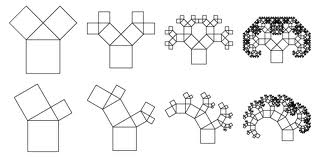
The colony founded by Pythagoras is sometimes characterized as having been a religious cult of sorts, yet his prodigious contributions to the history of mathematics are beyond dispute and have to a large extent saved his legacy. Every child learns the Pythagorean theorem in grade school:
a2
+ b2
= c2
The
sum of the square of each of the two sides of a right triangle is equal to
the square of its hypotenuse.
Pythagoras
was essentially the founder of the discipline of mathematics. In his
view, embraced still today by modern thinkers, numbers reflect
structures in the universe, beginning with 0, 1, 2, and 3,
corresponding to the zero-dimensional point, the one-dimensional line,
the two-dimensional plane, and the three-dimensional volume of space.
Later mathematicians have worked in many more dimensions, but
everything started back in ancient times with this man in awe of the
mathematical beauty inherent in the universe.
Unlike
Parmenides, whose contribution, that “All is one,” may escape
attention by the vast majority of humanity past, present, and future,
Pythagoras provided us with the foundations of all modern applied
science and physics.
Many
people dislike mathematics, or at least they claim to dislike
mathematics. In truth, they appear not to understand mathematics. It
was never presented to them in the proper way and from the proper
perspective. They were forced by martinet schoolmarms to memorize the
principles of mathematics rather than being taught how to deduce
them.
As
a result, mathematics remains for such people an arcane,
inaccessible, and even painful subject. Because physics is the most
directly mathematical of the sciences, requiring the use of many
abstract formulas and mathematical concepts, it, too, has left many
people with bad memories. Organic chemistry is another case where the
logic of the theory must be understood in order to achieve an
understanding of the profound beauty which it embodies.
It is unfortunate that many teachers of these subjects either do not themselves grasp the essential logic involved or else they are for some reason unable to communicate it to their students. The truth is that mathematics exhibits a profound beauty in its aesthetic simplicity and symmetry, as do the more theoretical of the sciences.
To
see the patterns of mathematics in these disciplines requires that
one ascend above the formulas to the spheres from which they derive,
and this was naturally Pythagoras' strong suit. Among the theories
devised by human beings, mathematics offers the one source of and
glimpse into eternity, because nothing that happens on the planet
which we happen by chance to inhabit will ever change the truths of
mathematics.
Psychologists
have discovered correlations between mathematical and musical
ability, and not without reason: all of music is grounded in the
proportions of mathematics. In this way the beauty of mathematics is
inherent to that of music. Most people never study music seriously
and have no idea why the compositions of J.S. Bach are perfect or
what is meant when someone makes this claim, which may strike them as
the ravings of a zealot. People who have never studied and played an
instrument may enjoy music in a superficial way, but they will never
be able fully to grasp the highest pleasure of musical art, to
participate directly in its production, which can be likened to
traveling to another sphere of reality.
Is
there a parallel mathematical universe, where musicians and
physicists interact? In a sense, yes. They are privy to secrets to
which most people have no access. Plato, who arrived on the scene in
ancient Greece a bit later than Pythagoras, attempted to capture the
distinction between mundane appearance and eternal truth with his
theory of the Forms and the Allegory of the Cave, to which, he
claimed, most people are effectively chained. We remain mired in delusion and
tricked by images cast on the wall by politicians and other
shucksters who wield flickering candles to persuade us to believe in their opportunistic lies.
Plato's Allegory of the Cave has never been more relevant than today,
as images and packaging have come to take precedence over content in
the internet age.
Plato
was influenced by all of the pre-Socratic philosophers in one way or
another, but his metaphysics reflects a belief in truth and and
beauty clearly captured by the Pythagorean world view. The realm of
knowledge is separate from the realm of opinion or mere belief, which
is a fluctuating sea of ideas deriving from the contingent ephemera
of the perceived world. Beyond the realm of the senses lies the realm
of truth. This is the insight of Pythagoras which explains the
magical effect of music and also the more mathematical sciences, at
least to their practitioners.
It
is probably worth observing here that in the worldview of Plato and
some of his pals, art and beauty are not at all the same thing,
despite the common tendency on the part of modern people to conflate
them. Plato disliked poets because he thought of them as deceivers or
even liars. Beauty and Truth are absolute and immutable Forms in which both instrumental music and perfume would seem to be able to participate because they cannot “lie”. Why? Because they are non-representational and therefore have no propositional content.
All of this poses problems for people who erroneously conflate beauty and art. The two are conceptually distinct. A naturally existing canyon is beautiful. When Christo “wraps” it, he thereby creates a work of art—one which many local residents may regard as ugly. We shall return to the important distinctions between art and beauty, art and design, and truth and artifice, in future episodes of the History of Philosophy Refracted through Perfume.
The
Pythagorean-Perfume Connection
As
we have seen in the other theories of pre-Socratic philosophers,
perfume has been omitted or deleted from the version of the story to
survive. It might seem that since the world of mathematics is
divorced form the senses and the world of perfume is intimately
connected to sense perception, that the two do not intersect.
By
that argument, however, it should follow that because we apprehend
music through our ears, therefore, it can have nothing to do with the
eternal realm of mathematical truth. These misunderstandings arise
when we make the same mistake as the schoolteacher who forces his
students to memorize mathematical formulas rather than teaching them
how to deduce them from first principles.
Most
people wear perfume in the way in which they listen to music
and balance their checkbook. They use perfume functionally, just as
they use music for entertainment and numbers for the math needed to
accomplish this or that task. Music is there in the world and they
hear it, and perfume is there in the world, so they use it, But their
limited appreciation of perfume's beauty is similar to the person who
enjoys the chirping of birds or the sound of rain in the springtime.
It's there, and they notice it, and it gives them pleasure, but
that's where their understanding ends.
There
is more to perfume than just the superficial scent, just as there is
more to music than the sound waves by which we apprehend it.
Pythagoras, as a master of mathematics, no doubt appreciated perfume
as well, having recognized that the mathematical proportions so
crucial to music are equally important to perfume.
Any
professional perfumer will aver that the distinction between a
masterpiece and a disaster may lie only in the proportions used. The
ingredients of a perfume are obviously very important, but even more
important, once the basic shape and demeanor of the perfume have been
determined, are the precise proportions of the various components
used. We laypersons might consider a comparison in the case of
cooking: a dash of salt may perfect a batch of carrot
ginger soup. A spoonful may ruin it by rendering it inedible.
Lists
of notes are only the most basic way of approaching perfume. The
experience of perfume is subjective and intimate, and the joy of
perfume is found at the first level in the judicious proportions of
ingredients combined by a skilled perfumer. But the perceiver
contributes to the creation as well, just as the beauty of a poem
emerges only upon its conscious appreciation by an interpreter.
Poetry, too, pace Plato, exhibits mathematical proportions of cadence and rhythm,
in addition to the use of colorful metaphors to produce something far
more valuable than the sum of the letters used to write it.
Pythagoras
no doubt recognized that perfume, like music and poetry, offers a
transcendent glimpse into the only certainty in the universe:
mathematics. The heavens may fall, but the truth will persist. The
truth is unassailable. Behind all of the deceptive techniques used to
market fragrances in the modern world, there is a reality. Not all
that glitters is gold, and hidden treasures are out there, ready to
be found by those who do not allow themselves to be distracted by all
of the hype and folderol and focus instead upon the quality of the
perfumes which they seek out and test.
We
may disagree about which precise perfumes achieve a transcendent
level of beauty, but that is because we perceive them from our own
peculiar and idiosyncratic starting points, which are determined not
only by our biological constitution, but also all of our past
experiences and memories. Just as people exhibit various degrees of
awareness about other aspects of reality, we should expect them to
disagree, too, when it comes to perfume. We are all on a journey, and
while our perceptions may sometimes coincide, often they do not.
The
music of the spheres is ringing in the background, beckoning us to
seek out the truth by whatever means available to us. We are
fortunate to be among the select few to have access to perfume,
through which we are able to travel to an olfactory universe unknown
to the vast majority of humanity but nonetheless real.
Labels:
Art vs. Function,
Beauty vs. Novelty,
chemistry,
Christo,
epistemology,
J.S. Bach,
mathematics,
metaphysics,
music,
numbers,
Plato,
poetry,
pre-Socratic philosophers,
Pythagoras,
The Cave,
truth,
Valley Curtain
Subscribe to:
Posts (Atom)