Showing posts with label hedonism. Show all posts

Sunday, June 9, 2013

El perfume no te salvará—Ni siquiera un perfume de violetas...


Muchisísimas Gracias 
a Gabriela Cortés por esta traducción de mi ensayo en inglés,  


Reflexiones sobre

Nadie te oye: Perfume de Violetas (2001), 

  un filme de Maryse Sistach*


  La Historia

Perfume de Violetas está ambientada en la actual Ciudad de México en donde dos chicas adolescentes, Yessica y Miriam se vuelven amigas en cuanto Yessica llega a su nueva escuela. Ella había sido expulsada de su escuela anterior debido a mala conducta. Yessica es una chica decidida, pero sus conflictos con la autoridad parecen surgir con bastante frecuencia debido a un exceso de energía, además de su rechazo a someterse dócilmente a sus abusadores.

Yessica es una chica sensible con una gran alegría por vivir y esto es evidente en su amistad con Miriam. Lo primero que Yessica nota en cuanto se sienta en la silla detrás de Miriam es que su largo cabello negro huele maravillosamente bien. Ella admira a Miriam desde el momento en que se conocen y de ahí en adelante se convierten en mejores amigas.


Yessica vive en un sector pobre de la Ciudad de México, tan pobre que las puertas de su casa que se encuentran por debajo del nivel de la calle son solamente cortinas, una clara indicación de que su familia no posee nada de valor para proteger del robo. Su madre trabaja muy duro lavando ropa ajena y cuando Yessica está en casa, también tiene que trabajar, ya sea lavando ropa o trastes o cuidando a los hijos más pequeños de su madre. Su padrastro y su hermanastro son los estereotípicos machos latinos y ambos parecen apreciar muy poco a Yessica o a su madre.

Mientras la amistad entre Yessica y Miriam se va desarrollando, la diferencia de clases entre las dos chicas se vuelve más gráfica. Miriam vive en un departamento de dos pisos con ventanas y puertas protegidas con barrotes—algo usual en los vecindarios de clase media en Latinoamérica. Al principio, todos los barrotes pueden llegar a impactar a los visitantes de países prósperos donde el nivel de seguridad en general no requiere de tales medidas. En los vecindarios de clase media alta en Latinoamérica, hay guardias de seguridad vigilando en las esquinas y en áreas de mucha afluencia y también es común que vigilen cada casa individualmente.

El estándar de vida de Miriam podría considerarse parecido al de los trabajadores pobres de los Estados Unidos, ya que su madre tiene largas jornadas de trabajo vendiendo zapatos en tiendas como Payless, sin embargo desde la perspectiva de Yessica, Miriam vive en el lujo.


La primera vez que la chica va a la casa de Miriam, Yessica admira la opulencia de tales "lujos" como un refrigerador y una tina de baño. Las dos chicas se dan el gusto de bañarse juntas, jugando con burbujas y pasando tiempo juntas. Además de tener en común el amor al maquillaje y al perfume, Miriam y Yessica sienten una conexión por el hecho de que ninguna de las dos conoció a su padre, siendo las dos hijas de madres solteras, aunque la madre de Yessica se haya vuelto a casar.


 Mientras se va desarrollando su amistad, el aroma de las violetas se vuelve un vínculo que las une. Miriam le lleva una barra de jabón a la escuela a Yessica para que lo huela, confirmando que es el mismo aroma que ella olió en su cabello el día en que se conocieron.

En la casa de Miriam, Yessica constantemente está rociándose con los atomizadores que encuentra. Parecen perfumes baratos o rocíos corporales de perfumes que se venden en farmacias, pero para Yessica son un néctar de los dioses. Las chicas también juegan con maquillaje y bailan cuando están juntas en la escuela, pero la historia toma un giro inesperado y negativo un día en el que Yessica va caminando sola de regreso a su casa después de haber ido a casa de Miriam.
 

Esta escena desgarradora en la que Yessica es brutalmente violada, fue presagiada por conflictos anteriores. Al principio, las chicas se resistieron a las insinuaciones del hermanastro de Yessica y de su amigo, un chofer de autobús. Además, Yessica y su hermanastro están en constante conflicto en casa, sumergidos en una implacable lucha de poderes.


De forma escandalosa, el chofer del autobús sorprende a la chica cuando va caminando por la calle y la obliga a subir al autobús que se encuentra estacionado en un terreno baldío. Mientras tanto, el hermanastro de Yessica se sienta afuera del autobús para vigilar que nadie se acerque y se percate de lo que está sucediendo.

La violación deja a Yessica muy lastimada. Cuando regresa a la escuela, otros estudiantes se dan cuenta de la mancha de sangre en la parte de atrás de su falda durante la clase de deportes. La maestra la lleva a la oficina de la directora, en donde la regañan ambas mujeres y Yessica es incapaz de explicarles lo que acaba de ocurrirle. La directora se parece de forma escalofriante a Condoleezza Rice, recordándonos aquella frase que dijo: "No queremos que la evidencia irrefutable sea un hongo nuclear" y se comporta de manera hostil, abusando verbalmente de Yessica y lastimándola todavía más.

A pesar de todo lo que le ha sucedido, Yessica se tranquiliza y sigue adelante, negándose a permitir que la intimiden.

Pero la violación le ha 
pasado factura a la chica y cuando va con su novio a La Fuente, una especie de mirador donde las parejas se reúnen para pasar tiempo a solas, ella lo empujabruscamente cuando él intenta tocarla. Ella salta y corre, dejando atrás al chico que se queda confundido con el comportamiento de la chica. Claro que todo tiene sentido,tomando en cuenta lo que le ha pasado recientemente.


Miriam y Yessica continúan pasando tiempo juntas y un día que están viendo ligas para el cabello en un quiosco, Yessica roba una pequeña botella de perfume de violetas al que no puede resistirse. La chica corre con la botella, dejando atrás a Miriam, quien tiene que enfrentarse a la ira de la dueña de la tienda.


Miriam paga por el perfume y queda en estado de shock al ver que su mejor amiga fue capaz de hacerle tal cosa, va a la tienda donde trabaja su madre y le cuenta lo que sucedió.

La madre de Miriam ya estaba preocupada por la amistad de Miriam y Yessica, ya que anteriormente se dió cuenta entre otras cosas, de que fumaron en el departamento, lo que la enfurece ya que para ella fue muy difícil dejar de fumar.


Después de que su amigo, el chofer del autobús violó a Yessica, su hermanastro a quien el incidente le parece cómico, le advierte que no le diga nada a nadie acerca de lo que sucedió "o si no..." Él acepta el dinero que le da el violador como pago por hacer guardia durante la violación y usa este dinero para comprarse un par de tenis nuevos.


Durante la película, la fascinación que sienten los personajes relativamente pobres con objetos comerciales como objetos del deseo se muestra una y otra vez. Simbólicamente es la madre de Miriam quien le vende los zapatos al joven, ignorando por completo su conexión con Yessica.

La amistad de Miriam y Yessica ha sufrido una ruptura severa debido al robo del perfume de violetas y a la humillación y la vergüenza que esto le provocó a Miriam. Pareciera que no hay manera de reparar el daño, pero Yessica hace un collage de fotografías de ella y de Miriam y regresa a su casa para dárselo, disculpándose por lo que ha sucedido. 


Las chicas sienten alivio al reunirse de nuevo y Miriam desobedece el consejo de su madre de alejarse de Yessica. También le permite entrar a la casa en contra de las órdenes de su madre

En una de estas visitas, Yessica roba un fajo de dinero escondido dentro del joyero de la madre de Yessica, el cual le da a su propia madre, quien se ha quejado en reiteradas ocasiones de sus problemas económicos. El dinero robado son los ahorros de la madre de Miriam para comprar una televisión y cuando descubre que el dinero no está se enfurece. Acusa a Yessica e insiste en que no es solamente una ratera, sino una golfa. Básicamente, su explicación acerca de lo que le sucedió a Yessica (la violación) es que "ella se lo buscó."


Increíblemente, el chofer del autobús y el hermanastro de Yessica la vuelven a interceptar de nuevo para violarla en el autobús (al parecer se trata de violaciones seriales, aunque en la película solamente se muestran dos incidentes explícitos). Esta vez Yessica está aturdida y confundida, encuentra la manera de ir a la casa de Miriam pero no hay nadie.
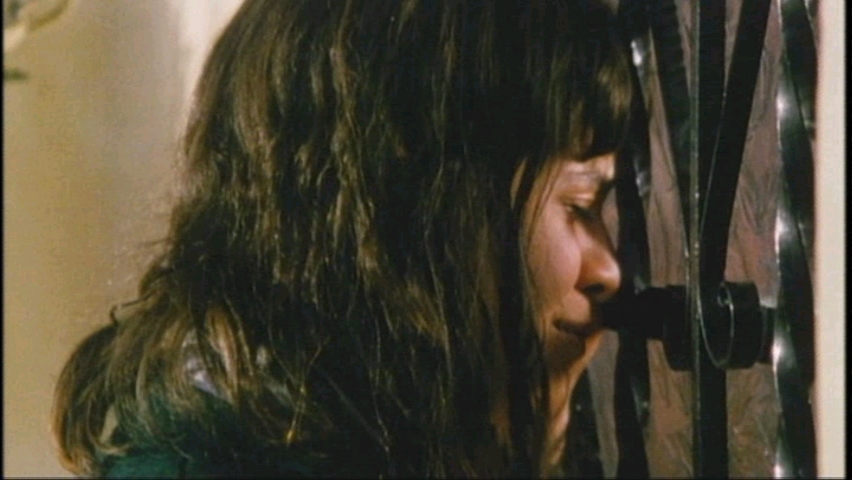


Todas las puertas y ventanas están cerradas con cadenas y candados para evitar que alguien entre. Cuando comienza a llover, Yessica se esconde bajo la escalera y se queda dormida.

Al día siguiente, Yessica logra llegar a la escuela, donde la madre de Miriam ya ha hablado con la directora acerca de los robos que ha cometido Yessica—el perfume de violetas y el dinero—y mandan llamar a Yessica a la dirección, pero dos de los miembros del personal se percatan de lo que le ha sucedido (sus rodillas tienen moretones y su cuello está sangrando).

Por fin alguien en la escuela admite lo que ha sucedido y le dice a Yessica "Nadie tiene el derecho de hacerte eso." Mientras que la chica está en la enfermería de la escuela, Miriam le avienta un avión de papel por la ventana con una nota que dice que se reúnan en el baño.


Yessica va al baño esperando una reunión con su amiga. En vez de eso, Miriam la insulta verbalmente repitiendo las palabras con las que se expresó su madre acerca de Yessica: ¡ratera, traidora, puta! Las dos chicas están muy enojadas y comienzan a pelear, culminando trágicamente en la muerte de Miriam cuando se cae y se golpea la cabeza con la taza del baño.


Yessica se escapa y se dirige a la casa de Miriam donde se acuesta en su cama.

Cuando la madre de Miriam regresa a casa esa noche, encuentra la puerta entreabierta y se preocupa por su hija hasta que ve que su cama está ocupada. Se acuesta al lado de Yessica, quien está completamente cubierta con una cobija en la oscuridad. La madre se siente aliviada de ver que su hija está en casa, sana y salva porque piensa que la persona en la cama es Miriam. La película termina con el teléfono timbrando, es la llamada de alguien en la escuela para darle la noticia acerca de la horrible muerte de su hija.


Discusión

Perfume de Violetas es un filme depresivo y casi nihilista. Ciertamente es un ejemplo extremo del cine negro, si bien se sitúa en la Ciudad de México, donde la corrupción cubre la historia por completo. La única persona entre todos los personajes que es completamente inocente es Miriam, quien muere asesinada como resultado de todas las fuerzas malignas que la rodean.

¿Cómo se hubiera podido prevenir esta tragedia? Tal vez si Yessica hubiera denunciado la primera violación tan pronto como sucedió. No lo hizo porque vivía en una cultura donde se asume que la culpa es de las mujeres quienes deben aceptar cualquier cosa de parte de los hombres. El comportamiento de las mujeres hacia otras mujeres a través de la película nos revela que ellas también han sido infectadas con el insidioso sexismo.

Mi reacción inicial a este filme fue que el final es exagerado e incluso siniestro, estirando nuestra credulidad más allá del punto de ruptura. El desenlace de hecho me recordó mucho al que es probablemente mi filme noir favorito (¡también en centelleante tecnicolor!): Plein Soleil [Purple Noon] (1960), dirigido por René Clément.

El trauma que experimentará la madre de Miriam al darse cuenta que la chica en la cama de su hija no es Miriam, quien de hecho está muerta, es verdaderamente difícil de imaginar.

La película está bien hecha y tiene un buen ritmo, cubriendo una impresionante cantidad de temas en tan solo 90 minutos. Claramente es una producción de bajo presupuesto pero está bien dirigida y las actuaciones también son muy buenas. También quedé impresionada con la ingeniosa selección de música. Mi queja principal acerca del filme fue solamente que la trama es tan terrible que es poco realista. Me quedé en estado de shock al enterarme en IMDB.com (la base de datos de películas en internet) que Perfume de Violetas  está basada en una historia real. Así que aunque la historia sea poco realista, resulta que los eventos que nos presenta realmente sucedieron, lo que hace que sea todavía más horrible.

Perfume de Violetas es una obra importante. Resalta las condiciones de vida de los pobres y de la clase trabajadora en la Ciudad de México y sigue la tradición de los autores de filmes en español como Luis Buñuel, quien durante su estancia en México dirigió Los Olvidados  (1950), un filme crudo en blanco y negro que también trata acerca de la situación apremiante de los pobres en la Ciudad de México pero se trata de gente en peores condiciones que Miriam o Yessica (y sin acceso al conocimiento o a los perfumes). Las Hurdes  (1933), dirigida por Buñuel en España también trata sobre un nivel de pobreza más bajo que el que se presenta en Perfume de Violetas.

En esta película el perfume juega un rol importante. El perfume es lo primero que atrae a Yessica de Miriam—o más bien el aroma de su cabello, que ella se lavaba con jabón de violetas. El perfume sirve como un medio a través de la historia por el cual Yessica escapa de su condición sórdida a un mundo de delicias olfativas.


El perfume representa la promesa y la esperanza. También mitiga el dolor de la chica violada. Después de haber sido violada, Yessica intenta reponerse y se niega a derrumbarse, acercándose al perfume para escapar a un mundo de fantasía en donde la maldad de la gente que la maltrata no existe.


El perfume también sirve como tentación. Yessica roba una pequeña botella de perfume de violetas del quiosco porque lo desea, pero no tiene el dinero para comprárselo. De esta forma, el perfume es una fuente potencial de peligro, ya que provoca que Yessica actúe en formas que afectan lo mejor que ha tenido hasta ahora en su vida: la amistad con una chica tierna y amable que es tan inocente que todavía  no hace distinciones sociales y económicas entre la gente.

Miriam acepta a Yessica como es, sin cuestionarse si ella está "del lado equivocado," por así decirlo. Incluso cuando Yessica lastima a Miriam en varias ocasiones, ella la perdona. Pero al final, no solamente pierde su amistad con ella y es por esto que este fime es tan nihilista. La esperanza y la belleza quedan destruídas, como cuando la madre enojada de Yessica rompe la botella de perfume, tirándolo al suelo en un despliegue de ira sin sentido. Prácticamente a través de esta acción le dice a su hija que no tiene derecho a tener un perfume porque ellos son pobres.

¿Cuál es el punto de este filme, para los perfumistas privilegiados como nosotros para quienes la única preocupación monetaria risible es si podemos comprar el último lanzamiento super nicho? ¿Cómo debemos interpretar esta historia tan perturbadora?

Para ser honesta, a veces me pregunto si no estamos viviendo en una gran burbuja perfumada. Cuando nos quejamos acerca del precio de un perfume o cuando discutimos entre nosotros sobre si la perfumería es un arte, estamos concediéndonos un lujo que está más allá de la realidad de la mayoría de la gente en el planeta y el de algunas personas cuyas condiciones se presentan en este filme que raya en lo obsceno.

A pesar de nuestro elevado estatus socioeconómico—como se puede evidenciar por el hecho de que podemos comprar perfumes y apreciarlos como un pasatiempo—nos parecemos a Yessica en nuestra fascinación con los perfumes. Estamos dispuestos a abstenernos de otras cosas, para poder comprar nuestros perfumes tan codiciados. Pero también hay un mensaje positivo.

Realmente, disfrutamos el perfume precisamente de la misma manera en que Yessica lo hace. El perfume es una fuente de placer para nosotros, como lo es para ella. ¿Importa que describamos esa fuente de placer de una manera u otra? ¿Por qué no podemos simplemente aceptar que el perfume nos produce placer? ¿Por qué tendría que haber algo más acerca de los perfumes? ¿Le tememos a nuestro propio hedonismo?

También a veces me pregunto si la energía dirigida hoy en día a defender la afirmación de que la perfumería es una de las bellas artes, no es desproporcionada en comparación con las consecuencias de tal opinión si se confirmara por unos cuantos de la élite. Obviamente la experiencia del perfume por parte de personas como Miriam y Yessica no cambiaría en lo más mínimo.

¿Cambiaría nuestra propia apreciación del perfume si lo describiéramos en los términos idealistas de alguna teoría difícil de comprender? Yo creo que no. Aún amaríamos a los perfumes precisamente por la misma razón y precisamente de la misma manera en que Yessica lo hace. ¿Por qué? Porque huele bien.


*Advertencia: Si te encuentras entre los millones de personas que están intentando desengancharse de los SSRIs— habiéndose percatado por lo menos de la dolorosa epifanía de que todo fue una trampa compleja concebida para llenar los bolsillos de los directores generales de Pharmafim y al mismo tiempo lograr que te calles—entonces te recomiendo que te mantengas muy alejado de este filme crudo y casi nihilístico.


Sunday, April 28, 2013

Tom Ford Porn: What does it mean?


While looking for a suitable image to open the lexicon entry on hedonism, I happened upon all sorts of pretty unbelievable things. Did you know, for example, that there are vacation clubs called "Hedonism" and "Hedonism II", where people go to have sex with strangers? Well, it was news to me. 

I also discovered a series of advertisements for Tom Ford Perfumes which I had never seen before. I had seen the Neroli Portofino shot with a naked man and woman pouring, I presume, water on each other from large Neroli Portofino bottles. It must be water, else they would not be laughing, and might even have to undertake a detox program after the photo session, given how strong that fragrance is. The volume which they were splashing around so blissfully in the ad spot could easily have cleared the building. 

I posted the Neroli Portofino ad before in connection with another topic, but here it is again:


Pretty racy, I thought, when I first encountered the image, especially given that the woman is fairly clearly staring at her partner's private parts. Another ad for the same perfume ratchets the excitement up from ogling to direct contact, as though the naked couple were together in bed in the midst of (gasp!) fornication:


A third image for the same perfume features frontal nudity:


To my surprise, however, the Neroli Portofino ad campaign does not hold a candle to some of the others which popped up using Google image search, including this one:


Not sure exactly what this is supposed to mean. Can anyone help me out here? Paper strips used for testing perfumes have been nestled in the woman's behind while Tom Ford, a confirmed homosexual, poses as a creative director assessing the perfumes. The message is quite unclear.

What about this one:


Here we have a more standard advertising technique. The suggestion appears to be that if one wears Tom Ford Cologne, then one will gain access to the treasures hiding behind the bottle in the ad. A version of "panty dropper" logic, it seems. Here a variation on the same theme adds the extra allure of well-oiled skin:


With all of this naked flesh, and the heavy-handed, even panting, juxtaposition of sexual images to bottles, Tom Ford perfume ads start to look verily pornographic!


I use the word pornography with some trepidation, as my own knowledge of the porn world is nearly exhausted by the contents of the film Boogie Nights, which I found utterly fascinating, in part no doubt because it revealed to me a subculture of human society about which I was up until then entirely ignorant.

It's not that I have any principled moral objection to pornography, per se. If it leads men to mistreat women, then I think that is a bad thing, but whether it does or does not is an empirical matter. My real objection to pornography is simpler and less contingent than that. What little I've seen of this genre of self-expression (for lack of a better term) has just struck me as boring or distasteful or stupidand usually all three. 


Pornography seems to be about separating body parts from souls, and in that sense it does not connect with my own experience in any way whatsoever. I've never had a relationship with anyone which was about isolated body parts. Really. As unbelievable as that may sound, it's true. Perhaps that is because for me, people are a package deal: body and soul. Aristotle opined that human beings were "rational animals" or "embodied souls," and I could not agree more.

Pornography is about severing the soul from the body, and dividing even the body up into appendages to be used as sources of pleasure. Say what you will, but isolated body parts are just not very interesting to me. I am merely reporting on a matter of taste here, not taking to task anyone who happens to like porn.

I also dislike boxing. It's true that one of my classmates in high school was rendered an imbecile by sparring without head gear during a practice session, but I disliked the sport even before that happened. I actually cringe during boxing scenes in movies. Raging Bull is the Scorsese film which I've watched the fewest number of times, and I still have not gotten around to the Hilary Swank boxing movie (Million Dollar Baby). Perhaps there is a connection between my aversion to boxing and my dislike of porn? Do I suffer perhaps from anemia?

Probably what I dislike the most about the small amount of pornography I've seenand I confess to never having made it through an entire "work", if that term even appliesis that the acting itself was so egregious that I could not even bring myself to watch the thing. To be honest, I found what I've seen excruciatingly embarrassing for the actors. How could they degrade themselves so horriblynot by having sex on film but by pretending to be actors when they were nothing of the sort! Know thyself. 

Which reminds me: while searching for Tom Ford Pornwhich returns thousands upon thousands of imagessome pornographic shots of Scarlett Johansson popped up as well. I was needless to say taken aback, as she is a real actress, is she not? Coincidentally, Bryan Ross at From Pyrgos opened a recent feature with a photo of and several comments about Scarlett, one of which being that she is the world's least talented actress. I almost left a comment, because I can think of about a hundred worse actresses than her. I am not saying that she's great, but far from the worst. For the record, I disliked Lost in Translation, which I found to be distastefully xenophobic. Japanophobic, to be more precise, and I'll never understand the praise which it garnered (I presume from monolingual anglophone Americans).

Now I am really curious: did Scar Jo (which I learned from Bryan's post is her nickname) do porn before breaking into Hollywood? Or were the porn shots I found photoshopped? Either way, it got me thinking about how easy it would be to fabricate false images of famous people juxtaposed with any- and everything, as in the images of Scarlett with plenty of other people's, let us say, "ample" body parts. Yet another reason to use avatars while roaming about the world wide web...

Add to my avoidance of bad films more generally the fact that I have no interest in watching other people have sexor any other animals for that matterand pornography just ends up being a no-go for me. It's not interesting, and I find it aesthetically repugnant and intellectually insulting. Why would I watch it? I refuse to watch bad movies, and the porn which I've been exposed to involved insipid plots and pathetically bad acting. Those are my queue to leave the theater. I never watch regular movies which are that bad, so why would I watch a porn movie which is even worse, given that I've no desire to watch animals copulatewhether dogs, horses, rabbits, or people?

I know that lots of people enjoy or even love porn, and Tom Ford appears to be one of them. In an interview for Harper's Bazaar in 2011, he indicated that he watches heterosexual porn "all the time". He went even so far as to say that his top bookmarked sites are porn sites:

"I watch straight porn all the time. If I go on my computer, there's a button that can connect me to all the sites I look at most often, and they're all porn—and 1stdibs.com. Porn and antiques!"

Tom is not alone. Cyberporn addiction appears to be quite the internet age phenomenon, impossible in centuries past, but made possible today by the ease with which images can be transmitted from one place to another and accessed with an innocentor not-so-innocentclick of the mouse.


Cyberporn addiction must be real because sometimes when I am in the computer laboratory at the library, I see men in rows ahead of me watching porn, which seems pretty incredibleat a library?but there they are! They tend to be older men, and my guess is that they watch porn at the library so that their wife will not discover their naughty cookies on a shared computer. I gather that they find it less embarrassing for the people in the rows behind them at the library to know that they watch porn than that their family find out. 

When I've seen what I presume to be "porn addicts" watching women masturbating and the like, I wonder again what the appeal of these images is supposed to be. I guess that I don't understand, but I also don't want to, to be perfectly frank. My reason for posting these Tom Ford Porn advertisements is not so that we can all enjoy the images. Nor am I hoping to draw porn traffic to the salon de parfum, which is not even monetized. No, I have ulterior, philosophical motives.


What do the Tom Ford Porn ads really reveal?

On their face, the Tom Ford Porn perfume advertisements suggest that Tom Ford advocates hedonism. Would that be descriptive or normative hedonism? the savvy salon de parfum subscriber is now wondering. In the Harper's Bazaar interview, the provocateur gestured toward descriptive hedonism about himself. But he is a role model of "coolness" the world over, so saying such things could also be advocating that people emulate him and start bookmarking porn sites, too. "If it's good enough for Tom Ford, then it's good enough for me!" we can imagine some of his many adulators explaining to their employer when asked about the suspicious cookies on shared corporate computers.

One interesting facet of philosophical hedonism is that it does not distinguish pleasure by species. Any sentient creature is capable of pleasure and vulnerable to pain. In an ethical framework such as utilitarianism, if utility is defined as net pleasure, then all sentient creatures should be taken into account in the final equation. That means that cats, dogs, cows, horses, pigs and, yes, rabbits, should be considered in deciding how to act.

Why is this relevant to Tom Ford Porn? you may not without reason be wondering. And the answer is because it just so happens that the house of Tom Ford is on the PETA (People for the Ethical Treatment of Animals) list of companies which test their products on animals. This is not a result of the fact that Tom Ford is one of the Estée Lauder group companies. Aveda is too, yet they bear the benevolent "Beauty without Bunnies" badge.

If Tom Ford is a philosophical hedonist who advocates maximizing the pleasure of the greatest number, then he owes us an explanation of why his company is injecting chemicals into animals and causing them to suffer so that other animals can spray on the products and hopefully snag some of the hot coochie which his ads promise awaits the wearer of Tom Ford Cologne.

Perhaps I am giving Tom Ford too much credit here. Perhaps he is not a philosophical hedonist at all. Perhaps he is just a money-grubbing guy out to make big bucks. His ads then reveal not what he himself thinks but what heor his marketing teamthinks that his potential customers think. He obviously does not use soft porn images for no reason. He thinks that sex sells perfume. One surmises that his marketing data bears this out, which is why he has put out so many such ads. He probably knows that not everyone will be seduced by his not-so-subliminal suggestions, but the ads are undoubtedly carefully placed in magazines whose readers generally share Tom Ford's fondness of pornography.

I have never seen any of the above advertisements in any of the magazines familiar to me. So the Tom Ford company has done a good job of placing the ads where they will be seen by people who are likely to view them favorably. Those of us who are not titillated by the juxtaposition of naked bodies and perfume bottles are probably better off not seeing the adsor any ads whatsoever. 

I own two bottles of Tom Ford perfume: Black Orchid and Black Orchid Voile de Fleur, but they were purchased not because of but in ignorance of the advertising strategies of the house of Tom Ford. The exclusive private collection is this house's effort to appeal to the sophisticated niche consumer and seems to be yet another savvy business tack. 

What Tom Ford Porn reveals is not what Tom Ford thinks, but that his company's marketing data suggest that a fair number of perfume users are hedonists of the sort who use perfume functionally, to achieve other forms of pleasure, above all, sex.


Friday, April 26, 2013

Entry #15: A Philosophical Lexicon for Perfumistas


Hedonism, Hedonist, Hedonistic

Western civilization has not been kind to the word hedonist, which as a result of the influence of ascetic religions connotes sinner before all other meanings. In philosophical circles, however, the term is much more neutral and has two distinguishable forms: descriptive and normative or prescriptive hedonism.

Descriptive hedonism is a theory according to which the ultimate reason why we human beings do anything, at the end of the day, is for the pleasure which we will derive or expect to derive from doing it. This form of hedonism is incapable of empirical refutation, for it essentially defines us as pleasure seekers and explains away all possible counter examples by reinterpreting the apparently non-hedonistic behavior in terms of pleasure. People who regard human beings as essentially animals, no more and no less, may find descriptive hedonism quite plausible. Others may find it demeaning. Given that it's a metaphysical theory, no one can demonstrate it to be true or prove it to be false by empirical means.

Consider the mother who toils away for her children, sacrificing all that she might have been and done for their sake. Or how about the soldier who courageously fights for his country and dies in the process? Are these not examples of virtuous self-sacrifice, of forgoing one's own pleasure in order to help other people? 

Not according to the philosophical hedonist, who is determined to interpret everything in terms of pleasure. The mother acts as she does because she derives pleasure from seeing her children thrive as a result of her apparent sacrifice. The soldier agrees to fight because he enjoys the idea of being thought of as a hero. Construed in this way, descriptive hedonism is closely related to psychological egoism: ultimately we do what we do for ourselves. Apparent acts of altruism are really only apparent. 

Normative or prescriptive hedonism denies that everyone acts according to the pleasure principle. However, the normative version of hedonism exhorts people to do so and deems them irrational when they fail to do so. Carpe diem could be interpreted as a version of normative hedonism, and it may seem to follow logically from a recognition of our mortality. Of course, carpe diem can also be interpreted in other ways (see existentialism...).


The term hedonism has come up in a few different discussions at the salon de parfum, especially in considering why we perfume ourselves. Why, after all, do we perfume ourselves? It may seem initially as though there are different reasons, but they all may come back, one way or the other, to pleasure, in the end. Either we ourselves enjoy wearing perfume, or we enjoy the reactions we get from other people when we wear perfume. Those reactions can range from compliments to varieties of, as they say in some fragrance community website forums, "panty-dropper" behavior.

Some people may also appreciate the feeling of prestige which they derive from being niche snobs or from developing a discriminating nose. Those would be further possible sources of pleasure, would they not? What about perfume as art appreciation? Do we like and wear perfume because it is art? Or do we wish to describe our olfactory pleasure as akin to art appreciation because it makes us feel sophisticated? 

I do not subscribe to the general theories of hedonism explained above, but it seems pretty clear to me that the vast majority of perfume consumers are hedonistic, at least when it comes to their perfume. Either they wear it because of the direct sensory pleasure which they derive from the olfactory experience itself, or else they do so in anticipation of other pleasures which they will derive from the reactions they get or hope to get when they wear perfume. In this sense, perfume use appears to be essentially hedonisticcertainly our early encounters with perfume areand attempts to elevate perfume to something "loftier" than a source of pleasure may be attempts to elevate the wearer to nobler plane.

Whatever we may say in our evaluations of a perfumeabout its notes, its development, its longevity, and sillageour final judgment of its value always seems to come down to whether we enjoy wearing the perfume. Sometimes in criticizing a new perfume a reviewer will write something to the effect that 


Perfume should smell good.

This precept is prescriptive, and it appears to advocate hedonism, at least as regards perfume use. 

What do you think about perfume use, my fragrant friends? Is it intrinsically hedonistic? Or should it be? Would you say that your own perfume use is hedonistic or not?


Friday, April 19, 2013

Entry #11: A Philosophical Lexicon for Perfumistas


Utility, Utilitarian, Utilitarianism

These words all relate in the vernacular to use. In everyday conversation, utility just means usefulness. Somewhat confusingly, these simple terms were appropriated by two nineteenth-century philosophers, Jeremy Bentham and John Stuart Mill, for a specific normative ethical theory, which they called Utilitarianism.

According to utilitarianism, the right action is the one which maximizes the utility of the greatest number of people, where utility is understood to mean either happiness or pleasure, and those terms are generally not taken to coincide. Some utilitarians advocate pure hedonism, with pleasure being the ultimate measure of any- and everything. J.S. Mill felt that there were "higher" and "lower" pleasures, and that higher pleasures (intellectual endeavors) were more valuable than what might be termed the "animal" pleasures. However one decides to understand utility, the idea is simple enough and is expressed by the principle of utility:

Always act so as to maximize the net outcome for all relevant persons taken together as a group.  

I've been thinking about utilitarianism today as I sit at home in "lock-down" with my fellow Bostonians while law enforcement officers conduct a manhunt for the missing suspect in the case of the bombing perpetrated during the marathon on Monday. The people interviewed today (friends, family, and former teachers of the suspects) make it sound as though these two brothers would never do anything so heinous, but someone obviously did, so we'll have to see how the evidence stacks up. I've no doubt that the suspects sought in this case can be demonstrated to be guilty, if indeed they are guilty. Now that one of them is dead, I certainly hope that they were the culprits, and not someone else. 

Here is a famous thought experiment discussed whenever the philosophical theory of utilitarianism is introduced. It illustrates the distinctive properties of this particular approach to morality and goes basically like this:


Imagine that a vicious killer is at large, and the people of a city have been crying out in outrage for days. The mayor wishes to quell the riots erupting all over the place, and with them the deaths which may be caused by the angry crowd. He therefore selects some poor schmuck to serve as a patsy. Evidence is marshaled, and the suspect is put on display. The public expels a collective sigh of relief. 
Those calling for the murderer's head have now been appeased, and the riotous crowds have dispersed. The city returns to its normal business, though the real killer has not been apprehended, but the mayor has acted in this way so as to maximize the happiness of the greatest number of people. 
During the period when they believed that the killer roamed at large, the citizens were unable to sleep at night or get anything done, filled with anxiety as they were that they might be the next in line to become his victim. Once someone was fingered for the crimes, everyone settled down, and the only person who suffered as a result of the mayor's decision was the innocent person framed.

The test for your own assessment of utilitarianism is how you react to this sort of scenario. Another similar example involves torturing one person to save many more. These sorts of awful dilemmas have unfortunately arisen in history, particularly under repressive regimes when, out of fear for their own lives, people have agreed to do what they would not otherwise have done. 

The thought experiments are not personalized and so are intended to allow people to reflect upon whether they find utilitarianism to be intuitively sound. Obviously, human rights are not intrinsic to this moral outlook. Human rights are valuable to a utilitarian only insofar as they may maximize the happiness of the greatest number. 


Perfume Applications

How does this approach to morality apply specifically to the case of perfume? I think that there are several ethical dilemmas which may raise the question of the validity of utilitarianism.


  • Some people maintain that animal testing of cosmetics (including perfume) is justified, because it maximizes the happiness of the greatest number at the expense of a few (the animals experimented on).


  • The people who produce fake perfumes and fob them off to unsuspecting consumers may believe that they are doing the right thing because most people cannot tell the difference anyway, and they are able to purchase the fakes at a significant discount. (I'm not saying that they actually reason this way, but it is a possible rationalization for what they do, and it may well allow some of them to sleep better at night...)


  • Similarly, perfume companies may lie about whether they have reformulated their perfumes (or the extent to which they have) under the assumption that most people will never know anyway, so the net outcome is better, all things considered.


  • In our wearing of perfume, we may think about the people likely to be around us when we select our scent of the day. Going to the library, for example, I am unlikely to choose a perfume with huge sillage because I do not want to offend other people, and I especially do not want to bother people with allergies. Sure I might prefer to wear something louder that day, but I will be in a public place, so I reason that the net consequences will be better if I sacrifice my own pleasure in order to accommodate those who may not agree with my perfume choice.


What about you, my fragrant friends, can you think of other utilitarian examples applicable to the case of perfume?