Sunday, June 9, 2013

El perfume no te salvará—Ni siquiera un perfume de violetas...


Muchisísimas Gracias 
a Gabriela Cortés por esta traducción de mi ensayo en inglés,  


Reflexiones sobre

Nadie te oye: Perfume de Violetas (2001), 

  un filme de Maryse Sistach*


  La Historia

Perfume de Violetas está ambientada en la actual Ciudad de México en donde dos chicas adolescentes, Yessica y Miriam se vuelven amigas en cuanto Yessica llega a su nueva escuela. Ella había sido expulsada de su escuela anterior debido a mala conducta. Yessica es una chica decidida, pero sus conflictos con la autoridad parecen surgir con bastante frecuencia debido a un exceso de energía, además de su rechazo a someterse dócilmente a sus abusadores.

Yessica es una chica sensible con una gran alegría por vivir y esto es evidente en su amistad con Miriam. Lo primero que Yessica nota en cuanto se sienta en la silla detrás de Miriam es que su largo cabello negro huele maravillosamente bien. Ella admira a Miriam desde el momento en que se conocen y de ahí en adelante se convierten en mejores amigas.


Yessica vive en un sector pobre de la Ciudad de México, tan pobre que las puertas de su casa que se encuentran por debajo del nivel de la calle son solamente cortinas, una clara indicación de que su familia no posee nada de valor para proteger del robo. Su madre trabaja muy duro lavando ropa ajena y cuando Yessica está en casa, también tiene que trabajar, ya sea lavando ropa o trastes o cuidando a los hijos más pequeños de su madre. Su padrastro y su hermanastro son los estereotípicos machos latinos y ambos parecen apreciar muy poco a Yessica o a su madre.

Mientras la amistad entre Yessica y Miriam se va desarrollando, la diferencia de clases entre las dos chicas se vuelve más gráfica. Miriam vive en un departamento de dos pisos con ventanas y puertas protegidas con barrotes—algo usual en los vecindarios de clase media en Latinoamérica. Al principio, todos los barrotes pueden llegar a impactar a los visitantes de países prósperos donde el nivel de seguridad en general no requiere de tales medidas. En los vecindarios de clase media alta en Latinoamérica, hay guardias de seguridad vigilando en las esquinas y en áreas de mucha afluencia y también es común que vigilen cada casa individualmente.

El estándar de vida de Miriam podría considerarse parecido al de los trabajadores pobres de los Estados Unidos, ya que su madre tiene largas jornadas de trabajo vendiendo zapatos en tiendas como Payless, sin embargo desde la perspectiva de Yessica, Miriam vive en el lujo.


La primera vez que la chica va a la casa de Miriam, Yessica admira la opulencia de tales "lujos" como un refrigerador y una tina de baño. Las dos chicas se dan el gusto de bañarse juntas, jugando con burbujas y pasando tiempo juntas. Además de tener en común el amor al maquillaje y al perfume, Miriam y Yessica sienten una conexión por el hecho de que ninguna de las dos conoció a su padre, siendo las dos hijas de madres solteras, aunque la madre de Yessica se haya vuelto a casar.


 Mientras se va desarrollando su amistad, el aroma de las violetas se vuelve un vínculo que las une. Miriam le lleva una barra de jabón a la escuela a Yessica para que lo huela, confirmando que es el mismo aroma que ella olió en su cabello el día en que se conocieron.

En la casa de Miriam, Yessica constantemente está rociándose con los atomizadores que encuentra. Parecen perfumes baratos o rocíos corporales de perfumes que se venden en farmacias, pero para Yessica son un néctar de los dioses. Las chicas también juegan con maquillaje y bailan cuando están juntas en la escuela, pero la historia toma un giro inesperado y negativo un día en el que Yessica va caminando sola de regreso a su casa después de haber ido a casa de Miriam.
 

Esta escena desgarradora en la que Yessica es brutalmente violada, fue presagiada por conflictos anteriores. Al principio, las chicas se resistieron a las insinuaciones del hermanastro de Yessica y de su amigo, un chofer de autobús. Además, Yessica y su hermanastro están en constante conflicto en casa, sumergidos en una implacable lucha de poderes.


De forma escandalosa, el chofer del autobús sorprende a la chica cuando va caminando por la calle y la obliga a subir al autobús que se encuentra estacionado en un terreno baldío. Mientras tanto, el hermanastro de Yessica se sienta afuera del autobús para vigilar que nadie se acerque y se percate de lo que está sucediendo.

La violación deja a Yessica muy lastimada. Cuando regresa a la escuela, otros estudiantes se dan cuenta de la mancha de sangre en la parte de atrás de su falda durante la clase de deportes. La maestra la lleva a la oficina de la directora, en donde la regañan ambas mujeres y Yessica es incapaz de explicarles lo que acaba de ocurrirle. La directora se parece de forma escalofriante a Condoleezza Rice, recordándonos aquella frase que dijo: "No queremos que la evidencia irrefutable sea un hongo nuclear" y se comporta de manera hostil, abusando verbalmente de Yessica y lastimándola todavía más.

A pesar de todo lo que le ha sucedido, Yessica se tranquiliza y sigue adelante, negándose a permitir que la intimiden.

Pero la violación le ha 
pasado factura a la chica y cuando va con su novio a La Fuente, una especie de mirador donde las parejas se reúnen para pasar tiempo a solas, ella lo empujabruscamente cuando él intenta tocarla. Ella salta y corre, dejando atrás al chico que se queda confundido con el comportamiento de la chica. Claro que todo tiene sentido,tomando en cuenta lo que le ha pasado recientemente.


Miriam y Yessica continúan pasando tiempo juntas y un día que están viendo ligas para el cabello en un quiosco, Yessica roba una pequeña botella de perfume de violetas al que no puede resistirse. La chica corre con la botella, dejando atrás a Miriam, quien tiene que enfrentarse a la ira de la dueña de la tienda.


Miriam paga por el perfume y queda en estado de shock al ver que su mejor amiga fue capaz de hacerle tal cosa, va a la tienda donde trabaja su madre y le cuenta lo que sucedió.

La madre de Miriam ya estaba preocupada por la amistad de Miriam y Yessica, ya que anteriormente se dió cuenta entre otras cosas, de que fumaron en el departamento, lo que la enfurece ya que para ella fue muy difícil dejar de fumar.


Después de que su amigo, el chofer del autobús violó a Yessica, su hermanastro a quien el incidente le parece cómico, le advierte que no le diga nada a nadie acerca de lo que sucedió "o si no..." Él acepta el dinero que le da el violador como pago por hacer guardia durante la violación y usa este dinero para comprarse un par de tenis nuevos.


Durante la película, la fascinación que sienten los personajes relativamente pobres con objetos comerciales como objetos del deseo se muestra una y otra vez. Simbólicamente es la madre de Miriam quien le vende los zapatos al joven, ignorando por completo su conexión con Yessica.

La amistad de Miriam y Yessica ha sufrido una ruptura severa debido al robo del perfume de violetas y a la humillación y la vergüenza que esto le provocó a Miriam. Pareciera que no hay manera de reparar el daño, pero Yessica hace un collage de fotografías de ella y de Miriam y regresa a su casa para dárselo, disculpándose por lo que ha sucedido. 


Las chicas sienten alivio al reunirse de nuevo y Miriam desobedece el consejo de su madre de alejarse de Yessica. También le permite entrar a la casa en contra de las órdenes de su madre

En una de estas visitas, Yessica roba un fajo de dinero escondido dentro del joyero de la madre de Yessica, el cual le da a su propia madre, quien se ha quejado en reiteradas ocasiones de sus problemas económicos. El dinero robado son los ahorros de la madre de Miriam para comprar una televisión y cuando descubre que el dinero no está se enfurece. Acusa a Yessica e insiste en que no es solamente una ratera, sino una golfa. Básicamente, su explicación acerca de lo que le sucedió a Yessica (la violación) es que "ella se lo buscó."


Increíblemente, el chofer del autobús y el hermanastro de Yessica la vuelven a interceptar de nuevo para violarla en el autobús (al parecer se trata de violaciones seriales, aunque en la película solamente se muestran dos incidentes explícitos). Esta vez Yessica está aturdida y confundida, encuentra la manera de ir a la casa de Miriam pero no hay nadie.
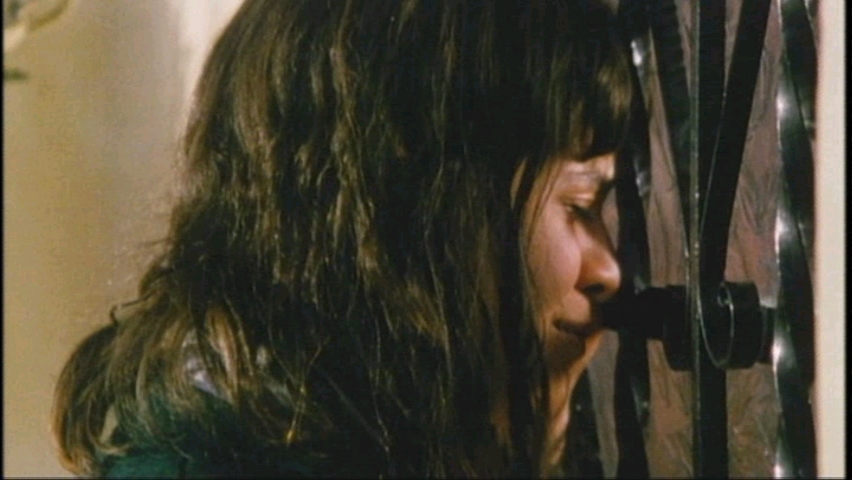


Todas las puertas y ventanas están cerradas con cadenas y candados para evitar que alguien entre. Cuando comienza a llover, Yessica se esconde bajo la escalera y se queda dormida.

Al día siguiente, Yessica logra llegar a la escuela, donde la madre de Miriam ya ha hablado con la directora acerca de los robos que ha cometido Yessica—el perfume de violetas y el dinero—y mandan llamar a Yessica a la dirección, pero dos de los miembros del personal se percatan de lo que le ha sucedido (sus rodillas tienen moretones y su cuello está sangrando).

Por fin alguien en la escuela admite lo que ha sucedido y le dice a Yessica "Nadie tiene el derecho de hacerte eso." Mientras que la chica está en la enfermería de la escuela, Miriam le avienta un avión de papel por la ventana con una nota que dice que se reúnan en el baño.


Yessica va al baño esperando una reunión con su amiga. En vez de eso, Miriam la insulta verbalmente repitiendo las palabras con las que se expresó su madre acerca de Yessica: ¡ratera, traidora, puta! Las dos chicas están muy enojadas y comienzan a pelear, culminando trágicamente en la muerte de Miriam cuando se cae y se golpea la cabeza con la taza del baño.


Yessica se escapa y se dirige a la casa de Miriam donde se acuesta en su cama.

Cuando la madre de Miriam regresa a casa esa noche, encuentra la puerta entreabierta y se preocupa por su hija hasta que ve que su cama está ocupada. Se acuesta al lado de Yessica, quien está completamente cubierta con una cobija en la oscuridad. La madre se siente aliviada de ver que su hija está en casa, sana y salva porque piensa que la persona en la cama es Miriam. La película termina con el teléfono timbrando, es la llamada de alguien en la escuela para darle la noticia acerca de la horrible muerte de su hija.


Discusión

Perfume de Violetas es un filme depresivo y casi nihilista. Ciertamente es un ejemplo extremo del cine negro, si bien se sitúa en la Ciudad de México, donde la corrupción cubre la historia por completo. La única persona entre todos los personajes que es completamente inocente es Miriam, quien muere asesinada como resultado de todas las fuerzas malignas que la rodean.

¿Cómo se hubiera podido prevenir esta tragedia? Tal vez si Yessica hubiera denunciado la primera violación tan pronto como sucedió. No lo hizo porque vivía en una cultura donde se asume que la culpa es de las mujeres quienes deben aceptar cualquier cosa de parte de los hombres. El comportamiento de las mujeres hacia otras mujeres a través de la película nos revela que ellas también han sido infectadas con el insidioso sexismo.

Mi reacción inicial a este filme fue que el final es exagerado e incluso siniestro, estirando nuestra credulidad más allá del punto de ruptura. El desenlace de hecho me recordó mucho al que es probablemente mi filme noir favorito (¡también en centelleante tecnicolor!): Plein Soleil [Purple Noon] (1960), dirigido por René Clément.

El trauma que experimentará la madre de Miriam al darse cuenta que la chica en la cama de su hija no es Miriam, quien de hecho está muerta, es verdaderamente difícil de imaginar.

La película está bien hecha y tiene un buen ritmo, cubriendo una impresionante cantidad de temas en tan solo 90 minutos. Claramente es una producción de bajo presupuesto pero está bien dirigida y las actuaciones también son muy buenas. También quedé impresionada con la ingeniosa selección de música. Mi queja principal acerca del filme fue solamente que la trama es tan terrible que es poco realista. Me quedé en estado de shock al enterarme en IMDB.com (la base de datos de películas en internet) que Perfume de Violetas  está basada en una historia real. Así que aunque la historia sea poco realista, resulta que los eventos que nos presenta realmente sucedieron, lo que hace que sea todavía más horrible.

Perfume de Violetas es una obra importante. Resalta las condiciones de vida de los pobres y de la clase trabajadora en la Ciudad de México y sigue la tradición de los autores de filmes en español como Luis Buñuel, quien durante su estancia en México dirigió Los Olvidados  (1950), un filme crudo en blanco y negro que también trata acerca de la situación apremiante de los pobres en la Ciudad de México pero se trata de gente en peores condiciones que Miriam o Yessica (y sin acceso al conocimiento o a los perfumes). Las Hurdes  (1933), dirigida por Buñuel en España también trata sobre un nivel de pobreza más bajo que el que se presenta en Perfume de Violetas.

En esta película el perfume juega un rol importante. El perfume es lo primero que atrae a Yessica de Miriam—o más bien el aroma de su cabello, que ella se lavaba con jabón de violetas. El perfume sirve como un medio a través de la historia por el cual Yessica escapa de su condición sórdida a un mundo de delicias olfativas.


El perfume representa la promesa y la esperanza. También mitiga el dolor de la chica violada. Después de haber sido violada, Yessica intenta reponerse y se niega a derrumbarse, acercándose al perfume para escapar a un mundo de fantasía en donde la maldad de la gente que la maltrata no existe.


El perfume también sirve como tentación. Yessica roba una pequeña botella de perfume de violetas del quiosco porque lo desea, pero no tiene el dinero para comprárselo. De esta forma, el perfume es una fuente potencial de peligro, ya que provoca que Yessica actúe en formas que afectan lo mejor que ha tenido hasta ahora en su vida: la amistad con una chica tierna y amable que es tan inocente que todavía  no hace distinciones sociales y económicas entre la gente.

Miriam acepta a Yessica como es, sin cuestionarse si ella está "del lado equivocado," por así decirlo. Incluso cuando Yessica lastima a Miriam en varias ocasiones, ella la perdona. Pero al final, no solamente pierde su amistad con ella y es por esto que este fime es tan nihilista. La esperanza y la belleza quedan destruídas, como cuando la madre enojada de Yessica rompe la botella de perfume, tirándolo al suelo en un despliegue de ira sin sentido. Prácticamente a través de esta acción le dice a su hija que no tiene derecho a tener un perfume porque ellos son pobres.

¿Cuál es el punto de este filme, para los perfumistas privilegiados como nosotros para quienes la única preocupación monetaria risible es si podemos comprar el último lanzamiento super nicho? ¿Cómo debemos interpretar esta historia tan perturbadora?

Para ser honesta, a veces me pregunto si no estamos viviendo en una gran burbuja perfumada. Cuando nos quejamos acerca del precio de un perfume o cuando discutimos entre nosotros sobre si la perfumería es un arte, estamos concediéndonos un lujo que está más allá de la realidad de la mayoría de la gente en el planeta y el de algunas personas cuyas condiciones se presentan en este filme que raya en lo obsceno.

A pesar de nuestro elevado estatus socioeconómico—como se puede evidenciar por el hecho de que podemos comprar perfumes y apreciarlos como un pasatiempo—nos parecemos a Yessica en nuestra fascinación con los perfumes. Estamos dispuestos a abstenernos de otras cosas, para poder comprar nuestros perfumes tan codiciados. Pero también hay un mensaje positivo.

Realmente, disfrutamos el perfume precisamente de la misma manera en que Yessica lo hace. El perfume es una fuente de placer para nosotros, como lo es para ella. ¿Importa que describamos esa fuente de placer de una manera u otra? ¿Por qué no podemos simplemente aceptar que el perfume nos produce placer? ¿Por qué tendría que haber algo más acerca de los perfumes? ¿Le tememos a nuestro propio hedonismo?

También a veces me pregunto si la energía dirigida hoy en día a defender la afirmación de que la perfumería es una de las bellas artes, no es desproporcionada en comparación con las consecuencias de tal opinión si se confirmara por unos cuantos de la élite. Obviamente la experiencia del perfume por parte de personas como Miriam y Yessica no cambiaría en lo más mínimo.

¿Cambiaría nuestra propia apreciación del perfume si lo describiéramos en los términos idealistas de alguna teoría difícil de comprender? Yo creo que no. Aún amaríamos a los perfumes precisamente por la misma razón y precisamente de la misma manera en que Yessica lo hace. ¿Por qué? Porque huele bien.


*Advertencia: Si te encuentras entre los millones de personas que están intentando desengancharse de los SSRIs— habiéndose percatado por lo menos de la dolorosa epifanía de que todo fue una trampa compleja concebida para llenar los bolsillos de los directores generales de Pharmafim y al mismo tiempo lograr que te calles—entonces te recomiendo que te mantengas muy alejado de este filme crudo y casi nihilístico.


Sunday, June 2, 2013

Coco sans Parfum


Reflections on Coco avant Chanel  (2009), 
directed by Anne Fontaine

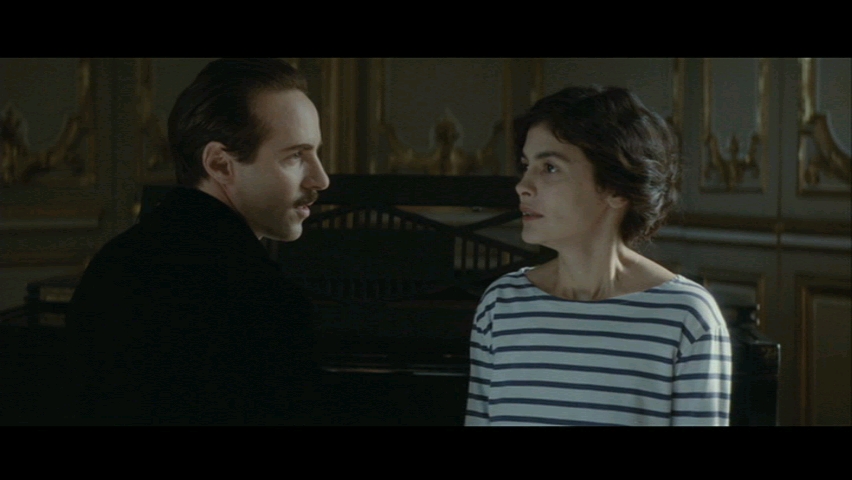
Historical fictions are tricky. Whether books or films, they play with and shape the facts in order to present a more pleasing work. The truth of what really happened may be sacrificed under the guise of poetic license. Because history is so complex, the decision to include or omit mention of certain parts of a story can completely change the overall portrait of controversial figures such as Gabrielle “Coco” Chanel. Before watching Coco avant Chanel, one of three films about the fashion designer released at about the same time (around 2009), I knew nearly nothing about her. This version of the story, in which Audrey Tatou plays the lead role, focuses on a simple idea: after her mother's death, little Coco was consigned by her father to an orphanage where she was raised by nuns. A single image of the young girl serves to determine the rest of the story:


Not much time is devoted to this segment of her life, but we learn that on visiting day, Coco would go wait outside for her father to come, which he never did. The image of this innocent child, devoid of any parental love and left to her own devices is referenced throughout the rest of the film.

Flashing forward to her young adulthood, Coco is singing at night for tips at a cabaret while working by day as a seamstress. She makes the acquaintance of Etienne Balsan, a rather boorish but extremely wealthy “old money” Frenchman, with whom she has a brief fling. 


Balsan arranges an audition for the young woman to obtain a regular position as entertainer, but Coco does not impress the judge with her performance. 

Her hopes of succeeding as a singer and dancer are dashed, and she returns to her apparent fate: to work as a seamstress.


When her sister (this is a composite character in the film, whose story does not accurately depict what happened) takes leave to live with a man whom she hopes to marry—though this seems unlikely ever to happen and indeed never happens, as a result of her membership in the French equivalent of an undesirable social caste—Coco decides to pay Etienne a visit at his estate, under the pretext that she is on the way to visit her sister and has decided to stop by. 


Needless to say, he is surprised to see her in this context, where she does not belong, as they met in the demimonde.


Chanel ends up staying at the Balsan estate as a live-in concubine whose true status is revealed when she is required to remain hidden from sight during parties with the social elites whom Balsan entertains. The arrangement is degrading, to put it mildly. 


Even when Balsan takes Coco to the horse races, he abandons her while he goes to sit with his upper-crust friends in the stands.


Probably the most shocking part of this arrangement is that Balsan “loans” Coco for the weekend to one of his British friends, Arthur “Boy” Capel, who has become slightly smitten with the attractive and obviously intelligent woman who has taken up residence chez Balsan. 


Coco and Arthur become romantically involved despite Balsan's presence during a costume party, and when they take off to the seashore, Coco begins to dream of life as the wife of this wonderful British nobleman, who far from hiding her away, puts her on display, taking her to dance at a fancy ball and treating her like a genuine lady rather than a low-class live-in domestic servant, as she is accustomed to being treated by Balsan.


Alas, Coco's dream is shortlived, as she is curtly apprised by Balsan that Capel is soon to be married to a high-society English lady. Arthur attempts to persuade Coco to believe that two people can be in love without marrying, and that his marriage is nothing more than a matter of social convention—from which he is apparently too weak to demur—but Coco is crushed by the news.


Coco's True Calling


Throughout her years at the Balsan estate, Chanel has been developing her unique pared-down, minimalist style, transforming men's clothes into innovative pieces for herself. By wearing these new creations, she flouts the reigning trends, which emphasize opulence and “busy” designs and patterns, perhaps most graphically illustrated by the huge hats being donned by women, but also by the obligatory corset worn by all true ladies.


Coco avant Chanel focuses on a couple of distinctive trends begun by the fashion designer, including the use of black, formerly restricted to mourning contexts, and the stripping out of excessive embellishment such as feathers and flowers. Chanel is portrayed in the film as a women's liberator of sorts, insisting that they should be able to breathe and move freely in their dresses. In several scenes she is depicted unlacing women's oppressive corsets.

In reality, according to other sources, Chanel's sympathies with women's liberation began and ended with the abolition of corsets. She paid her own workers very poorly, and when they complained, she remarked, "let them take lovers." She vehemently opposed unionization to the point where she preferred to withdraw from the fashion industry for a number of years rather than accede to the demands being made by her workers. All of this is omitted from the story as depicted in Coco avant Chanel, which ends up seeming more like a statement on the conditions of lower-class women in the early twentieth-century than a faithful portrait of Gabrielle Chanel.

In this film, the image of innocence is nursed from start to finish, and well-conveyed by Audrey Tatou, as she portrays a woman whose at times objectively disgraceful behavior is rendered comprehensible, and even a cause for sympathy, given her humble origins.


The truth is that Gabrielle Chanel would never have become a fashion icon had she been born into a family with money. She would have married a gentleman and borne his children, and we would know nothing of her today. Instead, she became associated with wealthy gentlemen who provided her with the means she needed to begin her own boutique in Paris. Coco avant Chanel skillfully presents the impediments to success to women in what until only recently has been a man's world, making Chanel's eventual triumph seem all the more remarkable.

In this film, Arthur Capel is credited with being the primary supporter and benefactor during Chanel's early years as a fashion designer. (In reality, it may have been Etienne Balsan, who is depicted as something of a scoundrel here.)  Despite Arthur's marriage to someone else, he is painted as the love of Chanel's life, and their affair continues torridly on. 


When Capel is killed in an untimely automobile accident, Coco plunges into despair.


The rest of the film portrays Chanel working indefatigably, apparently as an outlet to replace the lost love of her life. At the end she is presented as a strong and independent woman who never married because, it is strongly implied, she loved only one man, Arthur “Boy” Capel.


This, too, is a matter purely of poetic license, for we know for a fact that Coco Chanel had affairs with many other men. Indeed, in another film released also in 2009, Coco Chanel and Igor Stravinsky (to be reviewed here imminently), the fashion designer is portrayed as one of the inspirations and benefactors of the great composer! More infamously and less controversially (no one seems to know for sure whether Chanel ever had an intimate affair with Stravinsky), it is a matter of historical record that during the Nazi occupation of France, she lived in the Ritz Carleton hotel among German officers, one of whom was her lover for many years.


The Perfume Angle

What does any of this have to do with perfume? you may by now be wondering, and not without good reason. In fact, the word 'perfume' is nowhere pronounced in Coco avant Chanel. Nor is there is a single image of any woman (or man) reaching for a bottle of perfume. There are not even any images of bottles of perfume anywhere in sight—not even in the fancy boudoirs at the estate of Etienne Balsan. 


There is, however, one plausible candidate for perfume wearer in the story, Emilienne d'Alençon, an actress who has had a longer-term and somewhat higher-level affair with Etienne Balsan. This woman did exist in history, and was notorious for attaching herself to men of means, sometimes to the point of their ruin.


Rather than Coco telling Emilienne that “women have no business smelling like flowers,” in the story as depicted in the film, Coco designs streamlined hats for the flamboyant woman, in effect telling her that “women have no business wearing birds' nests on their head.” 


No mention is made of Emilienne reeking of violets or honeysuckle or any of the other soliflores which Chanel is reputed to have denounced during her design with perfumer Ernest Beaux of Chanel no 5.

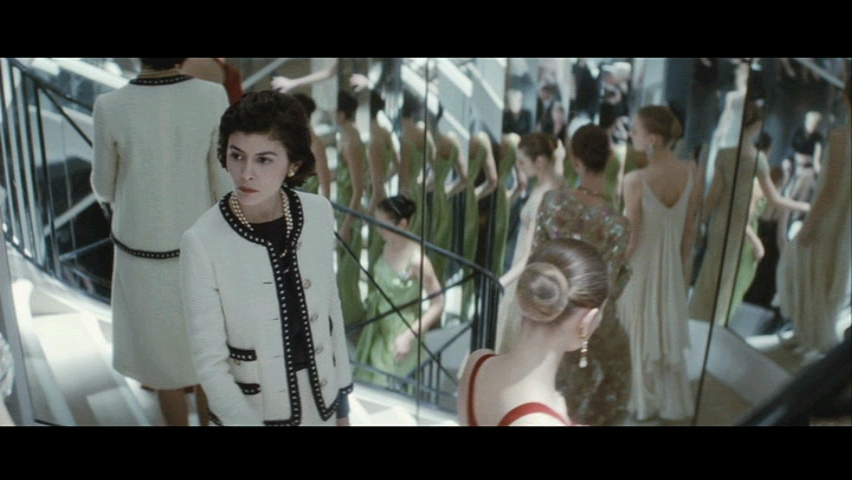
It is striking that there should be no mention of perfume whatsoever, though the film spans the duration of Gabrielle's life from her earliest days at the orphanage through the triumphant post-war comeback, where Chanel is shown inspecting her models from the vista of her famous mirrored staircase.


What are we to conclude? Someone ignorant about perfumery would come away from this film with no knowledge that Gabrielle Chanel brought into existence the most iconic perfume of the twentieth century. We perfumistas of course know this to be the case. Could a woman completely devoid of any interest in scent have done such a thing?


I should say that scent is not entirely absent from this film, as Coco is chain smoking in many of the scenes, from her days at the cabaret to her nights working alone in her atelier. While designing in her boutique, with customers present, she is repeatedly depicted with a cigarette dripping from her lip, to the point where one may not unreasonably wonder how an errant spark never caused the whole place to burn down in a blazing conflagration of black lace, silk, and wool.


Cigarette smoke has a strong and even overwhelming odor, which will modify, if not entirely mask, all subtle perfume. So one message which we could glean from this film, devoid though it is of any explicit mention of scent, is that when Chanel set about designing perfume, for her nose to be satisfied, it had to be a declarative, penetrating scent which would be detectable even in the presence of cigarette smoke. Perhaps therein lies the true reason why Chanel thought that women have no business smelling like flowers. A simple floral soliflore could never compete with the chimney stack of cigarette smoke which she was constantly pumping out!

Another message to take away from the omission of any mention whatsoever of Chanel no 5  is that Chanel was first and foremost a fashion designer, and perfume for her was a type of accessory. The fact that she farmed out her perfumery interest to the Wertheimer brothers would seem to corroborate that idea. Later, when Chanel no 5 became enormously successful, as a result of the marketing savvy of her partners, Coco attempted to reappropriate that part of her business, but her reasons appear to have been economic, not olfactory.

Perhaps the most obvious message to glean from the omission of any mention of perfume from Coco avant Chanel is that the director, Anne Fontaine, has no interest in perfume and so, to her, it seemed unnecessary to treat the topic at all in this version of the story. That a perfume-free film about Chanel could be made at all should serve as an important reminder to those of us ensconced within the subculture of perfume aficionados. There are countless people in the universe who do not care at all about perfume and find it even less interesting and valuable than fashion. Small wonder, then, that nearly no one takes it seriously as one of the beaux arts.


Wednesday, May 22, 2013

Between Charybdis and Scylla: Is There a Third Way?


The Professor's Signature Scent:
Escentric Molecules Molecule 01
Thurston Howell III's Signature Scent:
Creed Royal English Leather (vintage!)


???


The world of perfumery is swiftly transforming in so many ways that it is becoming progressively more difficult to navigate the territory, as it shifts constantly under one's feet. The once-independent designer houses have now nearly all been swallowed up by corporate giants such as Procter & Gamble, Coty, Estée Lauder, Elizabeth Arden, Puig, L'Oréal, and LVMH. Are the perfumes being produced by designer houses under the aegis of corporate masters more or less the same as they were before? Or have they essentially and irrevocably changed?

Perhaps no grand and sweeping generalizations can be made, but we can consider individual cases and may discover that the perfumes all being signed by one perfumer under LVMH but issuing from ostensibly distinct houses are converging in style. Similarly, we may take note of the convergence of Rochas and Patou under P&G, or that of Marc Jacobs and Calvin Klein under Coty Prestige.

Even while being conducted by publicly traded companies, the business of perfumery remains a secretive one, and it may not be possible to ascertain whether corporate suits get the final say on what happens after a perfume has been approved by the house's creative director. We really don't know. All that we can do is attempt to divine what is going on at P&G, Coty Prestige, LVMH, and the other corporations now in on the perfume business game. We can do this by considering the quality and type of perfumes being purveyed by the houses under their control.


The Skipper's Signature Scent:
P&G Old Spice

Recent restrictions placed by the IFRA on the use of what formerly were regarded as indispensable materials to the twentieth-century classic perfumes have produced a rash of reformulations, which may or may not have been undertaken first and foremost in order to comply with these industry standards. After all, reformulations were carried out by companies long before the IFRA began championing these restrictions—indeed, long before the IFRA existed.

All of this leads some critics to suspect that the IFRA serves the interests of those who stand to benefit from the progressively more abstract surrogates for natural materials being used in perfumery today. When self-appointed "experts" tout the allegedly superior quality of perfumes made with "abstract" florals, such as Estée Lauder Beyond Paradise, it is natural to be suspicious of their intentions, given the seemingly inexorable march forward in the twenty-first century toward maximum abstraction.

It's bound to be a lot less expensive to produce perfumes in a laboratory than it is to harvest tons of flower petals and extract from them the essence of the scent via a labor-intensive method such as enfleurage. Yes, abstract florals are superior from a purely business perspective, which sees only the bottom line. But our noses don't care about dollars and cents; they care about scents.


These sorts of fundamental changes—on the one hand, corporate control of houses; on the other other hand, a move to use more and more synthetic materials in modern perfumery—have generated a fair amount of disgruntlement among perfumistas and various kinds of response. Two very clear and distinct—and diametrically opposed—approaches have been marked out by a couple of my favorite perfume writers, Bryan Ross at From Pyrgos and Bigsly at Bigslyfragrance. If you have not yet had the pleasure of reading these gentlemen, I encourage you to visit their blogs where they have carefully and meticulously argued for their respective positions. I have certain sympathies with each of their approaches, but what I most love about reading them is that they offer so many intelligent reasons that I invariably find myself questioning my own beliefs and sometimes even swaying back and forth like a pendulum. It's great fun to read them because they disagree so deeply and yet both seem so eminently reasonable. It also does not hurt that they have excellent senses of humor...


Mr. Ross and Mr. Bigsly may not be philosophers by profession, but they are truly philosophical in spirit. They are what I call "olfactory truth seekers" because they relentlessly examine the state of perfumery through the application of their searching intellect to the many puzzles which arise as the terrain evolves incessantly. They are not engaging in this search for truth with any ulterior motive such as profit in mind. They are not shills, nor are they starf*cks. They call it as they see it, and although they disagree about nearly everything, they do so thoughtfully, offering reasons and adducing evidence for their bold contentions. It is refreshing to read what both of these thinkers have to say because, whether or not one agrees with their views, it cannot be denied that they are very well thought through.


I do not wish to summarize the perspectives of Bryan and Bigsly, only to encourage you to brew yourself up a stout cup of dark roast coffee and spend some time at their blogs. Here I prefer to generalize a bit, following the From Pyrgos and the Bigslyfragrance approaches to their farthest limits. I do not mean to suggest that the ideas which I shall discuss here are subscribed to precisely by either writer. In fact, the two approaches which I'd like to outline may be viewed as caricatures of sorts (hence, the selection of images, above...), lacking the subtlety to be found within their texts. My hope is to outline two general approaches which illustrate two different and very distinct tendencies: for and against sticking with tradition or, in the case of perfume, vintage.


That was then. This is now.


No one can deny that perfumery and perfumes have changed radically over the course of the past decade. Pre-Y2K perfumery arguably produced many if not mostly perfumes of integrity, which can be attributed in large part, in my view, to the very fact that they were composed over years by professional perfumers. Back then, a perfume launch was an event. Today, it is tantamount to a Tweet.


Post-Y2K perfumery is really all over the map, literally and figuratively. Not only has the perfumery branch of once-independent design houses been handed over to corporate giants, but at the same time, the niche scene has transformed beyond all recognition. Niche houses began, it is sometimes said, with L'Artisan Parfumeur back in the 1970s. At that time, "niche" meant “exclusive” and “difficult to find and access”. In the age of cybershopping, virtually nothing is difficult to find or access anymore. What, then, does it mean to be “niche”?


A further complicating factor is that at this point in history everyone and his mother, brother, cousin, and uncle appears to be jumping on the perfume business bandwagon, asserting their claim to a piece of the perfume pie as "creative directors" of “niche” firms. As a result, 'niche' has become more of a marketing term than anything else. Much niche (non-mainstream) perfume is relatively expensive, but the term can also be applied to some scattered houses offering less-expensive wares, including several of the traditional houses of France, some of which remain independent and based in and around Grasse. Houses such as Molinard and Fragonard appear to be overlooked by some snobs precisely because of the modest cost of their wares.


At the traditional and designer houses now under corporate control, such as LVMH-owned Guerlain and Christian Dior, there has been a radical increase in the number of launches, including seemingly endless lists of flankers and limited edition releases. In tandem, the number of new niche houses continues to augment, and each arrives on the scene touting the virtues and distinctness of their vision, with a slate of multiple, sometimes dozens of, perfumes. What to do?

One way of approaching the situation is to look back to the great classics, and track them down wherever they may be found. Vintage hunters spend untold amounts of time and energy in their quest for the treasure at the end of the rainbow. Often what they find is not gold but pyrite, but sometimes they have no way of knowing that this is the case because there is nothing to compare it to which might validate—or refute—the seller's claim to absolute integrity and authenticity. Nonetheless, the hunt continues.


Vintage hunting is to some a form of low-stakes gambling. Something about gambling appeals naturally to human beings, and for some people, hanging out at ebay and bidding in auctions is as much a form of entertainment as it is a way of acquiring vintage treasure. Of course, victory in this game is to have "scored" the rare and splendid jewel among the wide array of objects being sold there. Ebay has done a lot to make participation in the auctions a positive experience by implementing rules to prevent fraudulent transactions and protect consumers.

I have laid out the reasons for my skepticism about the general enterprise of hunting down remaining bottles of the vintage classics in The Question of Vintage. Probably my biggest concern regarding the hawks themselves is the very fact that people should be selling their supposed masterpieces and treasures at all. This implies that they are not great amateurs of perfume. But if they do not value perfume, then they may think that dilution or other other forms of tampering are perfectly fine. They may truly believe that “no one will notice” because they would not notice. Even stronger grounds for skepticism lie in the nature of the substances which make up perfumes: they degrade, and hence change, over time. It's anyone's guess what a perfume produced thirty years ago is going to smell like today, even if it was stored with the utmost vigilance and care.

Please note that I do not deny that, as a form of entertainment, ebay vintage hunting may have a value to the participant which transcends his or her ability to actually score great perfume. I have instead argued that there is something vaguely irrational about this hunt for treasure, given the nature, first, of perfumes, which fall apart over time; and second, sellers, who, being human beings, are subject to vices such as greed and unscrupulousness in their quest to maximize profit.

As a matter of fact, greed and unscrupulousness in the quest to maximize profit are the virtues of Gordon "Greed is Good" Gekko big corporate business types, precisely, I hasten to add, the types of people who head up conglomerates such as Procter & Gamble, Coty Prestige, Estée Lauder, Elizabeth Arden, Puig, L'Oréal, and LVMH. They, too, may not care about the products which they peddle. They, too, may think that it is “no big deal” to remove all of the natural components from the Guerlain Aqua Allegoria launches. “No one will notice,” the person who makes such calls may mutter to himself as he issues an executive decree, in the hope of improving the company's bottom line.

A generally realistic view of human nature would seem to imply that any skepticism which one harbors about the shady gray market operators who trade in now-discontinued, once-classic perfumes, should transfer directly to the purveyors of perfume by the once-independent but now corporate-conglomerate-ruled design houses. Greed and unscrupulousness are everywhere, my fragrant friends, when money is what is at stake.

I part company with both the vintage hunters and those who "believe in" the possibility of relaunches of the classics by the companies currently holding the keys to the safes where perfume formulas are stored. Call me a
cynic, but I trust neither the design houses under management by megacorporations, nor the peddlers of old vintage perfumes at ebay and elsewhere. And, with my solid background in chemistry, I found it preposterous that so few people acknowledge the reality of chemical degradation, which virtually guarantees that once-classic perfumes produced years ago are no longer the same.

Even when the peddlers are honest, they have no control over the condition of the perfumes which they peddle, which have changed hands many times over the course of the decades since the perfumes were produced, adding yet more cause for skepticism. As for the houses “under new management”: it's anyone's guess what the new boss thinks—or likes and values. Maybe he believes that Joy edp should be preserved in tact. Maybe he finds it stinky and will therefore order his minions to cut costs and “tame” the perfume in one fell reformulation.

We've seen plenty of blunders on the part LVMH, just to pick on them again. They discontinued nearly every Fendi perfume upon acquisition of that house. Clearly, someone did a miscalculation in cases such as Theorema. Perhaps the perfume did not do well because it was poorly distributed and marketed. Perhaps a more savvy marketing team could have squeezed some profit out of that beautiful perfume. No, the decision was made: destroy it. Now, if they announce that they are going to “bring back” Theorema, should we trust those very same decision makers? Or should we be skeptical that the same fools who axed the perfume in the first place (and therefore did not recognize its greatness), may also see nothing wrong with fobbing off a muzak version and calling it a relaunch of the original?

Who knows? Maybe the relaunches will be good. Once again, it's a numbers game, but when we see poor decision after poor decision being made by the powers that be (the renaming of Miss Dior Chérie as Miss Dior? Pray tell, whose call was that????), then it becomes less and less rational to believe that we should have any hope for anything that they will do in the future. This is not to deny outright that a relaunch might be good, but it is to predict, based on past behavior that it is not likely to be. That's just a question of probability based on prior experience. It's not irrational doom and gloom, it seems to me.

There are other possibilities as well. Should we perhaps hold out hope for tweaked relaunches of old classics and reformulations undertaken in order to appeal to new, modern sensibilities? This would seem to be an amalgamation of the vintage-valuing with the forward-looking approach, recognizing that "it's not 1988 anymore", but upholding the sanctity of the classics. The nature of consumerism has changed radically over the course of the past decade, with cybershopping achieving its furthest expression in the recent phenomenon of social shopping, made possible by the capitalization of sites such as Facebook and a general frenzy among cyberworld denizens to share with their "friends" everything they do, including buy.


Mrs. Howell's Signature Scent:
Why Chanel No 5, of course!


The same forward-looking attitude applies equally well, however, to the science of perfumery, as synthetic organic chemists endeavor to create new molecules for use in perfumes to supplant rare and expensive natural materials and also to create brand new scents. Indeed, the story of Chanel No 5 is that of a new idea applied to the perfume of its time. By adding aldehydes, never before successfully used (they had been used, but not widely), to a floral perfume, a classic icon of twentieth-century perfumery was born. Gabrielle Chanel proclaimed that women had no business smelling like flowers, and derided the “backwards” nineteenth-century soliflores dominating the perfume scene.


Maryann's Signature Scent:
Parfums Berdoues Violettes de Toulouse

There is a curious logical tension, it seems to me, in believing in the possibility of excellent relaunches of vintage classics, which seems to involve the very same nostalgia of which vintage hunters are sometimes accused. Should we really be wearing the perfumes of the twentieth century in the twenty-first century? Or is it not time to move on?

Like it or not, perfumery continues to march ahead and will soon be leaving "classics" such as Chanel No 5 behind—not only because using the precious jasmine of Grasse will be financially prohibitive from the perspective of the suits running the businesses, but also because consumers' preferences will continue to be transformed as new scents are created and widely marketed and disseminated in venues such as Sephora, which literally create tastes in mass market perfume.

Nowhere is the dependence of the range of perfumes available upon the whims of fashion—as molded by companies—better illustrated than in the current oud craze. The “need for oud” has been created out of nothing for people with no knowledge of that substance whatsoever by perfume companies! What next? Elves' sweat and fairies' breath?

The formidable forces of fashion explain how sweet laundry scents and gourmand and fruitchouli scents (in the model of Thierry Mugler Angel) before them flooded the market. Consumers came to view those types of scents as "appropriate" perfumes. The reason why people describe loud, megasillage perfumes as "so 1980s" is because back then people wore those scents, but very few people do today.

These changes took place not because Christian Dior Poison was objectively good twenty years ago and has now become objectively bad. No, this came about only because fashions change, and perfumery is part and parcel of fashion, as should be obvious by the very fact that so many clothing design houses launch perfumes as accessories of sorts, to embellish their line, not to replace it.

This also explains why designer after designer, beginning with Gabrielle Chanel, have handed over the perfumery end of their businesses to other parties to tend to. Fashion designers are first and foremost concerned with clothing, not perfume, so it is not that surprising that so many of them have handed over control of their perfumery branch to major corporations in the twenty-first century. From Calvin Klein to Fendi to Kenzo to Givenchy, Christian Dior, and Yves Saint Laurent, the perfumery end of things has been delegated to another entity, the multicorporate conglomerate.


The Third Way


If all of these people are selling their rights to control their perfume output, then whom ought we to trust? My view is that the way forward is not to hunt down decaying bottles of juice from times past, nor to hold out hope that the new corporate masters have any intrinsic interest in producing excellent perfume. The only people who really care about producing excellent perfume, in their heart of hearts, are perfumers. The third way which I propose today is to stick with the independents, where there really and truly is a perfumer in the house, not just a bunch of hired hack-chemists working under restrictions imposed upon them by their employer.


Independent perfumers offer us today the best hope of finding perfume which embodies the integrity found more often than not in early-twentieth century perfumery. Think about it: back then perfumers worked in small ateliers and both composed their elixirs and balanced their own books. They did not issue perfumes as frequently as Tweets. They invested time and energy in their creations rather than producing dozens of perfumes using combinatorial permutations of a set of fixed notes.


All of this may sound vaguely quaint in the twenty-first century, but independent perfumers represent the only case where we have rational grounds for believing that the fresh perfumes will not be either a con job (as in nasty, cheap, and insulting reformulations), or the creation of new tastes to shape a market solely for profit-making purposes (as in the case of launching the scents of laundry and personal hygiene products as perfumes).

There are no good reasons to cling religiously to vintage perfume nor to quixotically hope that the business people in charge of multicorporate conglomerates are somehow going to start caring more about matters olfactory than about their bottom line. Business is driven inexorably by a quest for profit. Nothing is sacred but the bottom line.

In making this proposal, I am emphatically not claiming that all niche houses are purveyors of excellent wares or perfumes of integrity, as I conceive of what all of us are really looking for in the end, whether we tend to look backward, forward, or around us right now. No, the niche scene is filled with façades in front of crass labs where, too, perfumes are being quickly composed and poured into fancy bottles and hyped in part by slapping on exorbitant price tags. So one must tread carefully in this realm as well. Many of the glut of current "niche" ventures will fold like a house of cards in a gust of wind, and their creative directors may move on to running fast-food franchises or selling real estate.


Nonetheless, within the vast sea of niche perfume being pumped out today, there are small islands of true perfumery, where people who are generally committed to producing beautiful things (and you may call them “artists” if you like, but you'll mean that in the pre-twentieth-century sense). That is where we are most likely to find the sorts of perfumes which vintage lovers remember and cherish as they slowly disappear, never to be replaced.

The Third Way, then, is not to look back to the past, nor to dream wistfully of the future, but to look into the true perfumers plying their trade at independent houses today. These people are much more believable than either the anonymous chemists composing at IFF or the “rock star” perfumers attaching their names to dozens of perfumes simultaneously across all categories. In many cases, “super-star” contracted perfumers appear to be signing off on perfumes which are then left to the chemists and accountants to modify with the aim of cutting costs. That would explain how some of the perfumes allegedly created by big names such as Calice Becker and Yann Vasnier are as mediocre as they come.

My advice, for those who wish to find the treasure at the end of the rainbow without having to travel back in time, and for those who are understandably skeptical about future “relaunches” of previously reformulated or discontinued perfumes—reformulated or discontinued in some cases by the very company claiming to be about to “bring them back”—is not to cling to the past, nor to hope for something logically possible but unlikely to occur. Instead, focus on the currently active and identifiable (not dead or anonymous) perfumers who run their own businesses and make their own creative decisions, over which no other person has veto power. There and there alone you will find the integrity of perfume still alive and well, and that is our best chance for finding great perfumes here and now, even today, in the ever-advancing age of abstraction.


Ginger's Signature Scent:
Keiko Mecheri A Fleur de Peau


Carpe Diem!


Screen captures were taken from Gilligan's Island, season 2, episodes 1 &2, 1965.

Sunday, May 19, 2013

Entry #19: A Philosophical Lexicon for Perfumistas


The Is-Ought Problem or Facts versus Values


From no matter of fact does any course of action follow. Descriptions do not produce prescriptions. Values must also be thrown into the mix. This is why it is impossible to argue someone into abiding by morality. They must already affirm the value of a moral perspective, and if they do not appreciate the value of morality, then nothing you can say will convert them to your view. You can show them pictures of atrocities and explain the negative consequences of acting immorally, but they will simply shrug their shoulders and say, "So what?" 

The same divisionor unbridgeable chasmbetween facts and values explains why you cannot talk anyone into loving or even liking something which they do not love or like. Many people would rather read a genre fiction "page turner" than an abstruse and labyrinthine multilayered and nonlinear nouveau roman. They may affirm the brilliance of the latter (if they understand it), but when it comes time to pick up a book to read onboard a plane en route to a land far away, they may select a paperback book from the bestsellers shelf.

In perfumery, you might recognize that a great deal of technical skill was needed to produce a given creation, but that alone will not make you like it. You might in fact detest it so much that you would never wear it. Nonetheless, we tend to think that the perfumes which we dislike are not good perfumes, because we consider our perceptions to be authoritative, and they areto us. 

"I know what I like" rings nowhere truer than in the realm of perfume, because at the end of the day, perfume is for wearing, and wearers have personal idiosyncracies and likes and dislikes which appear to determine their evaluations. Our values precede our experience of perfume, not the other way around. 

Philosophers usually talk about the "is-ought" problem as it applies in moral contexts. How can you convince a seasoned killer that what he does is wrong? In fact, you cannot. Once someone has already crossed over the line from within to beyond the pale, he may become even more inclined to do what he has already done in order to prove to himself that there was nothing wrong with what he already did. Indeed, it may be the very act of committing a moral transgression which converts some people to belief in amorality or immorality. 

Can the analogous thing happen with perfume? Can you force yourself to wear a perfume which you truly dislike initially to the point where it becomes familiar and somehow comforting to you? Can you habituate yourself to a scent which you did not initially like? I do not believe that an intrinsically unwearable perfume can work in this casesay something like Estée Lauder Intuition, which in my experience was so unpleasant that I actually returned the bottle for a refund at the counter where I had bought itThat is something which I nearly never do, but I could not bear the thought of wearing Intuition again, as it was an experience akin to forcibly removing my toenails, which, needless to say, I would never choose to do.

However, I do believe that fragrances toward which we are more neutrally inclined are easy to become habituated to. That explains the tsunami of sweet laundry and shampoo and conditioner scents which one finds littering the wall at Sephora these days. People are being slowly habituated to the idea that that sort of composition is perfume. It makes a lot of sense really, when you think about who's in on the perfume business game these days. Procter & Gamble, anyone? 

The very concept of perfume has been transforming as a result of the models being fobbed off on Joe and Jill Q. Consumer, who may go to purchase gifts for each other at Sephora and end up with an aquatic cologne for him and a pink fruity-floral fragrance for her, which they will wear until they are gone, at which point they'll go shopping again and look specifically for what they have already wornor something like it.

This explains, too, the culture shock on the part of perfumistas whose formative sniffing and wearing experiences pre-dated these new developments. Anyone who is old enough to remember what perfumes were like before the twenty-first century may simply deny that the aromachemical-heavy "stuff" being pumped out of vats into plastic-flower-capped bottles these days is perfume at all.

We are in the midst of a complete breakdown of perfume culture as a result of the fact that many perfumistas do remember the good old days, while at the same time, the ever-encroaching forces of abstraction engendered in part by the IFRA continue to act on everything produced in the mainstream realm. 

Returning to the "is-ought" problem, the fact that many women's fragrances are abstract, pink, fruity-floral fragrances does not imply that they should be. But they are. The question remains: what to do? This is a very deep question which divides perfumistas into two camps well-represented by savvy perfume writers Bryan Ross at From Pyrgos and Bigsly at bigslyfragrance.com. In the not-too-distant future, I'll take up their debate and attempt to navigate a third way between their two seemingly incompatible and irreconcilable approaches. 

Stay tuned... 

Thursday, May 16, 2013

Entry #18: A Philosophical Lexicon for Perfumistas


Non-contradiction, the Law of Non-contradiction

I have an uncanny knack for eliciting people's capacity to contradict themselves. This tendency goes way back. In sixth grade, I corrected my English teacher's grammar, and she slapped my face in response. That put a real damper on my motivation to do any school work or to participate in any way in any intellectual activity. By the time I reached high school, I was doing no homework whatsoever, having diverted my energies to "other priorities," as former U.S. Vice President Dick Cheney would say. It took me quite a few years to muster up the wherewithal to begin applying my intellect to the world once again. What I have found since then, repeatedly, is that lots of people contradict themselves, and the more power they have, the worse their behavior tends to be upon being confronted with their contradictions. My sixth grade English teacher does not hold a candle to some of what I have seen.

Socrates did a lot of this sort of thing, and look where it got him: a goblet of hemlock! To be honest, I believe that Socrates committed suicide, since there is no historical evidence that anyone forced his mouth open and poured the liquid down his throat. We know that he could have simply departed, moved to a different place, but I think that by that stage of his life, he probably realized that his legacy would be best served by a small act of martyrdom: all in the name of the law of noncontradiction.


It cannot be the case both that p and that not-p 
at the same time and in the same way.


or for those who prefer symbols:


~(p &~p)


The law of non-contradiction is the skeptic's bestand only!theoretical friend. The skeptic can question everything under the sun, but the law of non-contradiction is the basis for all criticism, so it cannot be abandoned without lapsing into complete and utter dysfunctional insanity. No, I have not tried. The law of non-contradiction is an article of faith which I am proud to hold high, as the sole irrefutable proposition in all of space and time.

What are the perfume applications of the law of noncontradiction? Every single act of criticism depends upon this law, and while we may not know whether p or not-p is true, we can be sure that both of them cannot be at the same time.

Has Mitsouko been reformulated or has it not? p or not-p? Since this is an exclusive and exhaustive disjunction, one or the other must be the case. Guerlain and most other companies have not denied that they reformulated their perfumes, but when they claim at one point in time that they reformulated as a result of the need to comply with the restrictions placed on the perfume industry by the IFRA, and then, later on down the line, that they will soon be restoring the former classic to its original state, something has to give. 

I've encountered other self-contradictions in the perfume world as well. The Holey[sic] Book is marketed as a work of criticism, so presumably its authors value criticism, no? The answer, I'm afraid, is "no." Their goons travel to the ends of the internet to quash criticism of criticism wherever it may appear, what on its face is a flagrant contradiction. 

Not so fast, sherapop. Perhaps the authors are not really critics after all. Perhaps they are only masquerading as critics, which resolves the apparent contradiction in one fell swoop! They do not value criticism in the first place, so it is not a contradiction for them to revile criticism of criticism, since they probably think that it is twice as bad!

A third example: a fragrance community website claims to uphold freedom of expression, but then arbitrarily censors at the caprice of some of its members. This would seem to be a genuine contradiction. In order fully and truly to uphold freedom of expression, you have to accept what you take to be the good, the bad, and, yes, the ugly. To claim that one upholds freedom of expression, provided that the expression reflects one's own values and beliefs, does not demonstrate a commitment to freedom of expression. The real test of one's commitment to freedom of expression is how one reacts to expressions of ideas and values with which one disagrees...