Many
perfumistas assume that perfumery is obviously an art and that only
philistines continue to regard perfume as a toiletry on the same
level as mouthwash and deodorant. We know the names of the perfumers
who created our favorite elixirs, and we regard some of them in a
manner befitting of great artists.
It may seem undeniable that perfumery is an art, once one begins to reflect upon and understand what is involved in conceiving of and producing a perfume. At first, there is nothing but a bunch of random ingredients, and then suddenly there is a masterpiece. Who but an artist could effect such a magnificent change, equivalent to a grand creation act?
 |
| Jean-Claude Elléna |
Some
perfumers, including Jean-Claude Elléna, have
published reflections on their own work in book form. Others, including Andy Tauer, offer through their blog entries an intimate glimpse into the life of a
perfumer. The way these perfumers regard their own vocation seems
very similar if not identical to the perspective of artists in other
realms on their own work.
 |
| Andy Tauer |
I
for one am fully prepared to label such perfumers as artists. Do I
think that all perfumers are artists? Frankly, no, I do not. I
believe that many of the people who produce fragrances under the
auspices of huge corporations are industrial chemists who accept
assignments to do as their employer decrees, creating the sort of
scents which the company would like its products to bear, and permitting the
employer to critique and tweak those scents. All of this is done within the
bounds of a strict budget fully determined by the profit margin
expected from launching and marketing a certain product in a certain
way to a certain group of consumers.
There
have been industrial chemists working in such a capacity for
precisely so long as there have been scented products: laundry
detergent, furniture polish, bathroom cleaning products, and also
such items as lotions, shampoo and hair conditioner, diapers and
baby wipes.
All of these products have scents and those scents are
produced by chemists, who can be regarded as perfumers, in some
tenuous sense, but not in the way in which Jean-Claude Elléna and
Andy Tauer and all other independent perfumers who run their own
houses seem to be dedicated to the production of beautiful perfumes.
Creative directors such as Serge Lutens and Keiko Mecheri work in close collaboration with professional perfumers to produce compositions which realize the vision and reflect the values of the creative director. No less than are salaried chemists working for large corporations, such contracted perfumers are the subordinate employees of their creative director when they are hired for a project, whether a single perfume or an entire series of launches.


I am certainly prepared to assert that figures such as Serge Lutens and Keiko Mecheri are artists whose vision is elaborated through their enlistment of people technically adept at producing perfumes. Are the people who work with such creative directors also artists? The line become finer and finer it seems to me and depends ultimately upon the perfumer's own role in a particular case. If the perfumer is informing the director's aesthetic choices in a significant way, then perhaps he or she should be regarded as a co-creator in the perfume production process and, therefore, also an artist. Christopher Sheldrake would be one example.
Are
“creative directors” such as Britney Spears and Sarah Jessica
Parker and Paris Hilton and Queen Latifah and Mariah Carey and
Jennifer Aniston and Kate Moss and Heidi Klum and Halle Berry and
Madonna—and all of the other many celebrities who have launched
perfumes or even entire series of perfumes bearing their name—also
artists in the sense in which Serge Lutens and Keiko Mecheri seem to
be?
 This
seems dubious to me, in large part because the finished products tend
to fit into certain market molds and are probably more reflective of
fashions and trends than of the “creative director's” vision. Certainly
the perfumes produced in these people's names have met with their
approval, in some sense, but whether or not they are actively engaged
in the process, and to what extent, will differ from case to case. I
myself do not consider any performing artist to be an “olfactory
artist” simply for having launched a perfume.
This
seems dubious to me, in large part because the finished products tend
to fit into certain market molds and are probably more reflective of
fashions and trends than of the “creative director's” vision. Certainly
the perfumes produced in these people's names have met with their
approval, in some sense, but whether or not they are actively engaged
in the process, and to what extent, will differ from case to case. I
myself do not consider any performing artist to be an “olfactory
artist” simply for having launched a perfume.
One
reason for denying that celebrities are artists when it comes to
perfumery is that their intention in launching fragrances seems
diaphanously to be not only to make money, but also to further extend
and promote their own fame. This primary motive distinguishes celebrity
creative directors from those such as Serge Lutens and Keiko Mecheri,
whose intention appears to be to produce excellent perfume—in
addition, of course, to making money.
Anyone
who looks anywhere—whether among the niche and independent, or the
mainstream designer and celebrity houses—for pure, non-mercenary
intentions in today's perfume industry will be disappointed, it seems
to me. The distinction between artists, on the one hand, and
businesspeople and hacks, on the other, cannot be that the former
have no interest in earning money from what they do. Artists, too,
need to support themselves, so wishing to make money cannot be the
deciding factor. In addition, entrepreneurs such as Laurice Rahmé
of
Bond no 9 appear to enjoy not only creating excellent perfumes but
also running successful businesses.
What
is missing in the case of the non-artists, those who could just as
easily be running a supermarket chain as a perfume house, is a
priority given to producing a certain kind of perfume. It seems clear
to me that many launches are crassly mercenary, as are many
reformulations. Those perfumes are a cause for cynicism about the
status of perfumery as an art, at least as it is practiced in many
contexts.
Companies
such as Bath & Body Works and Victoria's Secret offer useful
examples. Such “houses”, if you will, regularly generate new
perfumes and nearly immediately discontinue them, to the
disappointment of the consumers who have come to appreciate them.
Consider the Parfums Intimes launch by Victoria's Secret of a series
of quite decent fragrances in 2009.
These
perfumes were among the best—as far as I've sniffed—ever produced
by Victoria's Secret. They were evidently a market flop, however, and
were abruptly discontinued not too long after they had been
launched—I believe that it was less than two years. Why were these
perfumes discontinued? In all likelihood because Victoria's Secret
customers are not, generally speaking, concerned so much with having
a refined perfumic quality in their fragrances. Many of them, not
being perfumistas, were probably not prepared to pay the MSRP of the
Parfums Intimes, which was initially $59 for 50ml. The price was
lowered somewhat after the initial launch, and two further members of the series, more in line with the fruity-floral tastes of the typical Victoria's Secret customer, were added to the original four launches, but these measures appear to
have been too little, too late.
Many
Victoria's Secret customers are perfectly happy with the Secret
Garden series, the non-prestige eaux de toilette which carry a
regular retail price of $12 for 30ml. During sale periods, which occur
many times each year, these (needless to say highly synthetic)
fragrances can be had for less than $5 a bottle.
Despite
the fact that the Parfums Intimes perfumes were really quite good,
relative to the Victoria's Secret standard line—and even their other
prestige fragrances, such as the Dream Angels series—they were
discontinued. Success on the market is the only criterion for perfume
survival, and this is why such a company seems to me to be primarily
a business, one which happens to offer fragrances, among many other
products, above all, in their case, lingerie. For Victoria's Secret,
perfume is but an accessory to their primary output: bras and
underwear. Accessories are optional and can be changed or eliminated
as soon as they prove not to be profit-worthy.
The
perfumers who work for companies such as Victoria's Secret and Bath &
Body Works seem to me to be for the most part industrial chemists,
although on occasion a famous nose is contracted for a special
launch. Whether a particular perfumer is an artist or perhaps more of
a chemist or technician will depend upon that person's approach and
orientation. Andy Tauer has a Ph.D. In chemistry, but that has not
stopped him from being an artist. The question becomes: what are
the criteria to apply in order to decide who is right and who is
wrong when not everyone unanimously agrees about the value of a
particular perfumer's output?
Is
Perfumery an Art Like the Others?
In
a recent comment here at the salon regarding the status of perfumery at the end of a post on the pre-Socratic philosophers Anaximander and Anaximenes,
Christos (of Memory of Scent) posed the following challenge to those
who would exalt perfumery as an art:
As far as art, I really do not think that everything can be turned into art. To turn back to the Greeks, they had defined what art is and of course new media have added the moving image in the form of cinema, video, performance to the list. But olfaction has always been there since the beginning of the human civilization. Where is the theory behind it to make it a real art? Of course there are levels of creation and not all perfumers are made equal but I need to be convinced that a common language to express and critique perfume can be created before I believe it is true art.
The
more I reflect upon these incisive words, the more I recognize that
there really does seem to be a problem here. Perfume critics and
reviewers all seem to have very declarative and forceful opinions
about the perfumes which they sniff, but are they ever really
offering any genuine aesthetic criticism? Are they doing anything
more than expressing their personal likes and dislikes in the manner
in which one may express one's personal taste by praising or
denouncing anchovies or or a certain brand of black licorice?
My
skepticism about this question was further piqued by Chandler Burr's
repeated allusion to Alberto Morillas as an “olfactory artist”
during the revelation of the identity of S01E02, the second episode
of the first Untitled Series, which turned out to be Thierry Mugler's
Cologne.
I correctly guessed the perfumer's identity in a post at Open Sky in mid-July
2012, and the name of the perfume in a post at Fragrantica,
but my reasons for guessing Morillas were certainly not Burr's reason for substituting the
locution 'olfactory artist' where one might normally use the term
'perfumer'.
Burr
is evidently keen to underscore the status of perfumery as an art to
people who might not yet already believe, but I wonder whether he
thought through the implications of referring to Morillas repeatedly
as an “olfactory artist” during the discussion with Katie
Puckrick about S01E02. By saying that Morillas is an “olfactory
artist,” not just a perfumer, is Burr not implying that only some
perfumers are olfactory artists? In other words, by making this
distinction, Burr appears to be claiming that all olfactory artists
are perfumers, but some perfumers are not olfactory artists.
The
curious thing about this distinction is that Morillas is precisely
the sort of perfumer whom one might consider to be an industry hack,
someone who has worked for dozens of different companies on many
different projects and within the bounds of tight budget constraints
imposed upon the projects and according to the specifications of the
client. Certainly this sounds much more like a professional craftsman
or technician than an artist,
at least how we understand that word today.
In
the contemporary world, fine artists are typically distinguished from
the sorts of people who work for companies in ways intended to
increase their profits. So the people who write jingles for
television commercials are not generally regarded as poets—at least
not for this particular type of textual output. The people who design
ads for the weekly grocery circular are not usually regarded as
visual artists—though they may of course be in the privacy of their
own homes or in other spheres. The people who write music for movies
may or may not be regarded as great composers—depending upon what
else they do and also the quality of the movies for which they
produce scores.
On
analogy, the perfumers who compose for Bvlgari, Calvin Klein, Carolina Herrera, Cartier, Giorgio Armani, Kenzo, Thierry
Mugler, et al., are clearly helping those companies to
fill in their perfume portfolio, so to speak. The paramount goal in
hiring a perfumer is to make money, not to produce works of art.
A
recent article in Daily Finance, "Behind the Spritz," shows the somewhat alarming breakdown of
the cost of a mainstream bottle of perfume with a MSRP of $100. Without
delving into the details here, suffice it to say that the bulk of the money is poured into the management and presentation of the product, with only a pittance poured
into the actual bottle (which, at $6, typically costs three times more than the juice inside, averaging $2!). All of the effort put into distribution, presentation, and sales is made in order to get the bottle onto as many people's vanity trays as possible, what is naturally facilitated through the use of advertisements which seduce consumers into
believing that this is the perfume to use.
What
is curious about the identification of Alberto Morillas as an
olfactory artist rather than a commissioned perfumer is that he is
famous precisely for having created perfumes which have earned
billions of dollars for companies in the perfume industry. But does
this not suggest that Morillas is closer to a best-selling author
than he is to a writer of timeless literary works? Best-selling
authors abound at any moment in time—there is, after all, always a
best seller list, so someone must be on it! A big part of these
writers' success is due to the aggressive promotion of their works by
publishers. In reality, only a tiny fraction of even wildly popular
and financially successful authors achieve posthumous renown. In the
case of perfumery, posthumous renown would seem to be virtually
impossible, because perfume, like its creator, eventually evaporates
away.
A further problem with the “Alberto Morillas has earned the perfume industry billions of dollars” rationale for labeling him an “olfactory artist” is that, by that criterion, if Britney Spears keeps on her current fragrance launch trajectory, she, too, will one day be hailed as an “olfactory artist”!
Now,
one could say that Chandler Burr is simply attempting to shore up his
credentials as the curator of olfactory art at the Museum of Art and Design (in New York), which is a cynical but not
unrealistic view of the matter. Another tack to take would be to say
that in fact all perfumers are olfactory artists, but this seems
quite dubious to me, for the reasons given above. It seems quite
clear that some persons working in the perfume industry and directly engaged in the creation of new fragrances are consciously catering to and even helping companies to shape certain market niches, in part through the
use of marketing surveys and studies, among other techniques.
There
are obviously people creating sweet laundry and shampoo and
conditioner scents, all of which is a part of what might be termed
the “personal hygiene turn” currently under way in perfumery. I
wonder whether the house of Clean was not in some ways visionary, if
not revolutionary, in predicting what sorts of scents people would be
ready to buy in the aftermath of the post-Angel
wave of cloying sweet patchouli perfumes. There is only so much sweet
patchouli and skank that people are willing to tolerate: at some
point they just want to smell clean.
Now,
we can call anything we like by any name we choose. But the point
Christos made so insightfully is that there is a distinction between
an art which is actually susceptible of criticism and one which is
not. This leads us directly to the core question: are there or can
there be principles of perfume criticism, or are judgments of
perfumes all and only a matter of taste?
What
might principles of perfume criticism look like?
Here
are a few candidates which one might consider from a random selection
of entries in The Holey[sic] Book (misleadingly published under the
title Perfumes:
The A-Z Guide), by Luca Turin and Tania Sanchez:
As
regular visitors to the salon de parfum are fully aware, I am of the
opinion that the negative reviews in The Holey[sic] Book are, in a phrase:
solitary, poor, nasty, brutish, and short
Overeducated readers will immediately recognize that I have indeed
invoked, and not without reason, Thomas Hobbes' famous phrase for
describing life in the state of nature, that is, before the
establishment of civil society.
 |
| Thomas Hobbes, author of Leviathan |
Turin
and Sanchez certainly have strong opinions, and, like trash talk
television pundits, they are not afraid to express them. However, I
do not believe that their texts reflect anything even approaching
principles of aesthetic criticism. Why not? you may ask. Because their very own
criteria change from review to review. This would seem to imply that their judgments are based not on principles but personal taste and loyalties.
So, for example, longevity and projection are good, if the perfume is already liked by the authors. Longevity and projection are bad, if the perfume is disliked. Longevity and projection, therefore, cannot be criteria for distinguishing between good and bad perfumes. (Compare the reviews of Guerlain Insolence edp [5 stars] and Keiko Mecheri Loukhoum [1 star] to see this.)
Again,
some perfumes are blasted for claiming to be what they are not. In
other cases, such inaccuracy is taken in stride, because the authors
already happen to like what they sniff. Truth in naming is therefore
not a criterion. (Compare the reviews of Ambra
di Venezia
[4 stars] and Balmain Ambre Gris [2 stars] to see this.)
Some
perfumes are dismissed as substandard for their synthetic materials;
others are hailed as masterpieces for the same. Glorious “abstract”
florals become “skeletal” when they figure in a perfume disliked
by the authors. (Compare the reviews of Esteé
Lauder Beyond
Paradise
[5 stars] and Bond no 9 Fashion
Avenue
[2 stars] to see this.)
Candyfloss
appears at times to be a bad thing, but in perfumes praised by the
authors, such as By Kilian Love,
created by Calice Becker, suddenly candyfloss is a good thing.
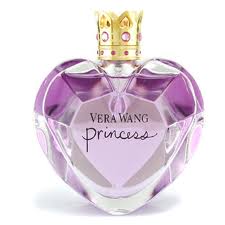
(Compare the reviews of Vera Wang Princess
[1 star] and By Kilian Love
[4 stars] to see this.)
But
even having been created by a perfumer praised by the authors
themselves as “great” cannot save a perfume which they happen to
hate. Dominique Ropion is said in some places to be a great perfumer,
yet he created perfumes upon which vicious invective is heaped, above
all: Givenchy Amarige
and Lalique Le
Parfum, each of which amazingly garners one star.
Again,
the “great” Alberto Morillas created Estée
Lauder Pleasures,
considered a masterpiece by the authors, but also Versace Bright
Crystal,
which garners one star and is denounced as a “nasty floral” and “hideously screechy.”
Those four words, in fact, exhaust the full content of the review of this
perfume by the “great” Alberto Morillas.
Bvlgari Blv
Notte,
also by Morillas, is criticized by Turin thus:
incompletely
worked out, as if the perfumer had hurried to the deadline and
submitted a pile of Post-its instead of a manuscript.
Of Carolina Herrera 212, yet another Morillas creation, Sanchez writes (and this is the entirety of the "review"):
harsh floral. Like getting lemon juice in a paper cut.
Being
a “great” perfumer clearly does not mean, according to the
authors of The Holey[sic] Book, that one creates great perfumes.
Another example: the “great” Mark Buxton is the explanation for
the four-star rating of low-brow juice factory perfume Salvador Dali
Laguna.
Unfortunately, he was somehow “throttled” to produce the
two-star Linari perfume Angelo
di Fiume, which, according to Turin, “has little to say and takes ages saying it.”
Even the perfumes of Buxton's own
eponymous house are dismissed as two-star mediocrity. But it's his
house, for heaven's sake! If this implies (as it seems to) that
Buxton is both the perfumer and the creative director, then how could
the “great” perfumer make such aesthetic mistakes?
Sophia Grojsman, also repeatedly identified as a great perfumer, somehow managed to produce the one-star disaster Estée Lauder Spellbound, denounced in these genteel terms: “Powerfully cloying and nauseating. Trails for miles. Frightens horses. Gets worse.” The two-word mnemonic which they confer upon this perfume is “medicated treacle.”
If Grojsman is one of the greatest living perfumers (which I do believe to be the case), then how
did she manage to produce such a horrid perfume according to the
authors of The Holey[sic] Book? That is the question, my fragrant
friends.
The identification of so many cases
of great perfumers producing allegedly nightmarish perfumes raises
two intertwined and rather vexing problems:
Should we believe the reviewers or
the perfumers when they come into radical conflict with one another
about the quality of a perfume? Clearly the perfumers do not regard
themselves as having produced dreck and swill. Clearly they do not
regard their own creations as “hilariously bad” or
“unconscionably hideous.” If the authors' opinions diverge
radically from the perfumer's own—say, in a case such as Mona di
Orio (may she rest in peace), whom should we, the readers, believe?
Why, moreover, should we believe
Turin and Sanchez when they say anything? If they are right that the
perfumers whom they proclaim to be great are truly great, then how
could they produce such awful perfumes? And if they are wrong in
their identification of great perfumers, then might they not also be
wrong in their judgment of perfumes?
I
would like to press this argument a bit further to make absolutely
clear precisely what it is that I am saying.
First,
there is no sense in which Turin and Sanchez have more
expertise about perfume than do perfumers themselves. Strikingly, I
recall that somewhere in The Holey[sic] Book, Turin even confesses to
having been a failure as a creative director at some point in his
personal history of perfume.
Second,
there is no sense in which the authors can be said have more passion for
perfume than people who have dedicated their very lives to its creation.
Therefore,
since knowledge of and enthusiasm for perfumery are the only alleged
qualifications of the authors, there is no reason to prioritize their
opinions above those of the perfumers whose creations they vilify.
Alas,
human beings are like sheep, who from time immemorial have been
following the lead of whoever steps forward with a megaphone and
yells louder than everyone else. This is how and why the opinions of
Turin and Sanchez have reverberated and echoed throughout the world
wide web as insecure acolytes parrot their words in an effort to show
that, yes, they agree with “the experts”. Sadly, many reviewers have also adopted their snarky, boorish style, mistaking nastiness for incisive critique.
The
Question of Credentials and Credibility
The
question of credentials was taken up recently in an excellent piece by Bryan Ross at From Pyrgos. Again, the crux of the issue can be
summed up in a single question: Why
should we believe that what Turin and Sanchez have to say about a
given perfume has any objective validity whatsoever?
As
I read through The Holey[sic] Book, with little knowledge about
either author, I occasionally bumped into remarks which piqued my
interest about who they were and what they had done to become world
renowned perfume experts. Consider these words written by Sanchez:
in
her review of Ellie D Ellie:
Sometimes
even the professional reviewer is baffled by too much information.
in
her review of Bond no 9 Fashion
Avenue:
I'm
always sure that some passionate botanist will phone me up on the
subject of one of these skeletal florals one day and howl, 'You
moron, it's obviously linden,' and my career will end, or something
like that.
I
often disagree with her most basic judgments about perfumes and
believe that some of her reviews contain factual errors (Bond no 9
Little
Italy
is marred by a big dose of civet???), but when I read the above,
self-referential remarks, which clearly indicate that Sanchez is a
perfume reviewer with a “career” at stake, I immediately googled
her name to find out where she had been gainfully employed as a
perfume writer before hooking up with Turin. Was she perhaps a staff
reviewer for the Los
Angeles Times?
Who knew?
In fact, I was unable to locate a
single piece of published writing by Ms. Sanchez pre-dating The
Holey[sic] Book or any evidence whatsoever that her “career” ever
had anything to do with perfume. Although she is sometimes referred
to by groupies (in forum threads at various sites) as a
“journalist”, I have also been unable to determine which news
service or paper she ever worked for—if any—as I could not locate
a single by-line for her anywhere.
I imagine that in centuries past,
people got away with these sorts of shenanigans far more easily.
Having once shamelessly promoted one's self through the use of
patently false claims, perhaps no one could complain so long as the
marketing campaign had achieved its aim, to catapult the liar to
fame.
Without delving into the question of
the morality of duplicity and deception, in the age of the internet,
publishing the above sorts of misleading—if not flatly
false—statements is highly imprudent. The fact is that, as
information has become more public, it has also become widely
accessible. People who are writers have publications. “Professional
perfume reviewers” have been paid to write perfume reviews. If
those supposed publications cannot be located anywhere, then they
never existed.
Here is an excerpt from a definition
in Webster's Third International Unabridged Dictionary:
fraud = an instance of an act of
trickery or deceit, especially when involving misrepresentation... a
person who is not what he pretends to be
Turning
now to
Turin, he appears to have attempted unsuccessfully to resurrect
someone else's vibrational theory of olfaction. Okay, fine. What does
that have to do with aesthetic judgment? Remarkably, Turin himself
owns that his nose is “average.” So why in the world should
anyone care what he thinks of any perfume? Even if it should turn out
to be the case that his pet theory of olfaction ends up being
vindicated—against all probability, it seems—this would not have
any bearing whatsoever on his status of as an aesthetic critic.
One
might wonder whether the credential situation is any better for
Chandler Burr, actually. He became famous in the perfume world in
part by writing, ironically enough, a book about Luca Turin! The
story of a frustrated scientist's obsession with and desperate quest to win a Nobel Prize? Really? Perhaps The Emperor
of Scent
will succeed in elucidating the source and full extent of Turin's
megalomania, but I must say that, although it is on my reading list
(I picked up a copy from Amazon for $2), it's not very high up in the
queue.
We
find ourselves in a situation here, my fragrant friends, where the
“experts” are appointing themselves and decreeing who “olfactory
artists” are and which perfumes are masterpieces and which are
disasters. But what, exactly, are the criteria being used to make
these pronouncements? The answer, I'm afraid, is that in each and
every case, the criteria are no more and no less than the subjective
tastes of those making the judgments, their alleged qualifications
being the sheer gumption to don the emperor's new (nonexistent)
robes!
What
if “The Experts” Disagree?
I
was delighted to learn that Chandler Burr had selected Prada Infusion d'Iris
as the first perfume for the Untitled series, S01E01. Why? Because I
hoped that Burr might thus be able to help to mend some of the damage
undoubtedly done to Daniela Andrier's name by the caustic
condemnation in The Holey[sic] Book of the entire perfumic output of
the house of Prada. (Honestly, if I were an attorney, the
slander/libel of perfumers throughout The Holey[sic] Book would be a
class action suit waiting to happen.)
But
here's the problem, for the question at hand: the few people
(essentially two, if we simply admit what by now seems obvious, that
Tania is no more and no less than Luca's rib) who have put themselves
forth as aesthetic experts in perfumery disagree
on the most fundamental question: whether a given perfume, in this
case, Prada Infusion
d'Iris
is any good at all! Let us be clear: Burr and Turin do not disagree
about why
this perfume is good or bad. They disagree about whether
it is good or bad!
 |
| "No!" |
 |
| "Yes!" |
Principles
or Taste?
Here
are the “principles” which I was able to glean from The
Holey[sic] Book: Turin
and Sanchez like the smell of rubber, sweaty musk, and peaches. They
do not care very much for roses. Rather than the golden mean or a
refined subtle quality (as found in the creations of Keiko Mecheri),
the authors prefer louder, more aggressive and extreme compositional styles (as are exemplified by some of the perfumes of the house of
Lush). They seem to be easily bored and would rather smell like
sneakers than amber. They harbor a deep-seated resentment toward
perfumers who charge prices which they regard as exorbitant (are they
really unaware that PERFUME IS NOT MILK?), and they are more
interested in originality of composition than they are in the quality
of materials.
This
is how a low-brow Parlux juice factory fragrance such as Jessica
Simpson Fancy
can garner three stars and Salvador Dali Laguna
four stars while high-quality perfumes produced by Mona di Orio or
Hermès—along
with many niche houses which use only the finest materials—receive
only one or two stars. The niche perfumes rejected by the authors as disasters often have broad
followings among perfumistas who regard them as great.
The
above gleaned “principles” are not principles of art criticism.
They are predilections and preferences. They are statements of the
authors' highly subjective tastes, no more and no less. If someone
were to read all of my reviews, he would learn that my personal
“principles” include a priority toward high-quality materials,
complex development, and good longevity and sillage. I appreciate subtlety and eschew histrionic excess. I am much less
interested than are Turin and Sanchez in who supposedly first came up
with the idea that a certain combination of notes would work well.
Frankly, I and many other perfume users could not care less who got
there first.
I
have a penchant for ambrette, violet, labdanum, benzoin, and roses, especially
in oriental compositions. I dislike rubber, plastic fruits, heavy
cumin, asafoetida, and sweaty musk. I would much rather smell like amber than sneakers. Another of my preferences—arbitrary though it may seem to
some—is to avoid fragrances boasting BHT among their ingredients.
In addition, because I appear to have a chemical incompatibility with
Alberto Morillas, whom I affectionately refer to as “Chemical
Albie,” I no longer blind buy any perfume created by him. Does this
mean that he is not an olfactory artist? No, it means that he is not
the perfumer for me. I and people who share my perfumic values wish
to smell beautiful, well-made perfumes which do not assault our
central nervous system and do not degenerate over the course of a
wear into some sort of noxious form of chemical waste.
We
all have our criteria for determining how to dispense with our
perfume wallet share, and those criteria explain why we favor the
works of this house or that, and we gravitate toward some perfumers
while eschewing others. But are these criteria ever anything more
than an expression of personal taste? That is the question, my
fragrant friends.
I
am fully prepared to be converted, if someone out there can step
forward and steer me toward whatever the principles of perfume
criticism are supposed to be. To this point, however, I have to say
that I'm with Christos: in thousands of years of perfume use, no
principles have ever emerged. Why should they now, in the
twenty-first century?
Can We Talk? About Perfume