Showing posts with label manifestos. Show all posts

Monday, December 17, 2012

STOP THE OUD MADNESS! An open letter to perfumers and perfumistas alike


My fragrant friends, I come to you today with an urgent matter requiring your immediate attention if we are to avert impending doom: 

the complete take-over of perfumery by the Oud Machine (hereafter, OM). 
You may find my warning alarmist, and I own that it is—as it must be, given the gravity of the crisis before us. Before I offer you the tools to extricate yourself from the insidious OM, let us review the facts. According to the Parfumo.net database:


  1. In 2006, no perfume was launched with the word oud in its name.

  1. In 2007, three perfumes were launched with the word oud  in their name.

  1. In 2008, thirteen perfumes were launched with the word oud  in their name, but all came from the houses of Montale, Mancera (more on the “M” connection, below...), or Ajmal.

  1. In 2009, twelve perfumes with the word oud in their name were launched, distributed over eight different houses.

  1. In 2011, all hell broke loose, with twenty-two oud-named perfumes launched by sixteen different houses

  1. In 2012, the numbers leapt to thirty-four oud-named perfumes launched by thirty different houses


I think that you can see where all of this is leading:


Scores of sheep flock together and head in the same direction
after being told by a sales associate in a niche emporium
that cool people wear oud perfumes.”

Three oud-perfume producing houses became eight, became ten, became sixteen, producing where there were none only five years earlier: thirty new oud perfumes!

Let's look at some of the mathematical series involved, selecting a few choice data points:

3——>8——>16——>34

The change in the numbers:

5——>8——>18

The next number in the series, those readers proficient at standardized tests will aver, is:

34

From there we can continue the series:

5——>8——>18——>34——>70——>138——>278——>564!!!!!!!

As you can see, within five years, the world will be literally awash in oud perfume. By the end of a decade, there will be an oud perfume purveyor on every corner, all asking for our precious wallet share, and what choice will we really have by then????

Yes, I'm afraid that the complete and utter homogenization of niche perfumery looms before us. The turning point may have been the admission of Estée Lauder and Jo Malone into the oud club. So now middle-class suburban housewives are wearing oud as well? Adding oud perfumes to their shopping carts along with their BB creams so that they can qualify for the latest GWP (gift with purchase) worth all of $1? What is this world coming to? I ask most sincerely.

I suppose that I should share with those of you who do not know that “BB creams” or Beauty Balms, too, were a capitalist-generated need now clamored for by all image-conscious women of the world. But let us return to the far more pressing matter at hand: the question of oud and the spectre of OM.


The Story of OM


Perfume tastes cycle, just like tastes in everything else fashion related. How else to explain the oft-wielded locution by younger perfumistas, Old Lady Perfume, used to denounce perfumes which the whippersnappers deem fit to be worn only by octogenarians rotting away in retirement homes? Proud wearers of so-called Old Lady Perfumes may smugly reply: “ignorance.” But do you really know anything whatsoever about what you do not know, aptly termed by former U.S. defense secretary and epistemologist Donald Rumsfeld, the “unknown unknowns”?

Our concern here is not with the question of Chanel no 5, whether it is as cool as Brad Pitt or as outmoded as Zsa Zsa Gabor. No, we have much stinkier odors to mask. Yes, the latest craze in perfume, which has yet to run its course and is gaining strength with each passing day, is in fact the basis of some of the stinkiest perfumes ever concocted on the face of the earth, to wit: oud.

In truth, we are being shepherded quite contradictorily from two sides simultaneously. At the mainstream designer level, we are being told to scent ourselves as though we were dryer sheets, shampoo and conditioner, or even household cleaning products, as the influence of industrial giants such as Procter & Gamble continues to swell unabated.

Yes, the perfumers creating scents for Oil of Olay face products are indeed the same perfumers creating scents for Pantene shampoo, and they also design pseudo-niche series of perfumes for the once independent houses now comprising but a thin page in the P&G portfolio. Will they survive? Does it even matter anymore?

If we stray from the designer herd, attempting to identify creativity and novelty in the niche arena, we find ourselves corralled more and more narrowly into yet another, perhaps even more insidious olfactory ghetto: the land of oud perfumes.


This clever plot has obviously been designed to secure our conformity with what we are told is desirable in perfume. But have we ever spent any time asking ourselves, in our heart of hearts, whether this is really true? Why in the world should we want to smell and waft of oud, pray tell?

I recently experienced something of an epiphany in this regard, which I am anxious to share with you O Not-so-gently Scented Reader. You may have reservations, having come to the conclusion—and not unjustifiably so—that “one person's epiphany is another person's hallucination.” And I do not deny that this is true. Fortunately, however, true epiphanies wear their veridicality on their face, and I was blessed to have been the recipient of one only just recently, which happens, not coincidentally, to bear on the topic at hand.

I was testing the latest oud creation to have found its way into my queue, Rosamunda, from the house of Laboratorio Olfattivo. It smelled good, and it smelled comfortingly familiar. Sure enough, it was that tried-and-true triad of rose, saffron, and oud rolled together once again and poured into a bottle to entice those of us by now accustomed—and drawn like iron filings to a magnet—to the scent.

My first reaction was: “Hmm.... smells like Bond no 9 New York Oud.” In my admittedly obsessive-compulsive quest for truth in reviewing, I decided to do a side-by-side test of the two perfumes. What did I find? I discovered that I preferred the Bond no 9. Why? Because it wafted much less of oud and much more of rose. Suddenly the truth flashed before my eyes like a javelin hurled down from the heavens by an angry God with no stock holdings in niche oud ventures:

Do I even like oud?

I was shocked, at first, by the question. I had spent many a review taking a house to task for producing what appeared to be an oudless oud perfume, but here I was at last confronted with the fact that in a comparison of two oud-boasting perfumes, I preferred the one with less, not more of the allegedly precious substance, which I had been incessantly indoctrinated by the OM to believe that I desire!

What, then, was the basis of my complaint in earlier reviews of oud-challenged oud perfumes, my fragrant friends? That the perfume in question, allegedly issued for we oud aficionados, was too oud weak to meet our oud need.

What oud need might that be? Why it's none other than the very one which was created by the launch of so many oud perfumes over the course of the past six years! First there were no oud perfumes. Today there are dozens, and they continue to proliferate as so many of us have been tricked by the OM—the most effective promulgator of propaganda since Goebbels himself—into believing that we not only want but in fact need oud.

We will travel to the ends of the cyber-world and pay exorbitant sums (relative to the price of other perfumes) to be able to sniff yet another new oud perfume, and to be thereby granted the privilege of bitching when the perfume inside an oud-labeled bottle contains nothing of the kind. Or so we think.

But do we really know this, in the first place? Many of the honest perfumistas among us must own that we have never been to Oman and do not expect to travel there anytime soon. Our concept of “oud” derives solely from what we have been presented as “oud” in perfume. This means that if rose, oud, and saffron are often rolled together in the same composition, we may find difficulty discerning the oud as an isolable note from the complex in which it is conveyed to our nose. And if we think that we don't, we may be deluding ourselves.

The devoted-to-oud reader may snort in response to my concern, to which I can only reply: the problem is much more profound than it may on its surface seem. Perhaps the art-mongers will own that perfume is subject to the whims of fashion no more and no less than anything else proposed to consumers by design houses. Perhaps they will not worry that they have been molded into oud-ingesters, always wanting more and more oud, never satiated, just as Marx and others so incisively diagnosed.


The truth, my fragrant friends, is that the proverbial wool of your very own coat has been pulled over your eyes, blinding you to the reality of what has been transpiring in niche perfumery over these past few years.


Is it too late to stop the OM? Has my little manifesto been for naught? I think not, my comrades-in-noses, but we must take action now, and we must do so swiftly, prepared to beat off those who would draw us back into the oud-herd once again.

For those stalwarth souls who are now ready to take back the oud-saturated night. I offer the following four-step program for recovery.


Saying “No” to the OM


It is high time for us to get our wits about us and nip this oud monster in the bud. Just say “No” to OM. The challenge before us may seem daunting, but a few guidelines may help you to win back your perfuming autonomy. If you are a perfumer, at last ready to break from the pseudo-niche herd, I encourage you, too, not only to cease and desist from producing oud perfumes but also to refrain from succumbing to what will no doubt remain the temptation to wear some of the oud stockpiled in the back room of your atelier. Please be forewarned that we will stop the OM, and when we do, you will want to be on the right side of history.

  1. Don't fall for the price trap—all that glitters of oud is not gold. Oud perfumes often cost more than the non-oud perfumes of the very same house. The first step, then, must be to refuse to pay the price being asked for über niche perfumes. Let niche be good enough for you. Don't be fooled by this little game, the suggestion that you get what you pay for. In the case of oud, my fragrant friends, you pay only to be enslaved by the OM.

  2. Temptation must be thwarted. When you espy a new oud offering, beckoning you from the counter of one of your customary niche emporium haunts, take a deep breath, count to eight, and walk slowly toward the door. Do not run, because you do not want to draw the attention of an SA, who may, and likely will, run after you to spritz you with a bit of the evil elixir, hoping that this will precipitate your return to the herd, that a few drops will cause you to throw open the oud floodgates, and your wallet, once again.

  3. Repeat after me: Rien n'est gratuit... [Nothing is free.] You will no doubt for the foreseeable future continue to receive “free” samples of oud perfumes from “generous” emporia and houses with new launches. Don't be fooled. Upon receiving one of these vials, proceed with dispatch and purpose to your kitchen sink, remove the lid from the vial, and pour the contents down the drain. This will be difficult at first, I am aware, but with time, and as your own sense of your perfumic autonomy slowly begins to return, you will become stronger and more determined with each vial emptied in a haughty show of disdain for the OM.

  4. Knowledge is power. Be ever vigilant of the forces at work behind the scenes of the OM. Everyone knows deep down inside that behind every Machine hides The Man, the puppetmaster pulling the strings. Is it a coincidence that in this case his name also happens to begin with the letter 'M'? I think not. The veritable flood of oud perfumes over the last few years has been yet another ingenious scheme on the part of The Man to convince perfume enthusiasts that they desire nothing more than Middle Eastern inspired oud perfume. 
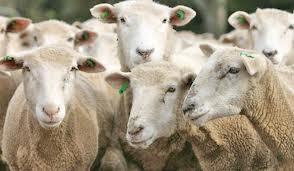


    But once the oud seed has been planted—like a tick, or a microchipit won't be long before the sheep all flock back to Montale/Mancera. Why? Because all oud roads lead ultimately to Montale, one way or the anagrammatically other. The Man's man on the ground, Ammar Atmeh is there to authenticate the perfumes being produced by the OM (not coincidentally located in OMan) as the real thing. That's right genuine oud perfumes, and in sufficiently high concentration so as to be detectable by even the marginally hyposmic nose, can be dependably found at one and only one house, and it does indeed begin with the letter 'M'.

So there you have it, my fragrant friends, the peculiar phenomenon of oudless oud perfumes, too, has as at its source The Man. As difficult to believe as it may be (not at all to the savvy shoppers among my readers, those who have studied up close the wily ways of capitalists, and devised ways to beat them at their own game), Monsieur M. has been sending oud-siphoning elves out to dilute the stores of oud juice at his competitors' houses the night before aliquots are to be measured and mixed into the final perfumes.

The results we have all seen—or rather sniffed—and we have indeed become, as was the intention of this ploy, ever more cynical, wary of the sheer possibility of finding a decent oud perfume produced by any house other than Montale/Mancera. I rest my case.

To those perfumers whose interest may have been piqued by my posting of pictures of their oud creations, I offer commiseration. Yes, I am afraid that you have become the feckless minions of The Man. Until today, you, too, were being tricked into complicity with the OM. Yes, lurking in the shadows of every machine, even those of which we have become unwitting cogs, stands The Man, whose covert actions keep it chugging along as though in perpetual motion, when in fact nothing could be further from the truth.

My dear, honorable perfumers, it is time for you to throw your own wrench into the OM's works. Just say “No” to future oud-perfume launches! Working together, as a team, we perfumistas and you, the perfumers not profitably affiliated with the OM, can take back the oud night, allowing creativity and autonomy to reign in the glorious universe of perfume once again.


Tuesday, October 23, 2012

Public Space and Private Perfume Preferences: Is There a Problem?


I have often been surprised at the fervor with which some people denounce the use of perfume in certain spaces, most often the workplace, where the perfume naysayers appear generally speaking to hold sway. As a perfume lover, I am inclined to bristle at the effective olfactory tyranny of some in response to the complaints of a few, usually people who claim to suffer from severe allergies, and some of whom probably do. I doubt, frankly, that all of them do, just as I doubt that all of the people these days who request gluten-free substitutions in restaurants are in fact afflicted with Celiac disease (wheat gluten intolerance), as its incidence in the general population is rather low (~1%).


One reason why I doubt that very many people suffer from allergies bad enough to make even a whiff of someone's fragrance a cause for undue strife or major illness is that many parts of the world in which we live, and especially cities, are chock-full of scents. I often poke fun at New York City, in particular, but if such hypersensitive persons were truly so severely allergic, then it would be miraculous that they should be able to survive in most any city, in the midst of so many smells, many of which are quite a bit more offensive and obnoxious, if not noxious, than even Christian Dior Poison or Thierry Mugler Angel, to name but two of the more notoriously over-applied perfumes still in rotation among perfume wearers today. 

Despite my skepticism about and consternation at the anti-perfume backlash, however, I must confess that a couple of cases cause me to pause before dousing myself with loud perfume and proceeding to waltz out the door to a library or other public venue.


The Case of the Stinky Homeless Man

When I first moved to Boston, I used to attend free movie night at Boston Public Library on Boylston Street, conveniently located a few blocks from the Prudential Center and Copley Square and accessible by the T (our subway system). The films screened were usually classics, and so it was basically like going to a theater without paying but also being afforded the opportunity to see something which was actually worth watching. Overall, it was a nice way in which to indulge my passion for classic films without spending any money, which was especially good in my case as I had moved to this city without first finding a job and was living only on savings at that time.


The lure of attending free movies in a public space was considerably greater back then, before I had acquired a large flat screen television to forever obviate the need and squelch what motivation I once had for leaving my humble abode in order to see worthwhile films. I hardly ever go to watch movies in public anymore, and I suspect that I am not alone, although some theaters are managing to survive, even in a world where DVD releases succeed new movie premieres in some cases by a matter of only weeks. Since acquiring an HDTV, I find it very difficult to muster up the motivation to make my way to public movie screenings, although art film events such as the Boston French Film festival at the Museum of Fine Arts occasionally coax me away from the comfort of my couch.

One of the most unforgettable aspects of watching movies on Wednesday nights at Boston Public Library was the spectre of the local homeless men, one of whom in particular would often come to the movie screening and bring with him his weeks—months? years?—of accumulated stench. On the occasions where he sat within a few rows or seats from me, it was necessary to relocate to another part of the room because the smell was simply unbearable. One night I was so nauseated that I actually left without seeing the film.

The failure to bathe sufficiently or frequently enough is certainly not the province only of homeless people, but it is probably true that transients, having neglected hygiene in some cases literally for years, tend to be the worst olfactory offenders in this regard. They do not appear to recognize the type or extent of the scent which follows them around, leaving permanent memory traces in some people's minds, including mine. There are other varieties of unpleasant human-generated scent, but in thinking about public spaces and the question of perfume, I find myself drawn over and over again to the analogy which unwashed persons represent.

On the one hand, no one has the right to force someone else to bathe more frequently than he chooses to. On the other hand, it seems antisocial and rude to foist the scent of one's unwashed body upon other persons in public places. The case of the homeless person who reeks unbearably of filth, sweat, dirt, and general body odor all mingled together to produce a noxious “perfume” of sorts is especially interesting to me because of the apparent lack of intention on the part of the person to offend. Instead, stinkiness is a natural consequence of a lifestyle which may or may not have been chosen by the offender himself.

I imagine that most homeless people have not freely and willfully chosen that lifestyle, although a small proportion of them may have. For the most part, they are down on their luck, in some cases unable to land or keep a job because of psychological and emotional troubles. Having spent whatever resources they once had, they now lead a day-to-day, animal-like existence, living hand to mouth at the mercy of sympathetic passersby.

Perfumed people who stink because of their choice of fragrance or because they have overapplied it have definitely made a conscious decision to scent themselves, the consequence of which is to offend some of those in their environs. But I do not believe that very many such people intentionally overapply their fragrance in order to offend other people. Instead, they seem closer to the homeless man who, as a result of having not showered in weeks, months, or even years, verily stinks.

I was first made aware of the reality of olfactory fatigue on a day when a former colleague did not complain about but complimented me on my perfume, Marc Jacobs, which I was entirely unable to detect on myself so late in the day. In fact, when she asked me what I was wearing, I had to think back to what I had applied that morning in order to be able to answer the question!

In a recent comment on Perfumes of Geography: What's in a Place Name? here at the salon, Pitbull Friend observed that Serge Lutens Muscs Koublai Khan could be accurately renamed “Eau de Homeless Person”! Many people of course like and choose to wear this perfume, so Pitbull Friend's pointed barb underscores the general problem of divergent reception of perfumes, caused by our different tastes, backgrounds, and sensitivities, and is one reason why the question of perfume and public space seems to me to be quite complex.

What is interesting in the cases of the overperfumed and the homeless person (or the person who wears a detectable application of Muscs Koublai Khan in the presence of Pitbull Friend!) is the paramount importance of the subjective experience of the various parties in question. The overperfumed person does not believe that she stinks any more than does the homeless man. In each of these cases, the unwitting culprit, if you will, has become habituated, inured to his or her scent. The perfumed person has been wearing her perfume faithfully, let us say, for some time and has developed a tolerance for it, leading her to apply more and more so that she herself can smell her own perfume. The effect for others may be not at all unlike the homeless man who decides to sit close to you at the movie theater, making it impossible to concentrate on what is happening on the screen—or even to breath.

At the same time, and as Pitbull Friend suggested in christening Muscs Koublai Khan with her own colorful moniker, one perfumista's treasure is another's trash, and one person's heaven sent scent is another's hell-engendered olfactory torture implement. The question, then, for perfumistas becomes: when we wear perfume in public spaces in the presence of persons for whom perfume is a source of unpleasantness on a par with what we find to be highly offensive body odor, are we conducting ourselves in the manner of the transient who pays no heed to the negative effects of his scent upon the noses of others? Having consciously chosen to perfume ourselves, are we not, however, culpable in a way in which the homeless man cannot really be said to be, at least if it is true that he did not freely choose his current deplorable living conditions—city streets and alleys—and his resultant state of filth?


The Anti-smoking Revolution


Second-hand smoke offers a second tinted lens through which to view the perfume and public space issue. Not so long ago, smokers ruled the day. Nonsmokers had to grin and bear it in restaurants and bars because the smokers, having purchased their cigarettes and pipes and cigars, had simultaneously purchased the power to use them where they wished. The powerful tobacco lobby acted to promote and perpetuate the sale of tobacco far and wide, creating nicotine addicts in such abundance that they were able to bind together in solidarity to effectively repel the complaints of the nonsmokers.

The power of the smoker bloc shrouded the weakness of its individual members—they could not live without the stuff—but they were supported in a capitalist system where whoever has the gold makes the rules, and tobacco growers and cigarette manufacturers managed to suppress legislative efforts to curb tobacco use. Second-hand smoke was an annoyance which nonsmokers simply had to tolerate.

There has been a complete about-face on the second-hand smoke issue as more and more people have been made acutely aware in recent years of the serious health hazards of smoking, and the number of smokers continues to dwindle. The medical costs of dealing with the health problems caused directly by smoking eventually became more of a motive force than even the profits enjoyed by tobacco growers and cancer-stick manufacturers.

Massive marketing campaigns and legislation requiring the visible printing of health advisories on all ads and packaging for tobacco products eventually gave rise to an increased consciousness among people about the scientifically documented dangers of smoking. As a result, the number and proportion of smokers in the general population has plummeted in recent times. 


A big part of this downward trend in the percentage of smokers, and the concomitant turning of the tables to accommodate nonsmokers, leaving smokers out in the cold—figuratively but also literally, as anyone living in a city with frost on the ground in wintertime can attest—can be credited to the levying by governments of taxes on tobacco products so steep that it has become prohibitively difficult even to become a smoker, requiring as it does a significant amount of cash on hand to do so.


I actually marvel at the fact that any poor people are smoking at all these days, given the prohibitive cost of doing so, and I'm not sure what explains the persistence of this habit beyond the ongoing perception of a sort of “coolness” still associated with this practice in some sectors of society. 


At the other end of the spectrum, the very people who really can still afford to smoke tend to be well-educated and aware of the dangers of developing an addiction to nicotine. Taken together, these forces—the generally improved information disseminated to potential smokers and the prohibitive cost of purchasing tobacco-laden implements of premature self-inflicted death—persuades many would-have-been smokers (in earlier decades) never to begin.


Perfume haters who lobby for the prohibition of perfume in public space are concerned that many of the chemicals used in fragrances today have been demonstrated to cause health hazards on a par with exposure to second-hand smoke. Their argument is that they should not be in the position of endangering their own health because of someone else's willful decision to don a substance which will pervade the air of any space in which she travels.

I am sympathetic to the concern on the part of some people to avoid some of the substances included in perfumes today. Many of the chemicals do have pretty ugly health profiles, and I eschew them in my own personal perfume use. The question, then, is: should someone who avoids BHT, for example, be subjected to exposure to the substance simply in order to indulge another person's aesthetic caprice?


One possible solution to this problem, from the wearer's end, is to refuse to wear poisonous perfumes. This way one can prevent poisoning not only one's self but also others. The problem remains: which fragrances are the toxic soups, and which are innocuous liquids? Nearly anyone has horror stories of encounters with perfumes which induce vague feelings of malaise or even acute neurological distress.  But are those the poisonous perfumes? 

Once again, in considering personal perfume reception, it appears that one person's poison is another's panacea! I myself literally shudder at the thought of applying Estée Lauder Intuition or Isabella Rossellini Manifesto to my skin. I actually think that I would prefer to have my toe nails forcibly removed than wear Intuition again. Other people wear those perfumes comfortably and even reach for them in anticipation of the enhancement which it will bring to their day. A chacun son corps!

Some among the perfumes which I love, on the other hand, may well make some other people cringe. However much we may all love our own favorite perfumes, we are wired somewhat differently, and this manifests itself not only in our radically different evaluations of the quality of perfumes but also in our willingness to wear them. All of us quite naturally avoid the perfumes which induce in us undue strife, despite in some cases the praise of other people of the very same creations as great. It simply does not matter how much artistry has gone into a fragrance which makes us feel physically ill. That is the ultimate test of a bad perfume, it seems to me: its inability to be worn. While that may be an entirely subjective judgment, it is nonetheless authoritative—to us.


Ethics or Etiquette?

I am fortunate to have a large selection of perfumes ranging from intense mega-sillage elixirs which I myself cannot even don with the hope of getting anything done, to light, skin scent-like colognes whose presence I barely detect, if at all. I realize that some people who complain about perfume are simply complaining for the sake of complaining, because they want people to jump at their beck and call and to modify their habits at their behest.

Nonetheless, I approach the question of public space scent from the most charitable possible vista. I assume that there really are people whose ability to function well may be severely impeded by what to them is perfume-infused air no less polluted than a room full of second-hand smoke. For this reason, I reserve my intense, big projection perfumes for use at home, where I can be sure that no one will be bothered by the scent.

At the same time, when I encounter someone wearing the metaphorical equivalent to “Eau de Homeless Person,” I make a concerted effort to “put daylight” between us, to invoke a phrase unforgettably ascribed to U.S. President Barack Obama by presidential candidate and former governor of Massachusetts Mitt Romney. I operate under the assumption that such people do not know any better when they behave in socially unacceptable ways.

I do not conduct myself thus only in order to avoid conflict. No, I have an ulterior motive as well. By exercising discretion in my choice of perfume in public spaces, I avoid giving the perfume haters more grist for their mill. Similarly, while assuming that over-perfumed persons do not know what they are doing, I do not voice my disapproval because I refuse to give the perfume police and anti-perfume activists more evidence for their view that all perfume should be banned from public spaces. Nothing of the sort is true, of course, so strategically speaking, this approach makes the most sense to me.

In saying all of this, I should clarify, by way of conclusion, that I do not believe this to be an ethical issue at all. I do not believe that other people's even poisonous perfume is inflicted on those around them in concentrations sufficient to cause them harm. At the same time, as I have remarked before and will no doubt again, it seems quite clear to me that there is no natural right to perfume. Perfume is a luxury, pure and simple, and we are fortunate to be among the small percentage of humanity capable of enjoying this luxury. It is a privilege, not a right to perfume one's self, and no one is wronged by being deprived of something which was never his right in the first place.

Because we are among the tiny, incredibly privileged portion of humanity to enjoy the opportunity to indulge in the perfuming of ourselves, we should do so with discretion in public spaces, ever aware that it is our honor to do so. We should hold ourselves to a higher standard than the homeless man at the library and comport ourselves with civility among our fellow human beings, whatever that may require, and even when their perceptions differ radically from our own. 


Tuesday, June 26, 2012

The Question of Tea: TGFOP Perfume Testing?


One feature of perfume which makes it difficult to compare to the beaux arts is that it is consumed and cannot be recaptured once it has dissipated into the cosmos. Attempts to immortalize perfume seem for this reason in some ways confused and ultimately doomed. Perfumes are born through the industry of perfumers and are introduced to us by houses, but unlike a piece of music or literature, a perfume is bound to come to an end, sooner or later, by its very nature. 

Perfumes change over time in a way that musical compositions and poems do not. Yes, such works will be interpreted variously by different people at different periods of time, determined in part by the peculiar cultural milieu in which they live, but the score or the text remains the same.

A great poem or piece of music may be discovered where it was left in a drawer by its author decades or even centuries after it was composed, but a bespoke perfume forgotten in a closet would no longer exist by the time its bottle was found after the same period of time. Having been created and produced by finite human beings out of equally exhaustible materials, every perfume will eventually meet with its own demise.


The well-meaning, if naïve, intention of those who conceived of the Osmothèque was to elevate perfumery to the status of poetry, music, and the other beaux arts. It is true that any art form which involves natural materials will eventually decompose—paintings, sculptures, architectural structures, … —but perfume is far more evanescent than all of the rest, being made of highly volatile molecules which will immediately evaporate if the bottle in which it is housed is left uncapped, and eventually decompose, even if the bottle is tightly sealed. Storing perfumes under argon gas may help to postpone the inevitable, but such a measure does not make the ultimate fate of a perfume any less inexorable.

Some perfumes' lifetimes are longer than others, but none is very long compared to the works of music and literature which have stood the test of time, and it requires a continuous, concerted effort on the part of someone somewhere to keep perfumes alive (in production). Like periodical publications—currently in crisis (no doubt to the great relief of trees everywhere)—a perfume requires a vigilant support system in order to persist.

Many magazines have folded in recent years due to insolvency. Even magazines with devoted readerships may abruptly shutter their offices when funding is suddenly withdrawn for no better reason than that the benefactors or producers have lost interest and decided to redirect their energy and financial support to other projects. The texts may of course be archived, but the magazine, as a thing in reality, ceases to exist, just as the leaves of a tree deprived of water will shrivel and dry, and ultimately die.

Perfumes, too, require a benefactor of sorts: a house willing to do what it takes to keep the perfume in production. In recent times, as small houses have been absorbed by large corporate conglomerates such as LVMH, Estée Lauder, and Procter & Gamble, the fate of a given perfume has come to have more to do with whether it makes business sense to maintain it than whether the creation has intrinsic aesthetic worth. One might have thought that no one could be so obtuse as to refuse to continue to produce a widely acclaimed perfume, one touted as a masterpiece, and yet this has happened and will no doubt continue to happen, perhaps with even greater frequency as corporations continue to expand, cordoning off more and more of perfume land.

The trend these days appears to be to focus more on heavily advertised mass market fragrances which sell not for their composition but for the appealing images which are tied to the products. The profligate production of flankers is best explained by the fact that they provide companies with a head start on marketing, being parasitic as they are on the namesake perfume and the images used to promote it. True, the visual images used in advertising perfumes are independent of the perfumes themselves, but through image-based marketing campaigns, consumers are persuaded to part with relatively large sums of money for even mediocre juice. Consumers are, in effect, paying more for the advertisements than they are for their perfume.

In the end, perfume is consumed, so the goal of marketers is to get people to buy a bottle, after which, if it is at all wearable, then the perfume will be used. This situation is similar to that depicted in Mondovino regarding wine. Once people have purchased a case of wine, then they will drink it, provided that it is potable.

In the case of perfume, having spritzed through a good 100ml, the wearer may find that it has become a part of his or her perfumed identity, and he or she may well purchase the same perfume again. Signature scents become signature scents through a process of habituation. As with wine, a certain type of perfume may be an acquired taste, but because human beings are naturally habit-forming creatures, our preferences can be molded by tastemakers who decree what we should wear or drink and persuade us to agree.


Why do people drink wine, and why do they drink tea?

While thinking about the tastemakers in Mondovino and the tastemakers in the world of perfume, it occurred to me that perfume use seems closer to tea than to wine when it comes down to actually consuming it. Why is that? Because tea and perfume do not alter one's state of mind in any debilitating way. There is no loss of lucidity in overimbibing tea or overapplying perfume.

In contrast, when one overindulges in wine, the price paid is a rapid loss of acuity, what can range from tipsiness and a slightly blurred or skewed vision of reality to the complete loss of consciousness. Some people handle alcohol better than others—one glass may enough to induce a drunken slur in some while others can single-handedly empty entire bottles—but everyone has a point beyond which they are no longer in complete control. That state of drunkenness—beyond which one is not permitted legally to drive—is not achieved through the use of perfume or tea alone. Indeed, caffeinated tea may well sharpen rather than dulling one's senses and wits.


I had a professor a while back (in California) who told me that he thought that wine connoisseurs were a bunch of alcoholics. I think that he was probably overgeneralizing, but surely there are some wine connoisseurs who are alcoholics, and certainly many people appreciate wine more for its effects on their mind than for the lingering taste on their palate. Or do they separate these two effects at all?

One might argue that a big part of the experience of tea, too, has to do with its felicitous provision of a source of caffeine, and that many tea drinkers imbibe their beverage of choice in part for the mental effects which they can expect to derive from doing so. True, there are people who drink only herbal infusions and decaffeinated teas, but many tea drinkers really do prefer good old stout black tea or a bracing cup of green, which strikes a balance between herbal and black, providing a medium-sized dose of caffeine.

Tea drinkers often have very specific loves and likes, and some of them are familiar with the many fine grades of darjeeling and assam, to say nothing of the thousands of other varieties of tea available on the market today. Still, I suspect that for many such tea drinkers, part of the joy of drinking tea is indeed the joy of achieving a state of caffeination—or recaffeination when it is consumed later in the day.


I recall asking at one point an Irish fellow what sorts of teas were found in Irish Breakfast blend, and he confidently (and endearingly) replied, “Black.” This is where most tea drinkers are found, among the teeming masses of people who think that “black tea” refers to a single thing in the universe. Green tea has recently come to be recognized as well, thanks to the aggressive marketing of it as a source of “antioxidants” said to stave off cancer, but here, too, the vast majority of people could not offer any help whatsoever if asked to describe the difference between gunpowder and sencha. Like George W. Bush, who once confused Sweden with Switzerland, most people could not even name the countries of origin of those two very different varieties of green tea.

My impression is that the vast majority of tea drinkers are of the unsophisticated variety, the millions of people who think that iced tea tastes only like the liquid produced using Lipton's instant iced tea powder, and many of whom believe that orange pekoe is a flavor of black tea (not a size of cut tea leaves). I would venture to guess that most people do in fact drink tea as a source of refreshment with enough caffeine to reinvigorate. They are not looking at tea for its aesthetic properties but for its functional benefits.


I may as well confess here that I happen to be a caffeine addict (or has it been obvious all along?), and so although I can accurately answer all of the above questions and many more, my development of an interest in tea was tied up with my need to ingest enough caffeine to make it through the second half of the day. At one point I was becoming very involved in tea drinking, learning what the acronyms TGF BOP1—(Tippy Golden Flowery Broken Orange Pekoe 1), CTC (Crush Tear Curl), and FTGFOP and all of the other arcane designations mean, and even writing reviews at one site—until I discovered that my negative reviews were deleted, at which point I stopped.


I was delighted to find that tea forms a lively subculture in Western society, and began ordering all sorts of varieties of black and green teas from all over the world, brought together for me felicitously by my favorite tea emporium. During my journey through the world of tea, I discovered that certain varieties work very well for me and taste delicious, while others are far less appealing.


I cannot drink oolong or jasmine teas, for example. Sadly, they induce in me a sort of gag reflex, not unlike my reaction to the sight or smell of canned spinach, or of rum and Coke. I'd love to know which chemicals in these teas—or which proportions—push me over the edge so as to have this effect on me, but in the end it does not really matter. Given the choice of a strong black assam, a grassy darjeeling or a flowery oolong, my choice will always be one of the first two and never, ever the third.

Could I develop a tolerance—and even a taste—for oolong and jasmine teas? I'm skeptical, to say the least, because the experience of drinking those varieties is so very unpleasant to me that I cannot imagine picking up the habit. Perhaps if I tricked myself by slowly mixing larger and larger portions of oolong with a darjeeling, I could reach the point where I was drinking 100% oolong. This very method is recommended to pet owners when changing from one to another dry food rejected by their beloved furry friend: mix a small amount in and keep increasing that amount until finally, at long last, the new food tastes like the right food and will be gobbled up as though it had never been changed.

In any case, to return to the ostensible topic of this post, the parallels between the world of tea and the world of perfume seem to me to be virtually limitless. Let us begin with the most basic attitudes toward each of these liquids. There are people who dislike tea. They do not drink it, even when it is the only beverage available. There are people who dislike perfume, and never wear it, whether because of allergies or simple distaste. The case of specific tea intolerance (such as mine to oolong and jasmine) seems very similar to me to specific cases of perfume intolerance. There are some notes which simply do not sit well with some people, and they will avoid them to the best of their ability, in order not to suffer undue strife. Some people, for example, steer clear of jasmine. I myself love jasmine perfumes, but there is no way that I would drink them!


There is a broad swath of ignorant people who use “tea” in the form of “black” tea bags filled with very inexpensive, cheap-tasting, low-grade tea, just as there is a broad swath of ignorant people who use mass-marketed perfumes which they buy not for the qualities of the perfumes but because they have been persuaded to do so through advertising. 


The bottle is often also a part of the lure.


At the same time, there is a small subculture of perfume lovers who have undertaken to explore the olfactory universe just because it is out there to be explored: a vast, uncharted territory to be conquered. These people love well-crafted perfumes and the many fine nuances and distinctions which make each particular perfume unique. These people interact with one another at perfume community websites and on blogs, and they select their perfumes not on the basis of marketing but because it passes their personal inspection and coheres with their general sense of olfactory aesthetics.


Determining which perfumes to purchase requires, for self-respecting perfumistas, testing, which is where it seems that wine tasting may be closer to what many tend actually to do. Connoisseurs of tea who know their general categories will simply buy small packets of tea to drink—that is, in fact the way to test tea: to brew it up and drink it.


Wine tasting and Perfume testing

Ideally, to give a perfume a fair chance, one should wear it for the entire duration of its development and persistence. How else can one ascertain a perfume's longevity, wearability, and general aesthetic appeal? To know whether a perfume is right for one's self, it would seem that one must wear it, on one's own skin, precisely as a tea connoisseur will drink a tea in order to determine whether it should be purchased in larger quantities.

In reality, perfume testing is often carried out in a rather abrupt and perfunctory way, by taking a quick sniff off a strip, or wearing a minuscule amount which may not convey the full experience which one would have were one to partake of the luxury of spritzing on a regular-sized “serving”. The typical abbreviated testing—whether using a quick spritz from a jealously guarded tester bottle at a counter, or a few dabs from a small vial obtained from the house or a gray market decanter—is similar in some ways to the manner in which people test wine. Well, the manner in which professional wine tasters test wine, I should say.

How do ordinary people test wine? They remove the cork from a bottle and drink it. They definitely do not take a quick slurp and swirl it about their mouth before spitting it out, as professionals do. Of course, this is what professionals who test sometimes dozens of wines in succession must do, else they would be incompetent to render judgment upon the later wines tested. So this method of wine tasting has arisen with the arrival on the scene of wine professionals and consultants.

This situation raises an interesting question about whether the results obtained from testing in such a cursory way really have any bearing on the experience which consumers can expect to have when they buy a bottle of wine based on such tests. Is part of the experience of wine not actually ingesting the alcohol for which many people reach for it in the first place?

The fact that wine may impair faculties while neither perfume nor tea does, makes me think that perfume users may potentially be more in control of their perfume judgments than are wine drinkers. Let's face it: a bottle of wine which initially seemed mediocre may start to seem pretty good by the time one reaches the last glass. Indeed, by that point the “wine taster” may no longer care what the wine tastes like, singing under his breath, “Que será, que será,” or perhaps intoning some helpful advice to his companions such as: “Don't worry; be happy!”

The group most in control seem to me to be tea connoisseurs. This is not only because tea contains not a depressant but a stimulant, but also because the subculture is so obscure and does not significantly overlap or compete with the mass-market tea industry. The people who seek out specialty teas and develop tastes for exotic first- and second-flush varieties of super-rare teas from far-away estates, cannot really be wooed away by the Lipton tea company.


I think that we perfume lovers would do well to emulate the estimable members of the subculture of sophisticated tea drinkers by attempting to the best of our ability to focus more on the perfume and less on the hype, whether it be the mass advertising campaigns with which we are constantly barraged or the more exalted form of hype surrounding every new recent serial launch by niche perfumers. To retain our autonomy, to be fully in control of our perfume preferences and judgments, we need to find ways to separate out the perfumes from their packaging and promotion.

This focus on the object of critique itself is possible in the world of tea in the way that it seems much less possible in the world of wine, where hype is rife. Clearly this is because the worldwide market for wine is enormous, much greater than that even for supermarket varieties of tea. As a result, all wine drinkers are subject to the forces acting upon them when tastemakers decree that certain wines are better than others based on a five-second swirl and spit.

The reason why the most expensive bottles of wine are orders of magnitude more expensive than the most expensive bottles of perfume is itself a matter of hype, but also of demand and supply. With more people clamoring for a few select cases of allegedly great wine, the prices quickly spike. Wine shysters such as Rudy Kurniawan simply take advantage of the peculiarities of that market in rebottling lesser wines as sought-after vintages which they are not. But people succumb to such a ruse because they have placed their faith in the wine tastemakers and are not able independently to judge when they have been duped.

With perfume, we could cut through all of the hype by testing perfumes blind, with no knowledge of their provenance, although that would be logistically difficult to do. More realistically, we can attempt to test perfumes fairly by giving them a complete wear, preferably multiple wears, before pronouncing upon what we take to be their virtues and vices. To heed the alleged authority of anyone in the world of perfume nonidentical with one's self seems to me to be to walk down the path to error.

In order to achieve the heights of perfume appreciation, we need to focus more on our personal experience of wearing perfume and less on all of the irrelevant nonsense. 


Let us call it how we sniff it, my fragrant friends, 
and let us have the courage of our sniffing convictions!