Showing posts with label personal essays. Show all posts

Monday, March 11, 2013

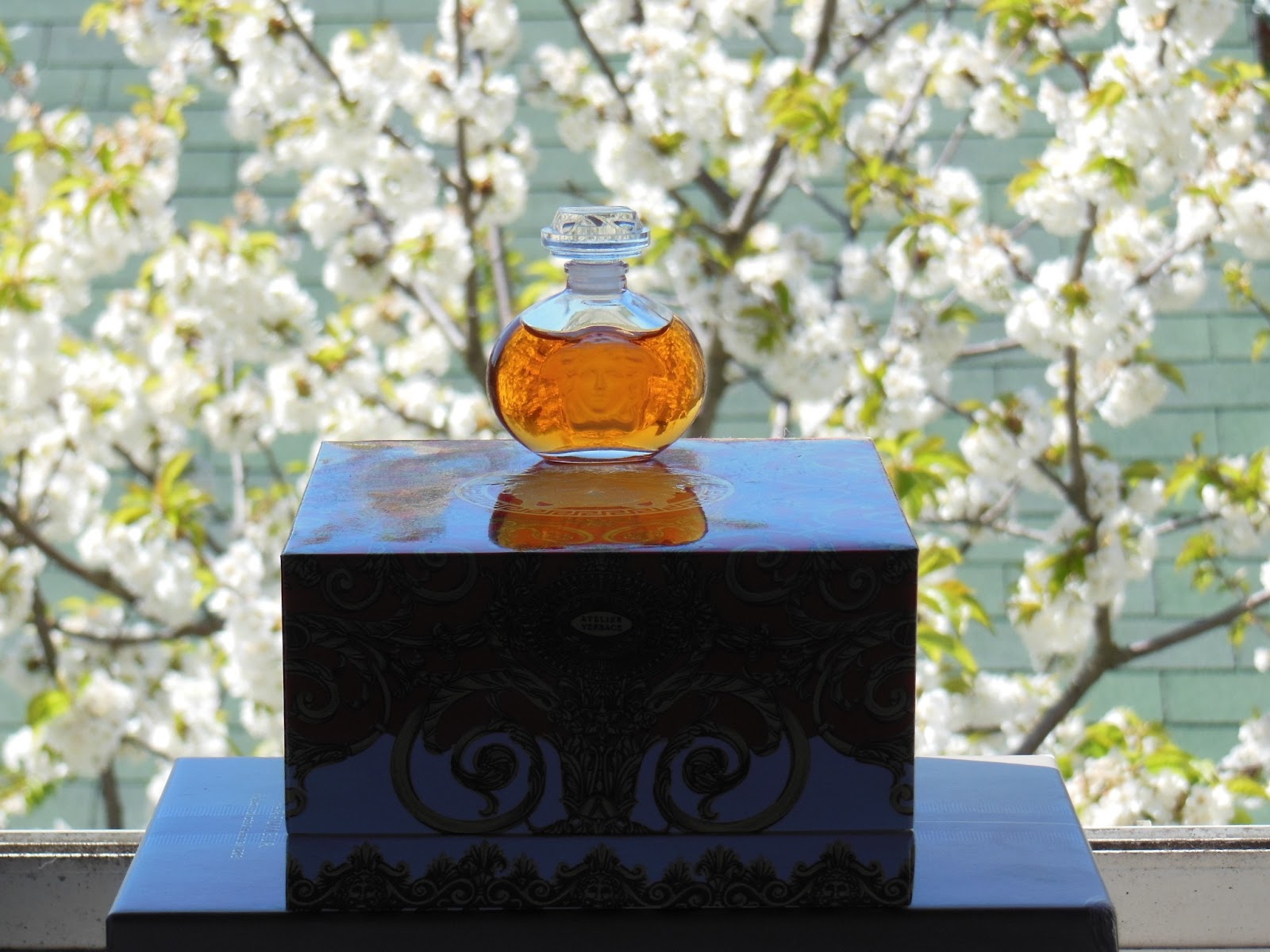
I fell head over heels with Lanvin Arpège...


It happened, as it were, completely by chance, as I suppose these things always do. Who can predict what new arrival at the forefront of one's mind—a flickering image, a faint idea, a vague prospect heretofore unrecognized—may inspire an outpouring of passion? Does anyone possess the wherewithal, the sheer power to turn such a force of nature away?

Lanvin Arpège was the farthest thing from my mind back then, when I was still wearing Chanel Allure: sweet, nice, and linear—a scent for every time and every place, and my favorite especially to don right before embarking on a journey to a land far away. Gambling on new perfumes was never really an option. Subject my fellow passengers to the latest Dior Poison flanker? Or some blue aquatic nonsense which might be even more emetic than the food served on board?

No, and as a seasoned traveler, I knew that every single duty-free shop in the world carries Chanel, before anything else. Let's put it this way: if there were a duty-free shop in an airport in even the remotest corner of the universe, it would contain tester bottles of Allure eau de toilette and eau de parfum within arm's reach. It's as though Chanel has underwritten the very existence of such stores—along with the Toblerone chocolate company.

Not that I'm complaining, mind you, for it is indeed true that in my many travels abroad to destinations far and wide, I have come to depend upon Allure as a dose of serenity, a way to calm my frazzled nerves before boarding a plane which might in fact—it's all a numbers game—experience a malfunction, impelling in a flash all of the passengers in the congested cabin to dredge through the many otherwise meaningless prescriptions inscribed in the deepest fissures of their brain to locate this phrase, relevant at most one time in any person's life:


Affix your own air mask before helping a fellow passenger.


A prescription which I confess to have found equally applicable, mutatis mutandis, to my attitude in the morning when opting first to prepare coffee before acknowledging the existence of anyone else. It is also the basis—whether sound or not—of many a person's refusal to help another person in dire need, even the proverbial damsel in distress. Remember Kitty Genovese? Probably not. But that's another story.

Allure was perhaps the precursor to the twenty-first-century SSRI scents now flooding the market, impossibly inoffensive, while at the same time a pleasure to wear. A beautiful blend of floral and light oriental notes into a seamless, indivisible layer of sweet niceness. “Linear” they called it, and linear it was, indeed, as dependable as a German or a Japanese train. Nothing rank, nothing obtrusive, nothing ugly. The perfect solution for long journeys spent in close quarters with complete strangers brought together fortuitously by nothing more and nothing less than their shared desire to be somewhere else and virtually anywhere but there, suspended in air, 30,000 feet above the surface of the earth.

My first bottle of Allure was purchased in Toronto, where I spent a few days alone and found that I really did wish to don a perfume, though I had neglected to bring any along. I acquired the bottle blind from an upscale department store from which I was buying a red cardigan, having discovered that the temperature in Toronto even in the summer months was quite a bit cooler than I had been led to expect. Did I become attached to Allure because of the comforting companionship it provided during that short trip? Whatever the explanation may be, I went on to drain bottle after bottle of both the edt and the edp, habitually reaching for Allure as a safe yet simultaneously endearing scent.

To be honest, I do not recall the circumstances of my first encounter with Arpège, but it certainly was not in a duty-free shop in a land far away or nearby, as I have yet to see any perfume by Lanvin being sold in any airport store—or virtually anywhere, for that matter. Perhaps the glimmering globes are hidden on some lower shelf in a dark corner of some of these establishments, but no one makes any real effort to sell Arpège, in particular, unlike the pro-active, seemingly ubiquitous Chanel sales associates, as hopeful as the barefoot Hare Krishnas with their tambourines, who will spritz even unwilling passersby with Chanel no 5. Which is not however to deny that the ploy appears more often than not to have worked, a part, as it is, of a grand, five-hundred-year master plan for marketing No 5 as not just the best-selling perfume of the twentieth century, but of all time.

Arpège, in contrast, is quite a bit more caddy, perhaps even coy. One must seek Arpège out, and if one fails to do that, well, you may rest assured that Arpège could not care less. I was one of the chosen few, the truly fortunate ones to happen upon this splendid and arcane creation. Yes, it is true: I felt blessed. I emphatically did not seek Arpège out and did not even really know what I had found for quite some time after having acquired a bottle, which is probably why I do not recall when precisely that was. Arpège was somehow delivered to me, a scent literally heaven sent, as though someone somewhere, a metaphysical matchmaker of sorts, had determined that it was meant to be.

Yes, somehow those beautiful bulbous bottles made their way onto the top shelf of my armoire, as though conveyed by supernatural forces beyond my power to control. But all of the history leading up to the big event proves irrelevant in the face of what transpired next.

I fell head over heels with Lanvin Arpège and, yes, I fell hard. How did it happen? you may well be wondering. From nothing to love in the blink of an eye, it happens every time, as the world is transformed beyond recognition all over again.

I began to see what had seemed to be his icy stare—at times a piercing glare—for what it really was: clarity. The lucidity of a mind capable of penetrating the inner secrets of the soul through the application of logic alone.

In the beginning, Arpège did not seem to have much interest in me, and to this day I wonder whether he ever did. Always cold and aloof in our initial meetings, he was sometimes brusque to the point of being rude. Never one to hug and kiss à la française, Arpège was more apt to refuse even to accept an outstretched hand. Some no doubt thought that he was rude, like the drunk who approached me as I was preparing one afternoon to depart from my table in a restaurant bar where I had stopped for a quick snack after a strenuous shopping trip.

He bumbled his way over, managing even in his stupor to see that there was only one body there, not two, and that it was a woman, not a man. He extended his hand, introducing himself, as though I should be happy to see such a slob standing before me with leering bloodshot eyes. I signed my check, picked up my things and dashed to the door while he lingered behind exuding what he took to be righteous indignation that I should be so uncouth.

That, too, is perhaps how some, even many, may have viewed Lanvin Arpège, but I knew that there was more to him than that abrupt façade, so I adamantly refused to retreat. Fortunately, I ,unlike the pathetic drunk who accosted me on that otherwise peaceful day in a restaurant bar, was not hopelessly confused.

I learned to brace myself before each encounter, and soon found that if I gave him some time, his layers of complexity would unfold, unraveling like infinite bolts of silk before my eyes until at last I realized that he had crept into my heart, and I could not live without him anymore. I began to regard his brusqueness as endearing, his way of fending off what might otherwise be the hordes of suitors unworthy of him. Was he elitist? Without a doubt, but it was this, perhaps, I cannot tell a lie, which drew me to him before anything else.

In the beginning I wanted nothing more than the modest privilege of being but one among his little club of followers. As time progressed, however, I began to want more and more, until at some point I realized that I was ready to turn my life over to him. I fantasized about him constantly, while knowing that most everyone else was satisfied with Chanel no 5, what they had been indoctrinated to believe and indeed took to be the greatest perfume of all time. Like the throngs of couples assembled together to take their marriage vows before Sun Myung Moon, they incessantly gloated as though No 5, which they happened by chance to have found lying around, were the best new discovery since sliced bread. Wonderbread, I hasten to add...

They had not yet met Arpège, and having tied the knot to No 5, perhaps they never would. To me, of course, all of this was perfectly fine, and many of them to this day remain mired in their abject state of ignorance, the corridors of their mind as dark as the remotest recesses of Plato's Cave. I knew all along, deep down inside, that they were wrong, but I had no desire to disabuse them of the errors of their ways.

They had all been tricked by the hype, the slinky black dresses flaunting vast areas of bare skin, Chanel bling, and the promise of a luxury of which their lives were otherwise entirely devoid. They were sucked in, like lambs to the slaughter, completely unaware of what they were missing. I haughtily and, I suppose, selfishly declined to correct their mistakes. By now it should be obvious: I wanted Arpège all to myself.

Aldehydes, yes, we all loved our aldehydes, but Arpège offered so much more, so much complexity and depth on top of the aldehydes that there was really no point in comparing the two. Yes, aldehydes; yes, jasmine; yes, rose. But those were only the beginning for the noble Arpège, a treasure thankfully never tied to images of blonde bimbos and the nouveaux riches. So why in the world would I want to share with all of the No 5 bots the truth about Arpège:


top notes: aldehydes, neroli, bergamot

middle notes: ylang-ylang, rose, iris, jasmine, cloves, coriander, geranium, tuberose, lily of the valley

base notes: patchouli, vetiver, vanilla, sandalwood, styrax


Instead, Arpège could remain my private—or near private—stock while all of the wearers of No 5 would smell the same. Did they smell like Marilyn Monroe, like Catherine Deneuve, like Carole Bouquet, Nicole Kidman and Audrey Tatou? To me, if the truth be known—and why not, after all?—the odor wafting off their bodies was quite a bit closer to that of Brad Pitt after three days of hitchhiking on a dusty desert highway, cigarette butts and empty beer cans rolling and jostling about like tumbleweeds in the wind.

To me, more than an arpeggio, Arpège was the olfactory equivalent to Bach's Goldberg Variations, which, too, had drawn me in and seduced me to believe for a time that nothing in the world could be nobler and more worthy of my life than perfecting such a magnum opus. Could it be accomplished in a single lifetime? Evidently not, but nothing would stop me from trying.

So, yes, I openly admit to having become completely obsessed with Lanvin Arpège, so much so that I began to believe in the house of Lanvin, not just this one particular perfume, but the entire family. I suppose that I might have been a bit like the man I know who married the sister of his former wife after she was inexplicably murdered one day while doing nothing more than walking home from work in a neighborhood not too far from mine. I shuddered upon hearing the story of this crime which, like the one-out-of-three murders in the United States never solved, implies that cold-blooded killers are roaming free throughout our streets.

I shuddered because I wondered—and still do to this day—whether the man who married his wife's sister might have had something to do with his former wife's death. Perhaps the idea was planted in my mind by Woody Allen's Crimes and Misdemeanors, a modern-day film noir in which a “well-regarded” ophthalmologist enlists the aid of his seamy brother to hire a hit man to dispose of his mistress, as she has become “troublesome”. Or was it Double Indemnity or The Postman Always Rings Twice which caused these nagging questions to arise in my mind? I don't know. All I know for sure is that this woman was in fact killed by someone, for reasons which remain obscure, and hit men do in fact exist, so there must be people who use them. Therefore, it is indeed possible that this man had something to do with that death. Have I watched too many movies? Perhaps. But I digress...


The In-laws


I decided to order other Lanvin perfumes, first Eclat d' Arpège, which came in the clear spherical bottle stamped with the same iconic image of mother and child but in silver rather than gold. The perfume inside was purple, not brown, and the cap, too, had been newly designed. The presentation was stunning: the perfume and a body lotion to match were housed in a lavender-colored leather hat box with a zipper closure. Alas, despite all of these beautiful trappings, the perfume itself never worked for me, albeit not for want of trying. 

Later, I bought a bottle of Rumeur blind, still convinced that the noble name Lanvin sufficed to justify such a purchase scent unsniffed. To my disappointment, the opening of Rumeur was empirically indistinguishable from the smell of an organic chemistry laboratory. I worked in one for some years, and so, no, this is no metaphor. All of the fumes mingle together as they waft out of the many hoods, each with its artfully constructed distillation apparatus, shimmering glass bulbs and joints assembled to achieve the specific task at hand: to isolate and purify some precious chemical substance under precisely controlled temperature and pressure conditions by removing all of the unwanted “stuff”.

No, the fume hoods never seem to work very well in those laboratories, which is one reason why some of my colleagues occasionally joked that there was a reason why men in organic chemistry have a higher tendency toward baldness than do men in the general population. For decades, no one even knew that benzene was a carcinogen, so it was splashed about like water, along with countless other liquids presumed but never proven to be safe.

Rumeur improves over the course of a wear, but the opening is so difficult for me to bear that waiting for the magnolia at the end of the journey is not really a possibility. I swapped the attractive thick-glassed milk bottle facsimile away. I am aware that there are people who love and cherish Rumeur, but to me, the opening smells simply too close to carcinogens—or other toxins—for comfort.


After those two poor purchases, I began to become wary of Lanvin. I had heard tales of the reformulation of Arpège and decided that I'd best be satisfied with the bottles in my collection, since the very persons responsible for the new perfumes were undoubtedly those, too, who reformulated the love of my life at the time, Arpège.


I gave the house one final chance when they launched Jeanne Lanvin, which was not to my liking either and, having apparently been composed under the influence of the “muse” of marketing data, seemed to be more of an insult than a tribute to its noble namesake. After that, I wrote Lanvin off forever and stopped wearing even Arpège, ironically because I did not want to run out. I simply could not bear the specter of another tragic reformulation of what once was a masterpiece.

Alas, as a result of my very own attempt to grasp too many grapes, the story, I'm afraid, took an Aesopian turn for the worse...


A Change of Heart

I regret in some ways to admit, but it's true: over time, I eventually fell out of love with Arpège, as I began to wear more and more chypre perfumes and then became seduced even by the modern sweet patchouli chypres—La Perla was one of my favorites (until its reformulation)—to the point where Arpège began to smell wrong or off. Had my bottles turned? Or did I? Perhaps I'll never know.

Had I stuck with Arpège through thick and thin, 'til death or drained bottle did we part, then perhaps I would not have noticed the mutual transformations taking place in each of us. We might have been like the old couples celebrating their thirtieth, fortieth, even fiftieth anniversaries, who simply do not notice subtle changes from one day to the next—the flaking dead skin cells, the graying hair, the creaky voice, the flabby flesh, the wrinkles creeping like cobwebs—though the sight of their loved one at the beginning was quite different from that at the end.


What's done is done; what's gone is gone. But I can and do here attest: once upon a time, I fell head over heels with Lanvin Arpège. Of course, it is true: I was different person back then. Now I've pretty much moved on, though I'll pull out a bottle every once in a while, to take a short walk down memory lane.

I was reminded of my former love recently upon donning Lubin Nuit de Longchamp, which seems to be close to an Arpège facsimile to my nose. But I must confess that today it smells to me rather old. Do twenty-first-century women have any business smelling like aldehydes? Gabrielle Chanel and Jeanne Lanvin passed away long ago, so long ago, in fact, that I wonder whether it is not simply time for perfumery, too, to move on to the next big thing.

Overdoses of aldehydes now seem to me as old-fashioned as floral soliflores did to Gabrielle Chanel back when she insisted that her new perfume smell not like flowers but like a woman. Do women smell like aldehydes? Well, many certainly tried to for a full century, seduced by the idea that they were more glamorous than flowers. But they were seduced to accept the dictates of marketers no less than they are today. Was I, too, on some level, in some intangible way? It's hard to say.

Was I wrong to fall in love with Lanvin Arpège and then to fall back out of love again? What could that mean? They say that “all good things must come to an end,” and I do believe that it is true. But that doesn't prevent us from imaginatively rehearsing fond memories of them. And it certainly doesn't preclude the possibility of its happening again... Could I, should I rehabituate myself to aldehydes, so that I might fall back in love with Arpège?

The paradox of morality and the inexplicable unpredictability of love are two facets of the very same crystal: no one can argue anyone else into changing sides. It simply happens, like a gust of wind arriving on the scene to sweep one away into yet another fantasy for a brief period of time, a drop in the pool of eternity, until at last what was once passion becomes but a plaintiff sigh.


Friday, November 30, 2012

Joy and I have finally made amends...


I was captivated by the image of Joy in my mind. After dreaming wistfully about her for years, I finally decided that it was high time to invite her into my home. I made the call, and a week or so later, on a crisp, cool fall day, she arrived at my place. I must say that I was tantalized by the glamorous demeanor before my eyes. Such a stunning package she presented, seeming to be everything I had hoped for.

No, I cannot deny that upon our initial encounter, Joy seemed quite accurately to reflect the picture which had been painted for me by others over the course of most my life. Yes, as I gazed at her amidst all of her trappings, she seemed to me truly to be the dearest in the world, as I had heard so many claim.... The epitome of refinement and class, she stood there before me in her gold jewelry and haute couture wrappings—I felt happy and frankly honored to have made her acquaintance at last.

But then it happened: Joy took off her coat, removed her cap, plopped down on the sofa as though she owned the place and propped up her mud-covered, dung-encrusted, four-inch chunky heels on the coffee table. Then, to my surprise and dismay, she opened her mouth and started to chat. She swore like a sailor, loud and brash. What was worse: she seemed to be talking for the sake of hearing her own voice, oblivious to the effect of the volume on anyone who might be present to hear, including me, her gracious host.

Tolerance has always been one of my virtues—which is not to boast, but to state a fact—yet I felt that my patience was being tested by the presence of this larger-than-life personality who managed somehow to cast a shadow down upon the ground in all directions at once. What to do?

Well, as I always say: when life gives you iso-E-super, why not make niche perfume? After all, you can pour it into attractive bottles and sell it at 10,000% profit—all that it takes is a “creative director” wand and a hat!

So, yes, I figured that I'd simply try to make the best of the situation, look at it as yet another opportunity for anthropological reflection on what we have become. How long, after all, could this stare-down with Joy really last?

I began to take note of her mannerisms and compare them to people in my past whose images were evoked by her, as if she and they were linked together metaphysically across space and time—among other more arcane dimensions. This little game, like counting tiles on the ceiling while reclining in a dentist's chair, did distract me for a while, but my plan was abruptly disrupted when two strange men suddenly showed up at my door.

At first I was taken aback—who could these strangers be? But then I saw their manner of dress, dirty jeans and sweatshirts, hammer and wrench-laden tool belts weighting their already low-rise pants down even further to the point where I found myself mumbling yet again that so-oft recited rhetorical refrain: Why bother? Why not just go out in your underwear, guys?

Suddenly it dawned on me who they were. Yes, coincidentally, on the very same day as Joy's arrival, I had scheduled the delivery and set-up of my new Samsung large-screen HDTV. There was no getting around this engagement, so I steeled myself as best I could, opening the door with a smile and gesturing them inside after first glancing at their work boots to make sure that they would not be tracking in any moribund leaves—or mud or dung.

I immediately registered the consternation caused to these two young men by the presence of Joy. Their faces seemed puzzled, a bit taken aback, not sure exactly how to react. They hoisted my television to its proper place and set it up, verifying that it worked in what must have been record time, and then they bustled to the door and went promptly on their way, plumber's cracks in tow, no doubt glad, even relieved, to have escaped Joy's wrath. Or was it, rather, that they feared some sort of trap? A snare of seduction, perhaps?

As far as they could see, there was no one there but me, so were they then wary of me rather than her, whom they had no reason to think might be lurking just below threshold visibility? From their perspective, if Joy did not even exist, as far as they could see, then I and I alone was the cause of what they perceived. Had I, indeed, not laid the trap for them?

Yes, if it was true, as it seemed to be—I had gathered from the looks in their eyes that they were quite anxious to leave—then this was because they believed that I, and I alone, was implicated in the clever scheme. They had no idea that she was there, in my house, invited by me, and let loose to vent her vapors upon them. Was I not, then, ultimately the cause of their unwitting encounter with Joy? Was I not, then, as far they were concerned, numerically identical with Joy?

What, precisely, did that eccentric woman have in mind? they seemed to be musing to themselves as they hurried out of the house and back to their truck, peeling out so rapidly that they burned tire rubber in the process. The noxious stench of black smoke now the only trace left behind, in the blink of an eye, the deliverymen were nowhere in sight, having disappeared forever from the narrative of my life.

Even now, years later, I do not know the content of the ideas circulating about those men's minds on that fated Joy-ful day. I caught their sideways glances to one another and have often wondered what it was precisely that they thought. Had they stumbled upon yet another hoarding cat lady's home, filled with the scent of used litter and hidden infelicities on rugs under sofas, chairs and, yes, even beds? They had been given no reason to believe that the problem had anything to do with Joy at all. The only person whose presence they registered was mine. I was the only one whom they could see.

Perhaps they considered me to be like the woman in her exercise studio accidentally killed by Alex in A Clockwork Orange while trespassing, thus transforming a trivial into a capital crime. It's true that they were younger than me, and the more I thought about this little theory, the more plausible it began to seem.

In my more epistemologically humble moments, I recognize that the answers to these questions I'll never know. The only thing I have to go on is my memory of the looks that passed between the two stocky fellows—padded with both muscle and fat—who had seemed to be so taken aback, to say the least, by this unexpected encounter with what they could not have known was really Joy.

Had I violated norms of acceptable behavior by inviting Joy into my home and permitting her to stay, effectively giving her license to take over the space, leaving traces of her blood-red lipstick on my glasses, clods of dirt on the floor, and a filthy bathroom to boot? My vexed visitors were long gone, but now, having in exasperation altogether abandoned my pretensions to armchair anthropology, I came to the realization that Joy's visit would have to be curtailed, before anyone stopped by to spend time with me or dropped by under whatever other pretext.

In my defense, I must say that I did try for a short time to come up with a way to make it work, but eventually I detected the scent of the rotting carrion of a dead mouse in the kitchen, at which point I had no further choice. I pulled myself together, mustered up the courage and showed her the door. Yes, I threw her out.

It wasn't that she violated the four-day house guest rule, smelling like old fish forgotten in the fridge and unable to recognize that she did. No, the sad truth is that she had become habituated to her own odor, what was from day one an off-putting amalgamation of dirty underwear, sweaty stockings, and old crusty make-up applied from tubes acquired decades ago. She seemed even to be carrying a huge corsage of dead flowers in her bag—no doubt from a jilted lover in her checkered past.

To my amazement, Joy managed to produce a roomful of smells strong enough to offend even some vintage perfume lovers. Yes, I'm talking about those who revel in the scent of sour, dead floral top notes and wait patiently—dare I say it? religiously—for the ecstatic moment hiding somewhere amidst the gooey, gummy drydown.

Joy was just too much for everyone who came in contact with us—albeit unbeknownst to them. Enough was enough, I read her the riot act, packed up her bags and placed them outside on the curb. On the off chance that she had stolen one of my keys, I even called a locksmith to change all the bolts, and, yes, cruel though it may seem, I scrupulously avoided answering her calls for years.

With time, my memory of Joy's visit, as of all negative experiences, slowly faded. No longer did she appear in my mind as a haughty, bawdy harridan, a veritable hurricane wiping everything and everyone out in her path. Now, with the benefit of distance and the smell long gone, I began to wonder, whether I had done her wrong in throwing her out. Did I base that decision on my own hyperosmia of what only to me seemed to have been her nauseating concoction of scents?

I knew from my testing of perfumes such as Frédéric Malle Musc Ravageur, that I was certainly not anosmic to musk, but was I perhaps a bit too sensitive, too touchy to the scent of Joy—what would perhaps be truly enjoyable to precisely the sort of person who revels in Musc Ravageur (to say nothing of Serge Lutens Musc Koublai Khan...).

So, yes, I had second thoughts about the whole affair, wondering whether I had blamed her when in fact I was at fault. As the wheels whirred, my thoughts began to multiply, ultimately culminating in pangs of compunction, until I could no longer sleep well at night. I had invited so many other new friends into my home, and none of them had offended me in the way in which Joy had, and yet somehow I sensed that what I had done was wrong.

No, I could not stop myself from agonizing over and over again about who was ultimately responsible for the debacle that her visit had become. Was I not in fact the sole author of this clash? Could she really be blamed for my wishing that she was other than who she was? When I looked at Joy, did I want nothing more than to see a reflection of me?

From there, I began to wonder whether I was not attempting, like the tyrants of the past, present, and future, to create the world in my image. Should it really be peopled only with people like me? Anxiety was now commingling with my long incubated dread of hypocrisy as I lashed out at myself, crying to no one but the walls and God (or reasonable facsimile): No, No, No! How preposterous could something be?!

To calm my frazzled nerves, I prepared a white porcelain cup of sencha tea, foregoing my usual afternoon mug of coffee. I stared into the citrine-peridot green liquid in search of an answer, and at last it emerged, as usual, in the form of a series of questions:

Did I not need to be a bit more open to lifestyles and personalities—and scents—very different from my own? Was I attempting to impose my own values upon the world, excluding anything which deviated from my parochial notion of what is good and fine? Did I not need to expand my horizons, look beyond the little pond in which I lived, like a goldfish bumping up against the edge of an aquarium while resolutely denying the reality of anything beyond the glass?

I concluded, at last, that it was time to invite Joy back, to see if it was not too late for some form of reconciliation and damage control. I must confess that I feared, on some level, a reprisal of what had happened before. To preclude such an unpleasant possibility, I determined that this time we should meet at a secure, undisclosed place, where no one who knew us would see—or smell—us together.

This rendezvous, up until now, was our little secret: only Joy and I knew. In some sense, I freely own, the trial was therefore risk-free. Nonetheless, deeply relieved at the outcome of this tale, I here openly avow that Joy did in fact accept my apology, and we have agreed to disagree about our differences, mutually respecting our divergent perspectives on the world.

I share my little story now with you, O Gently Scented Reader, in the hopes that you, too, will learn from my mistakes. 


Saturday, November 10, 2012

Blonde was a Bimbo


Blonde was a bimbo, no one can deny, but she stole many hearts all the same. The moment she entered a room, she'd strut her stuff, swinging left, right, left... swaying just a bit forward on the ball of her feet, and then back on her heels. Her hip bones would jut as she shifted her weight from side to side, sniffing like a supermodel, tell-tale white powder residues lightly dusting the tip of her nose. No one could fail to take note when Blonde arrived: her reputation, as her scent, preceded her by miles.

There were those of course who called her a slut, but what they really begrudged her was that she had left them in a rut, which they themselves had dug, having misconstrued the nature of their short-lived relation and come to believe that she was The One. They fervently clung to the image of their construction, mistaking it for an oasis, a veritable heaven on earth, illuminated by the light which they had finally seen, an unmistakable sign of the divine, a halo seemingly cast by the whites of her eyes! Where silence had reigned, now the sweet song of paradise was being sung by sprites, who had been hiding for so long and somehow sprung up all at once as though beckoned by Blonde—or so it seemed at the time.


Until, that is, the mirage vaporized before them, like drops of water from a sprinkler on a black asphalt street in the blazing heat of a late summer's day. Yes, she left them while they were still reeling, enraptured in the sweet throes of passion, still basking in the warm glow of desire, having discovered—or so they thought—that she was precisely what they had sought all along. At last, their knit-picking rejection of more orthodox, kind kinds—too boring, too plain, too conforming, too small-minded, and probably dumb. Not enough leg or breast, or too much of both, and certainly not good enough for them.

None of this could, in truth, be said of Blonde. Defying stereotypes at every turn, Blonde was as smart as they come. Those who set their sights on her could only aspire to capture this beguiling wonder, unaware that she was really Medusa in disguise.... No, it seemed to them, the wait was over, the search complete. These would-have-been suitors had all been seduced to believe that she, too, thought that they were The One. That somehow, miraculously, the planets had been aligned just right for the very first time, so that the only person whom they had ever found to be worthy of their esteem felt precisely the same way about them, and to the same degree.

One after the other, they began planning in their mind the home which they would fashion of a house, with Blonde by their side, little munchkins and dogs playing outside on the grassy green lawn in the backyard on warm sunny afternoons in a rural area of up-state New York. Manhattan was no place to raise a family, though they'd continue to commute there occasionally to make business connections and perhaps some weekend shopping trips to Dean & Deluca, Henri Bendel, Bloomingdales, and the like.

They imagined Blonde in a lush pink velour bathrobe baking croissants and brewing up mugs of dark-roasted Green Mountain coffee each morning in a kitchen shimmering with shiny silver appliances somehow magically rendered fingerprint-free. Sunlight would stream into the dining room through the shutters and blinds hanging before big bay windows, the whole place most tastefully decorated in purple and teal. There'd be a wine cellar and a sauna; a library and a music room; everything they needed would be right there within reach. As more and more gadgets and things were added to their ever-lengthening acquisitions list, their dreams became filled with ornate details of how what had begun as a romantic tryst would be seamlessly transformed into a model of marital bliss.


Alas, Blonde did not play the monogamy game. No, Blonde, unlike those who chose and chased her, was free. Free to leave, they all learned one way or the other, sooner rather than later. She left them all, one by one, they were serially discarded, like used haute couture dresses worn once for show and then no, not sold or put up for auction: she never deigned to stoop so low. Blonde donated her once-worn clothes—her silk scarves and jewel-encrusted sheaths, dead animal skins with the heads still attached, pairs of crocodile shoes and python bags dyed to match—to this or that charitable cause (presumably not PETA), where naturally the stuff was pilfered by bureaucrats, much like the CEOs of NGOs who drive Mercedes and pose as altruists while the people doing all of the work are volunteers.

Blonde was oblivious to all of this. It wasn't that they fooled her but that she really didn't care. She did not need those discarded things anymore, and what became of them was no matter for her concern. Never one to judge, Blonde was far above the petit bourgeois fray, their endless moralizing chatter, their pathetic excuse for a life. Blonde, unlike them, was not molded by the mercurial forces of capitalism bearing down from all sides. She knew what she wanted and got what she needed and no one would—or could—stand in her way.

Blonde was tough and mean, making her break cold and clean when it came time to leave, never turning back, never offering excuses or explanations, never even saying goodbye, and certainly never suffering compunction or guilt for what she had done. Why? Because she never lied.

Blonde was a bimbo, no one can truly deny. And though she had many critics and naysayers, the deep, dark secret was betrayed by the slight twitch at the corners of their eyes, the quiver of their lip, even as they condemned her in the harshest of terms, the hair raised on their forearms, their inability not to shiver just a bit each time that her memory flittered to the forefront of their mind, a jumbled collection of emotions welling up inside as they attempted yet again to sort out the source of their short-lived relation's demise.

The truth was that they all wanted in their heart of hearts nothing more than to be just like her. She was the image of what they had never become, not for their strength, but because they were weak. They were forever shackled by the manacles which they had created and attached to their wrists precisely in order to protect themselves from their very own beliefs. Trapped in prisons of their own making, after so many years of pandering to please others, their feet were planted to the mud-encrusted floor of dark caves of delusion, having come to believe even the lies which they had devised to fool the others with the paltry aim of achieving the trivial objects of their desire. As time progressed, they became anchored, and then began to sink ever deeper as though into quicksand, their life dwindling away, as their once abundant reserves of energy were steadily, inexorably depleted.

She was free, what they would never be, and though they might grow old and wrinkly and gray, outlasting her by decades, the price they paid for the very scrupulousness of their prudence was the failed promise of what they might have been, what they never became, and all of the things which they wanted to do but never did. Blonde lived fast and furiously and though she is physically now a part of the past, her memory lives on, lingering in the minds of all those fortunate enough to behold one of the few creatures ever to have been totally free, what her detractors and jilted suitors will never be.

Blonde died young, but no one can say that she did not lead a richer, more beautiful life than those who survived to tell tall tales, regaling alleged events said to precede her departure, directing all of their energy and intellect to dismantling her legacy through libel and slander which would have made her scoff and perhaps does as she gazes down haughtily from the heavens, knowing full well the cause of these sorry slobs' ressentiment, and the true reason for all of their lies.

Blonde was a bimbo, no one can deny, but she, unlike the others, chose what she had become and never regretted a single thing that she had done, having lived each day as though it were her last, They, in contrast, saved up small change to buy RVs and ugly condominiums in south Florida, waiting until they were too old to enjoy their remaining time, like all of the wage slaves before them who had squandered the best years of their lives only to sit, bored, playing Bingo and Sudoko, dead skin cells flaking from their decrepit bodies while they waited to die.

An epicurean through and through, Blonde was acutely aware that we're all going to die, which was precisely why she conducted herself in the manner in which she did. She refused to squander her precious time on lost causes, utter nonsense attempting to please others who might or might not appreciate who she was or anything she ever did or tried to do. Blonde lived her life for herself, no one else, like a cat, and that was both the secret to her greatness, and the best explanation for the disparity between who she really was and what her rancorous, regret-ridden survivors now say.


Sunday, August 26, 2012

In Praise of Bathing


My first memories of baths date back to early childhood, when my father would deposit me along with my two sisters in the tub for an economy-of-scale suds-up. Yes, we all fit: three girls in four years was what my contraceptively challenged parents—while still undergraduate students—managed to produce during the first three years and six months of a marriage which finally ended around my sixteenth birthday. No need to express condolences: divorce was the best thing that ever happened to my parents' marriage. Aside, of course, from its fruits—mistakes though we may have seemed to be at the time...

Both of my parents have been happily remarried now for many years, much longer than they were married to one another, which would seem to suggest that mutual fertility is not a sufficient basis for a stable marriage, notwithstanding the “grand plan” of whoever—if anyone—devised the preposterous pregnancy scheme. Marriage has of course enjoyed a resurgence of popularity in recent times, but I suspect that all of the excitement will eventually die down—perhaps in seven years? In the meantime, I think that any couple—straight or gay—interested in tying the proverbial knot (what a metaphor!) should be required first to do a dramatic reading à haute voix of Ionesco's play Délire à Deux. If, having successfully completed that exercise, the happy couple is still intent on taking vows, all I can say is: more power to them! But I digress...

A civil engineer by training and in mindset, my father, in addition to having fun regaling us with rhymes such as “Scrub-a-dub-dub: three girls in a tub!” undoubtedly derived a measure of satisfaction through conserving both time and water by bathing us in this way. Indeed, his area of specialization is none other than dams and irrigation systems!

I have no other clear memories of baths for many, many years. I believe that I took only showers during high school, and I certainly did not take baths while living in the college dormitories. I am not even sure whether the shared bathrooms had anything but shower stalls. That's how little importance bathing in a tub had for me. I do seem vaguely to recall that someone barfed in a bathtub somewhere, during a party at which Koolaid spiked with Everclear was being served. (Was it, perhaps, me?)

Fast forward to today, and here I am a full-fledged bath addict. This is no exaggeration: I do not even feel clean unless I take a full-on soak in a tub, and on those occasions when I am forced to forgo my bathing ritual because of traveling, I await with great anticipation the opportunity to return home where I'll be able to bathe once again in the manner to which I have grown quite accustomed. Mind you, I am not an obsessive-compulsive hand washer, or anything of that kind.

I observed one of those people recently in the bathroom at the library. She was lathering up and scrubbing her arms and hands when I entered a stall, and she was lathering up and scrubbing her arms and hands when I left the stall. I stood briefly next to her in what may have seemed to be a show of hygienic solidarity, a couple of sinks down. But after I had spent maybe ten seconds washing my hands and reached for a paper towel, she was still standing there, lathering up and scrubbing her arms and hands. No, you may rest assured, I am nothing like that.

I suspect, however, that some shower advocates may view me in just that way when I say that I honestly feel that a thorough cleansing can only be accomplished through a bath. Perhaps they, too, will smile politely and walk quickly away—or the internet equivalent: navigate away from this page... I imagine five-minute hot shower takers asking in their minds, Really? You only take baths? in entirely sincere puzzlement over how someone could waste so much time.

I went from nearly no memory of having taken baths to wishing only to take baths. I am by now so habituated to baths, an important part of which involves lying in a supine reclining position, that I consider showers even to be a form of work. Standing up? Really? is my natural rejoinder of puzzlement to the advocate of showers who cannot imagine spending an entire hour—or even half—on a bath.

Having numbered for so many years among those who take only showers, I do of course understand why people opt for them. Yes, it is true: they are quick. And yes, it is true: they work in shared bathroom arrangements such as dorms and houses where not all inhabitants have private bathing quarters. I recall that a fellow living in a house where I was renting a room at one point in the Los Angeles area used to leave the bathtub half-full of dark gray, opaque water, clogged as the drain was with his body hair. No, this is not a joke. Ian was his name.


Two other renters, Ann and Stan, also lived in that house, and so did the landlord and his wife, but the person whom I'll never, ever forget—no matter how old I eventually become, and even if I lapse into an advanced state of senility—is Ian. In addition to being ape-ily hairy, Ian also left a strong acrid odor behind wherever he went—a trail of sillage, if you like—even after having bathed. I think that it is fair to say that anyone who rejects The Myth of the Skin Chemistry Myth never shared a house with Ian. What would Chanel no 5 smell like on Ian? Honestly, I do not want to know. Come to think of it, although he did not fully bubble up in my mind at the time, Ian was perhaps the ultimate subconscious inspiration for one of my proofs: The case of the stinky guy.


Taking a bath in such a tub, shared with such a fellow as Ian, was never going to happen, for obvious reasons. The whole experience of even wanting to shower in that tub on a day when Ian had already been there was in itself a sheer nightmare, a veritable horror story rivaled only by Alfred Hitchcock's Psycho. At the time, however, I myself was a showers-only type, so the challenge each morning became to beat Ian to the bathroom. I'd scuffle down the hall as quickly as I could in jammies and rubber flip-flops, mug of French roast in hand, fluffy white robe in tow, to take my shower and scurry back to my room, deeply relieved to have escaped the horror which would now await some other poor unsuspecting soul.


A Question of Culture?

Americans, on the whole, are a part of a showering culture. Baths tend to be reserved for special occasions: to soothe sore muscles in Epsom salts after running a marathon, or to help clear one's congested sinuses with an herbal remedy including eucalyptus and the like... I understand that culture, because I, too, was a part of it for most of my life. Even when I lived in a beautiful house in the mountains and had a private bath, I used it only infrequently as a tub, to alleviate stress. Baths back then were a type of event, not an ordinary way to cleanse myself.


So how in the world did this radical transformation, from a showers-only person to a baths-only person, take place? Interestingly enough, the changes in my attitudes toward showers and baths, like the circumstances of my birth, were entirely a matter of chance and, some might even say, negligence. I discovered that an apartment which I had rented with a one-year lease had a bathtub with a malfunctioning shower head. The nozzle barely dribbled any water at all, but when I pointed this out, the skinflint landlord insisted that it was supposed to function like that.


Everyone, I trust, has run into one or more of those “special” landlords who insist that everything is exactly as it should be. Whether I liked it or not, my only real option for cleansing myself during that year became taking a bath. What I found, hundreds of baths later was that I actually enjoy taking baths. Slowly but surely my entire perspective on bathing ended up transforming to the point where I never, ever shower at home anymore. I am so much a bather at this point that after moving to the house in which I now reside, I did not even bother to hang up the shower curtain and rod until some house guests arrived!

Ironic though it may seem, it is nonetheless true: as a direct result of a cheapskate landlord, today I feel deprived whenever I find myself in a shower-only scenario. This happens when I travel to a place where hotels either do not come equipped with bathtubs, or they do but for one reason or another it is infeasible to render them acceptably clean. I am very picky about bathtubs: they must be spotless in order for me to soak my body in one. I realize that this may make me sound a bit like the woman in the library bathroom compulsively lathering and scrubbing her arms and hands, but I do here confess that I will not bathe in a hotel bathtub which I have not scrupulously inspected for cleanliness.

Not a problem in a couple of parts of the world, above all, Japan, the bathing capital of the universe, where spotless baththubs—and sencha tea centers—are de rigueur! I have also often been pleasantly surprised by the accommodations in Europe, especially Italy. Europeans, while not quite obsessed with bathing—as the Japanese truly are, to their credit, I hasten to add—do seem to appreciate that a good bath tub is just as essential as a good bed. Or a bidet! Some of the most beautiful bath tubs and bathrooms I've ever encountered were found in Italy and in Spain.

I never intended to become a bather, but it happened, and now I honestly cannot imagine forgoing what has become my bath ritual. Along the way, I became a major consumer of bath products, and thanks to the ridiculous biannual sales at Bath & Body Works and The Body Shop, I could probably go for years without needing to buy anything. Every time I consider the possibility of moving, in fact, I realize that I need to decrease my gross shipping weight before doing so. I did give away about a thousand books last year, and I no longer buy either CDs or DVDs, but despite having skipped the sales at BBW and TBS, I still have an impressive array of bath and shower gels, scrubs, and lotions. And then, of course, there are the colognes and perfumes.

Am I “hoarding” bath products? I think not, because the variety is very important to me. A day when I wish to take a citrus bath is not at all like a day when I'd rather soak in lavender or jasmine or cherry blossom or... the list goes on and on. I delight in selecting which bath bubbles to run under the faucet, and I coordinate scrubs and soaps and even hair products so as to complement the scented water. As a part of my ritual I also apply Borghese Fango mud to my face, and I may actually hold the record for the most tonnage of that product consumed by any individual person.


Deontology versus Teleology: Showers versus Baths

I suspect that eighteenth-century Prussian philosopher Immanuel Kant, probably the most famous deontologist in history, preferred showers. According to Kant, morality is a matter of duty: it is not because of the benefits which one can expect to derive from doing the right thing that one should do the right thing. No, consequences have no relevance, morally speaking, in Kant's view. You should do the right thing because it is the right thing to do!


Immanuel Kant, author of The Metaphysics of Morals 


Americans certainly seem, for the most part, to regard showering as a duty to execute, not a pleasure to enjoy—except insofar as removing dirt can be a source of relief. One of my sisters, a deeply entrenched shower advocate—who perhaps not uncoincidentally also has a dog—insists that baths increase the incidence of urinary tract infections. She once expressed extreme distaste for my predilection for baths in these terms:


How can you stand to sit there in a pool of dirty water?!

To which I replied:

The water is not dirty, BECAUSE I BATHE!


I do not doubt that a person who takes only showers over many years with nary a bath would indeed create a dirty pool of water just like Ian, the fellow whose sole distinction in my memory bank is to have been the stinkiest person I ever knew. What else did he do? I have no idea.

Anecdotally, I can report that the first time I bathed HRH Emperor Oliver, the bath water was indeed rather dark and gray. He had never been dipped in a tub throughout his entire life, why? Because cats have superlative personal hygiene and shun bodies of water larger than the volume of space which their body occupies.

Since his retirement, it has become necessary to provide some bathing assistance to The Emperor now and then, as a result of which I have become convinced that in fact all cats hold within their minds a quasi-Jungian “collective unconsciousness” fear of drowning. I suspect that it is the image of small kittens being mercilessly terminated “with extreme prejudice” in a pond by some illiterate and sadistic hick which may surface inchoately—to a greater or lesser degree, depending on the intellectual capacity of the cat—when they first face the specter of a bath.

Happily, dozens of baths later, The Emperor has learned that drowning at the Divine Feline Assisted Living Retirement Community is not an option. It's not going to happen, so long as his chief of staff is standing by. Having largely overcome his initial reluctance to bathe, The Emperor today enjoys the benefits of hydrotherapy so dear to bath lovers more generally and especially helpful to those such as he, who suffer from diabetes and debilitating neuropathy in their legs, feet, and toes. But I digress...


HRH Emperor Oliver relaxes after a bath and blowdry


The Bath-Perfume Connection

While bathing recently—one day in satsuma, the next in grapefruit and citron, the third in lavender and chamomile, and yesterday in Fresh Citron de Vigne shower gel—it occurred to me that the attitudes of many people toward perfume can be mapped onto their attitudes toward bathing along two different axes. First, it seems clear that some, perhaps many, people think of perfume use in purely functional terms, just as they think about showering.

Consider, for example, the “panty dropper” threads which get started over and over again by new visitors to fragrance community websites. This may seem risible to veteran perfumistas, who regard themselves as having a higher appreciation of perfume, often as an art form, but the reality seems to be that most consumers use perfume as a way of increasing their own attractability to persons with whom they may become romantically involved.

I myself found this factoid rather unbelievable, but in a fashion magazine a couple of years ago, in one of the relatively rare features on perfume, the statistic was reported that the number one reason why French women use perfume is to attract a mate! That was a sobering statistic to me, generally inclined to believe as I am that the French tend to be leaps and bounds above Americans in terms of sophistication. Meaning, of course, that the statistic for Americans could only be worse.

There is another axis along which perfume appreciation can be mapped, and this one does not point toward the same rather self-congratulatory conclusion, that most perfume users are philistines and only elite perfumistas appreciate the artistry of vrai parfum and the work of “olfactory artists,” to invoke here Chandler Burr's term for accomplished perfumers. This second axis is that of pure sensory experience, which does not seem to me to be relevantly distinct in the case of bathing and perfume use. In other words, thinking about perfume use in purely phenomenological terms, as a subjective experience, the use of perfume may be much closer to bathing than perfumistas ordinarily suppose—unless, of course, they happen to be bath addicts like me.


One reason why I love bathing is because I am enveloped in the process not only by warm water, but also by beautiful scents. This leads back to the question, perhaps vexing to some, whether perfume really is different in any fundamental way from other toiletries, to wit: bath and shower gel, soaps, scrubs, lotions, oils, etc. There are more and less sophisticated toiletries, to be sure, and people may use them and appreciate them to varying degrees. But let us consider the case of bath and shower gels which have been scented with perfumes which we ourselves already affirm as excellent.


Is it any less of an experience of perfume to smell it wafting off the water or off the skin of a freshly bathed and lotioned body than it is to spritz on the perfume itself? In terms of the pure olfactory experience of the perfume, I cannot for the life of me figure out why one of these forms of perfume experience should differ from the other. The truth, it seems to me, is that we appreciate perfume, above all, for the pleasure it provides.

Read all the perfume reviews you like, you will find that the fundamental judgments derive nearly exclusively from an answer to the question whether the wearer enjoys the experience of the perfume being reviewed. That is the bottom line. Reviews invariably circle back to the reviewer: specifically, the effect that the perfume has upon the wearer.

Is this true of the nonperfumic arts? Do we evaluate the quality of a poem or a piece of music or a film by describing their effects upon us? Perhaps on some level and in part, but only a small portion of a review of any object of art explicitly references the experiencer. The rest points outward to the object itself.

In contrast, in the case of perfume, everything turns on the subjective experience, and the very terms which one selects in attempting to convey one's experience point back to the wearer. This seems to me to provide grounds for skepticism about the status of perfume as an art. People who love perfume would naturally like there to be objective truths about the object of their love, but the reason why even “the experts” do not agree, it seems to me, is that their reviews always say much more about them than about the ostensible object of their critique.

The object under review in the case of perfume is tied up essentially with the reviewer, because everything which he or she consciously perceives is determined by facts about him or her, not facts about the perfume. In addition to having entirely different personal histories, human beings are differentially sensitive to all of the various components of any perfume, which is how and why people with vast experience in sniffing perfumes and familiarity with even thousands of them can radically disagree about a question as fundamental as whether it is any good.

What matter in evaluations of perfume are not objective facts about the creation—what particular chemical substances were used to create a certain perceptual quality—but our subjective reception of it conjoined with our personal tastes. In fact, tastes appear to do most of the evaluative work. We like this or that note: patchouli, tuberose, benzoin, etc. We dislike this or that note: rubber, cumin, pineapple, etc. Therefore, if a perfume features those things which we happen to like and we also happen to like their conjunction, then that alone will suffice to make our experience of it a positive one. “Your mileage may vary,” but to us, which is all that matters in our own evaluation of a perfume, it ends up seeming like either a masterpiece or a disaster or, more often, somewhere in between those two extremes, based largely upon what we happen to like.

Now, one might reply that people's tastes in art vary as well, and this is true. The difference, however, is that in the case of perfume, tastes do the bulk of the work of evaluation. Everything turns upon individual tastes and preferences. To praise a perfume is to enjoy the experience of wearing it. This is why the more a reviewer writes, the more he reveals—not about the perfume but about himself.

Setting to one side all of the vapid chatter about art, I must own that when I make a judgment about perfume, the bottom line is that a good or bad perfume to my nose is rather simple to define. I derive pleasure from the former and not from the latter. This is not an objective judgment and reveals the folly involved in issuing imperious decrees about which perfumes are masterpieces and which are disasters. 

In order to do such a thing, one would first have to assume the exalted status of one's own subjective values and tastes, in addition to one's heightened ability to perceive all of the many components of a perfume. Who can make such a claim, in complete sincerity? I know of no one, to be perfectly frank. Indeed, the two requirements would appear to be mutually exclusive. Moreover, a great or accomplished nose is probably not the best person to seek out for advice on which perfumes to buy. Why? Because your less than great nose will not detect the same things and to the same degree. In other words, you will smell what is essentially a different perfume than did he.

What I have learned about perfume through reflecting upon bathing while bathing is that pleasure, my fragrant friends, is the bottom line. There is no more and no less to perfume than that. We may, in our vanity, wish to follow the lead of thinkers such as the nineteenth-century British philosopher John Stuart Mill, who distinguished higher from lower pleasures, claiming that

It is better to be a human being dissatisfied than a pig satisfied;
better to be Socrates dissatisfied than a fool satisfied.

It is unclear from this pithy little adage whether it is supposed to be better to be a pig satisfied or a fool satisfied, but I suspect that Mill was not a vegetarian and may well have joined his compatriots in repasts frequently featuring offal.

John Stuart Mill, author of Utilitarianism

In any case, what seems indisputable to me is that what we may wish to honorifically label "olfactory art" is in fact an exceptionally pleasurable scent. It may be complex and unfurl in waves so as to induce in us olfactory delight. It may surprise us and lead us down new paths of our thoughts and evoke memories of times past and things lost. Experiencing perfume is a sensual process which begins with our nose and ends in our brain, but the measure of a good perfume is only the pleasure which it provides.


What does hedonism imply?

Just as people may adopt a certain attitude toward cleansing their body, viewing it as a necessity, a duty to be carried out, so, too, do consumers sometimes become distracted by extrinsic factors. They may become concerned by price, status (is it niche—or expensive—and therefore, presumably, refined enough?), or even the celebrities or models suggested or implied to be attached to the perfume through advertising. In view of the size of marketing budgets for many perfumes, it may well be the case that most consumers select the bottles which end up in their boudoir by such olfactorily irrelevant factors.

Such perfumes, once owned, may be spritzed on without stopping to smell the perfume, so to to speak. I see this, too, in the reviews written by many self-styled perfumistas who report quick impressions and often quite dismissively. Did the reviewer give the perfume the benefit of a full wear—or two? Was the experience interrupted, mediated, or curtailed by the wearer's memory of the experience of another perfume in the past? Can we experience a perfume as an isolated thing in itself? Probably not, given that our minds are not a blank slate—and if they were we wouldn't be able to make sense of anything anyway.

The famous deontologist Immanuel Kant never married, nor did he ever leave his hometown of Königsberg. Small wonder, then, that he had so much time for cogitation and the composition of extremely lengthy sentences. Naturally, he had something to say on this matter as well. Kant rejected the possibility of naïve empiricism—the pure, unmediated apprehension of reality—in these terms (translated from the German):


Percepts without concepts are empty; concepts without percepts are blind.


In some ways, bathing provides a superlative opportunity to reflect upon a perfume, as one is not surrounded by all of the usual distractions which can make it difficult to focus upon the olfactory experience itself. How often do we wear a perfume in the way in which we listen to a piece of music or watch a film? True, music is often playing in the background while we do something else, but when we attend a concert, we are there specifically to listen to the music, though we may of course be distracted by such annoyances as audience members who cough or talk during the performance. The same is true of our experience of films and may help to explain why many people today only watch films in the (quiet) privacy of their homes, made possible by the existence of so many new technologies in a series which began with videotapes and appears to be culminating in wireless media streaming.

Even perfumistas who exalt perfumery as an art may not actually dedicate any independent time to the experience of perfume. They may use perfume in the way in which they play background music while engaged in activities very different from what one does while sitting in rapt attention at a concert. Both music and perfume are nonrepresentational, but music is at least sometimes capable of capturing our undivided attention. Even further removed is the experience of a film, which, being representational, can convey a message of one sort or another. In the case of perfume, only one question really makes much sense: Does the perfume provide pleasure? Do beautiful scents fill you with joy?

One implication of this bath-inspired way of looking at perfume would seem to be that the provenance of a scent is irrelevant to one's experience of it. Perhaps this is why I don't care who allegedly made the first perfume in the history of the world to combine certain notes together. It doesn't matter. What matters is that they were brought together by someone—anyone—to produce a perfume capable of inducing in me the sense of pleasure I feel upon donning it. We may tell all the stories we like about perfumes, but our stories are no more and no less personal confessions, in the end.

I leave you now to soak in these ideas and look forward to reading your thoughts on the matter. As for me, I do believe that it's time for a bath!