Showing posts with label numbers. Show all posts

Sunday, September 1, 2013

The Beauty of Bell Curves, with applications to perfume


As of today, September 1, 2013, at 10:34 pm Berlin time, the Parfumo database lists 31,748 perfumes. For the past few months, I have been attempting to pull all of my perfume reviews together in a searchable archive. I'm not quite finished, but as of right now, there are 2,114 reviews. 

The goal of Parfumo appears to be to list all perfumes in existence, whether discontinued or readily available. My goal? Just to travel around the olfactory universe a bit. Do I have any intention of reviewing another 28K perfumes? No, of course not. Maybe I'll call it quits when I reach 3K, but one thing is clear: I have no desire to sniff the vast majority of perfumes in existence. Why? The answer, my fragrant friends, lies in the beautiful bell curve:


Bell curves depict a "normal" or Gaussian distribution of some quality or thing covering a fixed range. They are perfect for evaluations of things which come in all sorts of varieties and specifically when we choose to rate those things using simple numerical scales. I rate perfumes on a scale from 1 to 10, with 1 being rock bottom scrubber, and 10 being incredibly wonderful, even transcendent. In a normal distribution of things along the x axis, the number of items (shown on the y axis) at the lowest end will be matched by the number of items at the highest end. The ratings eventually drift off to nothingness at both ends when continuous and not discrete measures are used.

Bell curves are useful for handling lots of things in real life, believe it or not. Take people, for example, but let's also stick with perfume. Of the people you happen to encounter in your life, how many of them are completely anosmic? Probably not very many. If we were to graph that trait, I imagine that only a tiny number would be completely anosmic, and it might well match the number of people who are hyperosmic to the point of throwing a fit whenever anyone wears a scent in their presence. Most people fall somewhere in between. 

There are lots of statistical nuances between mean and median, and so forth, but for our purposes, to think about what we should expect when we set out to test perfumes, this simple bell curve is good enough.


The numbers didactically displayed on this particular version of the bell curve indicate that 68% of things fall right down the middle of the range, and 96% of things fill the broad underbelly of the curve. Most things, including perfumes, are average. Some are above average; some are below average. The extreme outliers are the top 2% and the bottom 2%. 

Let's think about those numbers for a moment. If you test 100 perfumes, how many, realistically speaking, should be masterpieces? Well, if perfume ratings are plotted along a normal distribution, then you should expect the number of scrubbers to pretty much equal the number of masterpieces. This is not to say that any two perfume wearers will agree on which ones those are. 

Every single trait, every sensitivity to every scent (and ingredient) included in a perfume, and every single taste can also be understood in terms of a bell curve distribution. Consequently, we should not expect to see all that much convergence in opinions about perfumes, it seems to me. What we should expect, however, in every case, is that to any given perfume wearer, most perfumes should be average. This might even be a tautology.

I have often wondered how I could explain my innate disdain for people who throw temper tantrums about perfumes which they happen not to like. Yes, they are childish, of course, but how and why exactly? The answer, my fragrant friends, lies here in the bell curve. We should rationally expect the worst 2% of all perfumes to be just that. It would be crazy to expect more than 2% of all perfumes to be masterworks, would it not?

Not so fast, sherapop. It's all going to turn on the reviewer. If someone actually expects every perfume to be a masterpiece, then he will be disappointed 98% of the time. On the other hand, if a person has no powers of discrimination, then everything will smell great. Will it not? But what, you may by now be wondering, does the actual perfume rating distribution look like for a real live perfumista?

Inspired by Undina, the reigning Queen of Perfume Stats, I set out this afternoon to plot my very own ratings and determine whether or not I evaluate perfumes numerically in accordance with a normal bell curve distribution. Here's what I found:


As you can clearly see, my ratings lean to the right, relative to a normal distribution. Although my numbers of absolute scrubbers and masterpieces are very similar, I am more generous in bestowing ratings on the wearable perfumes in the broad underbelly of the curve. I give an unexpectedly large number of 6's and 7's, which is probably because my approach is to award ratings based on an "all things considered" system. I take into account the cost of perfumes which strike me as an exceptionally good value, and as a result, I'll give a Molinard a 7 which I might have given only a 5 or a 6, had it not cost me nearly nothing.

All of this makes me wonder whether I should try to not do "all things considered" ratings. Until I remember that people may read my reviews, and they may be looking for some useful advice, especially if they already know that we have similar tastes. Keeping those people in mind, I feel that I should continue on with my "all things considered" ratings. So if a perfume costs $800 and smells like an average designer launch, then I may give it only a 4 instead of a 5, even though it is completely wearable. In this way I am basically expressing my opinion that it is not a perfume which I would recommend purchasing. Why? Because I don't see the point in spending $800 for a perfume very similar to a perfume which costs $80.

There is another possible explanation for the right-side heaviness of my curve: I do not seek out perfumes which I am fairly sure a priori will not smell good. I tried a couple of the Coty drugstore scents, and they were so horrible that I simply decided to avoid liquids in that general territory. This means that I am not really sampling a normal distribution of perfumes. I am not randomly spritzing in the dark. I decide to sample some perfumes and not others, and that selection process weeds out more of the perfumes that might have shown up in the 2, 3, and 4 rating region of the curve. 

I also test a lot of niche perfumes. Whether or not I happen to think that they are great, they are often very nice, and because I care very much about high quality ingredients, even a solid niche perfume which does not break any new ground may receive a 7 from me, just because it smells so nice. 

Now I'd like to open up the floor. What does your ratings distribution look like, and why? Can you think of other explanations for the leaning to the right of mine? Of course, I could just be indiscriminate, but that does not explain why the far left and the far right do appear to be normal. Or are they? I need to do a quick calculation. 

The total number of reviews is 2114, so 2% is about 42! This means that my extreme termini are unexpectedly low--at both ends of the graph. 

So it's really true, after all: Most perfumes are average! Or at least I believe that they are...




Tuesday, February 5, 2013

Perfume and the Pre-Socratics 7: Pythagoras and the Importance of Proportion


Pythagoras stands apart from the other pre-Socratic philosophers for having focused primarily on mathematics rather than observable phenomena to be explained in terms of other observable phenomena such as air, earth, fire, and water. In the view of Pythagoras, number is the first principle of the universe, which is ordered in a mathematical sense. The word cosmos, which means order, was first applied to the world by Pythagoras, although some of the other pre-Socratic philosophers are now referred to as cosmologists and regarded as the earliest scientists in human history.


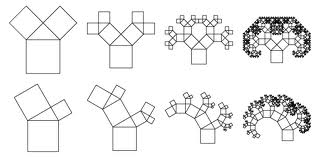
The colony founded by Pythagoras is sometimes characterized as having been a religious cult of sorts, yet his prodigious contributions to the history of mathematics are beyond dispute and have to a large extent saved his legacy. Every child learns the Pythagorean theorem in grade school:


a2 + b2 = c2


The sum of the square of each of the two sides of a right triangle is equal to the square of its hypotenuse.


Pythagoras was essentially the founder of the discipline of mathematics. In his view, embraced still today by modern thinkers, numbers reflect structures in the universe, beginning with 0, 1, 2, and 3, corresponding to the zero-dimensional point, the one-dimensional line, the two-dimensional plane, and the three-dimensional volume of space. Later mathematicians have worked in many more dimensions, but everything started back in ancient times with this man in awe of the mathematical beauty inherent in the universe.


Unlike Parmenides, whose contribution, that “All is one,” may escape attention by the vast majority of humanity past, present, and future, Pythagoras provided us with the foundations of all modern applied science and physics.

Many people dislike mathematics, or at least they claim to dislike mathematics. In truth, they appear not to understand mathematics. It was never presented to them in the proper way and from the proper perspective. They were forced by martinet schoolmarms to memorize the principles of mathematics rather than being taught how to deduce them.


As a result, mathematics remains for such people an arcane, inaccessible, and even painful subject. Because physics is the most directly mathematical of the sciences, requiring the use of many abstract formulas and mathematical concepts, it, too, has left many people with bad memories. Organic chemistry is another case where the logic of the theory must be understood in order to achieve an understanding of the profound beauty which it embodies.


It is unfortunate that many teachers of these subjects either do not themselves grasp the essential logic involved or else they are for some reason unable to communicate it to their students. The truth is that mathematics exhibits a profound beauty in its aesthetic simplicity and symmetry, as do the more theoretical of the sciences.

To see the patterns of mathematics in these disciplines requires that one ascend above the formulas to the spheres from which they derive, and this was naturally Pythagoras' strong suit. Among the theories devised by human beings, mathematics offers the one source of and glimpse into eternity, because nothing that happens on the planet which we happen by chance to inhabit will ever change the truths of mathematics.


Psychologists have discovered correlations between mathematical and musical ability, and not without reason: all of music is grounded in the proportions of mathematics. In this way the beauty of mathematics is inherent to that of music. Most people never study music seriously and have no idea why the compositions of J.S. Bach are perfect or what is meant when someone makes this claim, which may strike them as the ravings of a zealot. People who have never studied and played an instrument may enjoy music in a superficial way, but they will never be able fully to grasp the highest pleasure of musical art, to participate directly in its production, which can be likened to traveling to another sphere of reality.

Is there a parallel mathematical universe, where musicians and physicists interact? In a sense, yes. They are privy to secrets to which most people have no access. Plato, who arrived on the scene in ancient Greece a bit later than Pythagoras, attempted to capture the distinction between mundane appearance and eternal truth with his theory of the Forms and the Allegory of the Cave, to which, he claimed, most people are effectively chained. We remain mired in delusion and tricked by images cast on the wall by politicians and other shucksters who wield flickering candles to persuade us to believe in their opportunistic lies. Plato's Allegory of the Cave has never been more relevant than today, as images and packaging have come to take precedence over content in the internet age.

Plato was influenced by all of the pre-Socratic philosophers in one way or another, but his metaphysics reflects a belief in truth and and beauty clearly captured by the Pythagorean world view. The realm of knowledge is separate from the realm of opinion or mere belief, which is a fluctuating sea of ideas deriving from the contingent ephemera of the perceived world. Beyond the realm of the senses lies the realm of truth. This is the insight of Pythagoras which explains the magical effect of music and also the more mathematical sciences, at least to their practitioners.

It is probably worth observing here that in the worldview of Plato and some of his pals, art and beauty are not at all the same thing, despite the common tendency on the part of modern people to conflate them. Plato disliked poets because he thought of them as deceivers or even liars. Beauty and Truth are absolute and immutable Forms in which both instrumental music and perfume would seem to be able to participate because they cannot “lie”. Why? Because they are non-representational and therefore have no propositional content

All of this poses problems for people who erroneously conflate beauty and art. The two are conceptually distinct. A naturally existing canyon is beautiful. When Christo “wraps” it, he thereby creates a work of art—one which many local residents may regard as ugly. We shall return to the important distinctions between art and beauty, art and design, and truth and artifice, in future episodes of the History of Philosophy Refracted through Perfume.


Valley Curtain, 1970-2
by Christo and Jeanne-Claude


The Pythagorean-Perfume Connection

As we have seen in the other theories of pre-Socratic philosophers, perfume has been omitted or deleted from the version of the story to survive. It might seem that since the world of mathematics is divorced form the senses and the world of perfume is intimately connected to sense perception, that the two do not intersect.

By that argument, however, it should follow that because we apprehend music through our ears, therefore, it can have nothing to do with the eternal realm of mathematical truth. These misunderstandings arise when we make the same mistake as the schoolteacher who forces his students to memorize mathematical formulas rather than teaching them how to deduce them from first principles.

Most people wear perfume in the way in which they listen to music and balance their checkbook. They use perfume functionally, just as they use music for entertainment and numbers for the math needed to accomplish this or that task. Music is there in the world and they hear it, and perfume is there in the world, so they use it, But their limited appreciation of perfume's beauty is similar to the person who enjoys the chirping of birds or the sound of rain in the springtime. It's there, and they notice it, and it gives them pleasure, but that's where their understanding ends.

There is more to perfume than just the superficial scent, just as there is more to music than the sound waves by which we apprehend it. Pythagoras, as a master of mathematics, no doubt appreciated perfume as well, having recognized that the mathematical proportions so crucial to music are equally important to perfume.

Any professional perfumer will aver that the distinction between a masterpiece and a disaster may lie only in the proportions used. The ingredients of a perfume are obviously very important, but even more important, once the basic shape and demeanor of the perfume have been determined, are the precise proportions of the various components used. We laypersons might consider a comparison in the case of cooking: a dash of salt may perfect a batch of carrot ginger soup. A spoonful may ruin it by rendering it inedible.


Lists of notes are only the most basic way of approaching perfume. The experience of perfume is subjective and intimate, and the joy of perfume is found at the first level in the judicious proportions of ingredients combined by a skilled perfumer. But the perceiver contributes to the creation as well, just as the beauty of a poem emerges only upon its conscious appreciation by an interpreter. Poetry, too, pace Plato, exhibits mathematical proportions of cadence and rhythm, in addition to the use of colorful metaphors to produce something far more valuable than the sum of the letters used to write it.

Pythagoras no doubt recognized that perfume, like music and poetry, offers a transcendent glimpse into the only certainty in the universe: mathematics. The heavens may fall, but the truth will persist. The truth is unassailable. Behind all of the deceptive techniques used to market fragrances in the modern world, there is a reality. Not all that glitters is gold, and hidden treasures are out there, ready to be found by those who do not allow themselves to be distracted by all of the hype and folderol and focus instead upon the quality of the perfumes which they seek out and test.

We may disagree about which precise perfumes achieve a transcendent level of beauty, but that is because we perceive them from our own peculiar and idiosyncratic starting points, which are determined not only by our biological constitution, but also all of our past experiences and memories. Just as people exhibit various degrees of awareness about other aspects of reality, we should expect them to disagree, too, when it comes to perfume. We are all on a journey, and while our perceptions may sometimes coincide, often they do not.

The music of the spheres is ringing in the background, beckoning us to seek out the truth by whatever means available to us. We are fortunate to be among the select few to have access to perfume, through which we are able to travel to an olfactory universe unknown to the vast majority of humanity but nonetheless real.