Showing posts with label pre-Socratic philosophers. Show all posts

Saturday, May 11, 2013

Entry #16: A Philosophical Lexicon for Perfumistas


Ontology, Ontological, Ontologist

A few entries back I boldly asserted that epistemology and phenomenology were the two most reviled philosophical terms. What was I thinking? Even philosophers hate the word ontology! "Ontology, schmontology," has often been muttered by lovers of Quine and scientistic types more generally. The science worshipers and analytic philosophers (not quite coextensive, but close enough), all roll their eyes whenever anyone expresses an interest in the topic of ontology. So what is it, exactly?

We covered the basics of ontology in the episode of The History of Philosophy Refracted through Perfume dedicated to Parmenides, an ancient Greek pre-Socratic philosopher who was the ontologist to end all ontologists. The key concept for Parmenides was Being. Ontology is the study of Being. And, yes, I do believe that it is supposed to be capitalized, to underscore its importance. So what, exactly, is BeingTo be or not to be, that is the question, and it's a lot more profound that you might initially have thought. 

To begin with, what are the things in reality? Sounds easy, right? There are chairs, and there are tables, and there are bottles. Now we come to perfumes. Are there individual perfumes? Perfumes actually perfectly reflect the profundity of ontological studies. What makes a perfume a perfume, after all? When and how does a perfume come to exist? 

In terms of chemistry, a perfume is made up of a bunch of molecules. All of the ingredients on the label, including the mystery ingredient parfum, which especially distinguishes a perfume from all others, are components which, before being mixed together are other things: alcohol, eugenol, linalool, geraniol, the list goes on and on. So in mixing a bunch of different substances together, a perfumer ends up creating something new, a perfume which did not exist before. This is a grand creation act. How can a mere human being create new objects in reality? Perfumers appear to do it all the time. Chanel no 5 did not exist, and then suddenly, thanks to Ernest Beaux and Gabrielle Chanel, it did.

But are these new perfumes really real? Or are they not merely a part of the unstable world of becoming? That was essentially Parmenides' view. All of the change and movement which we observe in reality is illusory. There is only one real thing, and that is Being. Ontology is the study of Being, but since there is only one real thing, Being, nothing can be said about it, since any spoken words are going to divide up reality into pieces. 

Understood in the Parmenidean sense, ontology digs deeper than metaphysics, which is still concerned with cause and effect and ultimate divisions between things, even if those things cannot be accessed through empirical means. Ontology, my fragrant friends, is deep, and I suspect that at least some ontologists throughout history have grasped Being only under the influence of powerfully psychomimetic drugs. For now, we are mired in the world of becoming, which is of course why we are functional. 

We do distinguish things from one another in what we perceive to be reality. Not all perfumes are the same. Perhaps if we were enlightened enough, we would cease making any distinctions whatsoever. For now, let's just keep reviewing all of the different perfumes which we believe ourselves to be encountering while we wallow our way through the shadowy world of becoming.

I will say that when I see the tsunami of new niche launches, I start to understand the appeal of the simpler approach. Is every single possible combination of any possible liquid substances a perfume? Are there then infinitely many perfumes? Apparently so, if the behavior of the multilaunchers means anything. So long as they can keep coming with new namesoften through the use, it seems, of random name generatorsthen they can continue to christen new perfumes. 

We sometimes identify perfumes as very similar to already existent perfumes, but as the grand map of the olfactory world becomes populated with more and more perfumes, at some point there will cease to be any iconic perfumes. At that point, perhaps, we will all be carried away in a sea of perfumes, the names of which will cease to matter anymore.  

If we could adopt the perspective of Parmenides, we'd be cured forever of our disappointment and anger over reformulated perfumes. They were never real to begin with, so how could they be any less real today than they ever were? Mitsouko was always an illusion.


Wednesday, March 27, 2013

Intro and Entry #1: A Philosophical Lexicon for Perfumistas

Introduction

My mother is fond of reminding me every several months or so that "normal people don't use words like epistemology and phenomenology." She is an intelligent woman with a graduate degree in political science, so I feel that she's not just picking on me. The last time she mentioned this, she adduced as further evidence of the truth of her claim that when she asked her husband, an attorney (not my father, who is an engineer) whether he knew what the word epistemology means, he shrugged his shoulders and replied, "No."

Needless to say, I've been doing some soul searching and have decided that it's time for me to start defining my terms. I realize that the salon de parfum has been in existence now for more than fifteen months, but, as they say: Better late than never! If my highly educated parents don't even know what epistemology means, can I really expect even astute perfumistas to know what I am talking about when I pepper my texts with such terms as ontology, metaphysics, phenomenology, and the like? 

Effective right now, I am building a philosophical lexicon for ready reference by visitors to the salon de parfum who wish to debate deep issues about perfume but have no idea what I am talking about. This will take me a bit of time to complete, so I'm going to approach this as a blogger, which you may have noticed is not really my style. I prefer to post essays, but for about the next month or two, I'm going to try to put together, piece by piece, a philosophical lexicon. Composing such a reference source in a single sitting would be too tedious for me, and you can be sure that my ADD would be fighting it every minute of the way. 

Instead, I'm going to post a separate entry for a new word each day, and combine them into a full-length lexicon, which by the end of this process should provide all of the definitions and examples needed to be able to participate fully in philosophical debates about perfume. 

Let us start at the very beginning, a very good place to start:


Entry #1: Philosophy

The word philosophy comes from the Greek (and Comrade Christos from Memory of Scent can back me up on this) for "love" and "wisdom". Philosophy is the love of wisdom. Love is probably not going to cause anyone to pause. But "wisdom"? What could this mean? 

My own take on this concept is that some people seek out the truth and a deep understanding of subject matters and their own place in the universe. Is wisdom the same as knowledge? Not exactly. One could know everything there is to know about the chemical components of a perfume without appreciating its beauty or greatness. On the other hand, a person entirely ignorant of the chemical components of a perfume may intuitively grasp truths through their experience of it. 

I believe that many perfumistas are philosophers in this sense: they are seeking to deepen their understanding of perfume and also themselves through traveling around the olfactory universe and testing lots of different perfumes. It seems to me that philosophy (love of wisdom) and love of perfume go hand in hand in cases where people are interested in perfumes not solely for functional benefits (pleasure, seductive appeal, fame and fortune, etc.) but also as things in themselves. Perfumistas who actively acquaint themselves with new perfumes are engaging personally with them, because scents elicit memories from the wearer's past and help to connect disparate things together to make more sense of the world.


Tuesday, February 5, 2013

Perfume and the Pre-Socratics 7: Pythagoras and the Importance of Proportion


Pythagoras stands apart from the other pre-Socratic philosophers for having focused primarily on mathematics rather than observable phenomena to be explained in terms of other observable phenomena such as air, earth, fire, and water. In the view of Pythagoras, number is the first principle of the universe, which is ordered in a mathematical sense. The word cosmos, which means order, was first applied to the world by Pythagoras, although some of the other pre-Socratic philosophers are now referred to as cosmologists and regarded as the earliest scientists in human history.


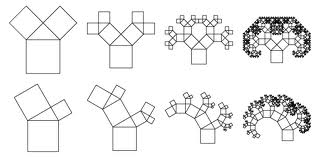
The colony founded by Pythagoras is sometimes characterized as having been a religious cult of sorts, yet his prodigious contributions to the history of mathematics are beyond dispute and have to a large extent saved his legacy. Every child learns the Pythagorean theorem in grade school:


a2 + b2 = c2


The sum of the square of each of the two sides of a right triangle is equal to the square of its hypotenuse.


Pythagoras was essentially the founder of the discipline of mathematics. In his view, embraced still today by modern thinkers, numbers reflect structures in the universe, beginning with 0, 1, 2, and 3, corresponding to the zero-dimensional point, the one-dimensional line, the two-dimensional plane, and the three-dimensional volume of space. Later mathematicians have worked in many more dimensions, but everything started back in ancient times with this man in awe of the mathematical beauty inherent in the universe.


Unlike Parmenides, whose contribution, that “All is one,” may escape attention by the vast majority of humanity past, present, and future, Pythagoras provided us with the foundations of all modern applied science and physics.

Many people dislike mathematics, or at least they claim to dislike mathematics. In truth, they appear not to understand mathematics. It was never presented to them in the proper way and from the proper perspective. They were forced by martinet schoolmarms to memorize the principles of mathematics rather than being taught how to deduce them.


As a result, mathematics remains for such people an arcane, inaccessible, and even painful subject. Because physics is the most directly mathematical of the sciences, requiring the use of many abstract formulas and mathematical concepts, it, too, has left many people with bad memories. Organic chemistry is another case where the logic of the theory must be understood in order to achieve an understanding of the profound beauty which it embodies.


It is unfortunate that many teachers of these subjects either do not themselves grasp the essential logic involved or else they are for some reason unable to communicate it to their students. The truth is that mathematics exhibits a profound beauty in its aesthetic simplicity and symmetry, as do the more theoretical of the sciences.

To see the patterns of mathematics in these disciplines requires that one ascend above the formulas to the spheres from which they derive, and this was naturally Pythagoras' strong suit. Among the theories devised by human beings, mathematics offers the one source of and glimpse into eternity, because nothing that happens on the planet which we happen by chance to inhabit will ever change the truths of mathematics.


Psychologists have discovered correlations between mathematical and musical ability, and not without reason: all of music is grounded in the proportions of mathematics. In this way the beauty of mathematics is inherent to that of music. Most people never study music seriously and have no idea why the compositions of J.S. Bach are perfect or what is meant when someone makes this claim, which may strike them as the ravings of a zealot. People who have never studied and played an instrument may enjoy music in a superficial way, but they will never be able fully to grasp the highest pleasure of musical art, to participate directly in its production, which can be likened to traveling to another sphere of reality.

Is there a parallel mathematical universe, where musicians and physicists interact? In a sense, yes. They are privy to secrets to which most people have no access. Plato, who arrived on the scene in ancient Greece a bit later than Pythagoras, attempted to capture the distinction between mundane appearance and eternal truth with his theory of the Forms and the Allegory of the Cave, to which, he claimed, most people are effectively chained. We remain mired in delusion and tricked by images cast on the wall by politicians and other shucksters who wield flickering candles to persuade us to believe in their opportunistic lies. Plato's Allegory of the Cave has never been more relevant than today, as images and packaging have come to take precedence over content in the internet age.

Plato was influenced by all of the pre-Socratic philosophers in one way or another, but his metaphysics reflects a belief in truth and and beauty clearly captured by the Pythagorean world view. The realm of knowledge is separate from the realm of opinion or mere belief, which is a fluctuating sea of ideas deriving from the contingent ephemera of the perceived world. Beyond the realm of the senses lies the realm of truth. This is the insight of Pythagoras which explains the magical effect of music and also the more mathematical sciences, at least to their practitioners.

It is probably worth observing here that in the worldview of Plato and some of his pals, art and beauty are not at all the same thing, despite the common tendency on the part of modern people to conflate them. Plato disliked poets because he thought of them as deceivers or even liars. Beauty and Truth are absolute and immutable Forms in which both instrumental music and perfume would seem to be able to participate because they cannot “lie”. Why? Because they are non-representational and therefore have no propositional content

All of this poses problems for people who erroneously conflate beauty and art. The two are conceptually distinct. A naturally existing canyon is beautiful. When Christo “wraps” it, he thereby creates a work of art—one which many local residents may regard as ugly. We shall return to the important distinctions between art and beauty, art and design, and truth and artifice, in future episodes of the History of Philosophy Refracted through Perfume.


Valley Curtain, 1970-2
by Christo and Jeanne-Claude


The Pythagorean-Perfume Connection

As we have seen in the other theories of pre-Socratic philosophers, perfume has been omitted or deleted from the version of the story to survive. It might seem that since the world of mathematics is divorced form the senses and the world of perfume is intimately connected to sense perception, that the two do not intersect.

By that argument, however, it should follow that because we apprehend music through our ears, therefore, it can have nothing to do with the eternal realm of mathematical truth. These misunderstandings arise when we make the same mistake as the schoolteacher who forces his students to memorize mathematical formulas rather than teaching them how to deduce them from first principles.

Most people wear perfume in the way in which they listen to music and balance their checkbook. They use perfume functionally, just as they use music for entertainment and numbers for the math needed to accomplish this or that task. Music is there in the world and they hear it, and perfume is there in the world, so they use it, But their limited appreciation of perfume's beauty is similar to the person who enjoys the chirping of birds or the sound of rain in the springtime. It's there, and they notice it, and it gives them pleasure, but that's where their understanding ends.

There is more to perfume than just the superficial scent, just as there is more to music than the sound waves by which we apprehend it. Pythagoras, as a master of mathematics, no doubt appreciated perfume as well, having recognized that the mathematical proportions so crucial to music are equally important to perfume.

Any professional perfumer will aver that the distinction between a masterpiece and a disaster may lie only in the proportions used. The ingredients of a perfume are obviously very important, but even more important, once the basic shape and demeanor of the perfume have been determined, are the precise proportions of the various components used. We laypersons might consider a comparison in the case of cooking: a dash of salt may perfect a batch of carrot ginger soup. A spoonful may ruin it by rendering it inedible.


Lists of notes are only the most basic way of approaching perfume. The experience of perfume is subjective and intimate, and the joy of perfume is found at the first level in the judicious proportions of ingredients combined by a skilled perfumer. But the perceiver contributes to the creation as well, just as the beauty of a poem emerges only upon its conscious appreciation by an interpreter. Poetry, too, pace Plato, exhibits mathematical proportions of cadence and rhythm, in addition to the use of colorful metaphors to produce something far more valuable than the sum of the letters used to write it.

Pythagoras no doubt recognized that perfume, like music and poetry, offers a transcendent glimpse into the only certainty in the universe: mathematics. The heavens may fall, but the truth will persist. The truth is unassailable. Behind all of the deceptive techniques used to market fragrances in the modern world, there is a reality. Not all that glitters is gold, and hidden treasures are out there, ready to be found by those who do not allow themselves to be distracted by all of the hype and folderol and focus instead upon the quality of the perfumes which they seek out and test.

We may disagree about which precise perfumes achieve a transcendent level of beauty, but that is because we perceive them from our own peculiar and idiosyncratic starting points, which are determined not only by our biological constitution, but also all of our past experiences and memories. Just as people exhibit various degrees of awareness about other aspects of reality, we should expect them to disagree, too, when it comes to perfume. We are all on a journey, and while our perceptions may sometimes coincide, often they do not.

The music of the spheres is ringing in the background, beckoning us to seek out the truth by whatever means available to us. We are fortunate to be among the select few to have access to perfume, through which we are able to travel to an olfactory universe unknown to the vast majority of humanity but nonetheless real.


Monday, October 29, 2012

Perfume and the Pre-Socratics 6: Democritus, Atomism, and Convention


Democritus, the next of the pre-Socratic philosophers in our History of Philosophy Refracted through Perfume series criticized Anaxagoras' explanation of qualities. Anaxagoras had hypothesized that the bits corresponding to the salient qualities of a thing are present in greater proportion than are the bits of other things. A bottle of Tom Ford Black Orchid contains a liquid which smells like Black Orchid because it is made up of many tiny little “Black Orchid” bits. His reasoning, to review, was in effect:


How could Black Orchid come from what is not Black Orchid, or Allure from what is not Allure?


In stark contrast, according to atomism, the theory championed by Democritus, reality comprises lots of different things which are made up of lots of little parts, but those parts are not direct or microcosmic reflections of the thing which they comprise. Instead, geometrical arrangements of smaller parts give rise to the emergent qualities which we perceive. The primary difference between the sort of Lego perfumery model presciently sketched out by Anaxagoras and the atomism of Democritus is that the small building blocks in the latter case have no color whatsoever, and between them are not other Lego blocks but the void. Atoms and the void are the basic components of reality according to the ancient Greek atomists.

The atoms—as Democritus and his mentor, Leucippus, did in fact refer to them—making up a perfume bottle are not tiny perfume bottles, or even pieces of glass. Nor does the liquid inside comprise individual “bits” sharing the qualities of the whole. Instead, the atoms are altogether devoid of such sensorily perceivable qualities. We do not perceive anything at all until the atoms have coalesced into much larger congeries. Out of nothing, something comes. Where there were no observable properties, suddenly they pop into our view, becoming a part of our reality because they are experienced by us.

The atoms have extension and shape, but they possess no qualities perceivable by human beings through their sense organs alone. It is only when the atoms are brought together in certain combinations and proportions that such qualities arise, emergently, out of the arrangements of individual atoms. Between the atoms is space.


Sound familiar? Yes, Leucippus and Democritus did indeed anticipate modern theories of chemistry, according to which all objects, including perfumes, comprise molecules, and all molecules are built up of atoms. Chemistry has obviously been refined over the more than 2,000 years since these pre-Socratic thinkers amazingly hit on something like it by casting about in an aim to understand the world in which they found themselves. We now identify the atoms in question as Carbon, Hydrogen, Oxygen, etc. The early atomists knew nothing about the scientifically hypothesized atoms of the nineteenth and twentieth century. Was it just a lucky guess, a stab in the dark? My hunch is that their bold conjectures were based on their first-hand experience of perfume.


Perfumes which look empirically indistinguishable often smell wildly different. How to explain this disparity in perception? The problem with Anaxagoras' theory was that all things were said to be made up of things which they resemble. This does not help in explaining the distinction in smell between two liquids of the same color. 


Take some perfumes by Annick Goutal with similar shades of color, say Quel Amour, Eau d'Hadrien, and Petite Chérie. These perfumes smell radically different. What makes these perfumes distinct, despite their visual similarities, is not that they comprise tiny bits of, respectively, Quel Amour, Eau d'Hadrien, and Petite Chérie.


Why, again, do beautiful, fully composed perfumes comprising high-quality materials, such as Miller Harris Jasmin Vert or Géranium Bourbon or Figue Amère smell so different from a vat-produced chemical soup which induces dread and malaise in the wearer? (The selection of examples is left as an exercise for the reader.) It is not because the former are made up of tiny homuncular (so to speak) bottles of great perfume. No, something else must be going on, the atomists correctly inferred.

Yes, today, with the benefit of hindsight, we perfumistas can see that, thanks to the early Greek atomists' felicitous encounters with perfume—edited out of the history of philosophy, but nonetheless true—these thinkers incredibly developed a theory which we reach for still today in attempting to make sense of our experience. True, atoms have by now been split (they were thought back then to be indivisible), but it is at the level of atoms and molecules where our ordinary scientific understanding and its folk applications end.

True, one can dig deeper, if one wishes, but theories of multidimensional strings are not going to provide much insight in attempting to understand why when an ebay hawk or grey market decanter dilutes a perfume it smells weaker than it did before. We modern people pretty much call it a day at the level of chemistry, which helpfully explains all sorts of empirical phenomena readily observable by us.


Colligative properties such as freezing point depression and boiling point elevation are good examples. Why does making a sorbet with a touch of alcohol added yield a softer outcome than a sorbet mixture to which no alcohol is added? Why does pouring salt on the sidewalk in wintertime prevent ice from forming?


We can even understand in the basic concepts of organic chemistry why trans-fats are worse than cis-fats. Chemistry offers satisfying answers to these questions. Digging deeper is possible, and physicists certainly do that when they go to work in their laboratories, but good luck trying to grapple with aspects of everyday existence—becoming—through appeal to strings. You may as well just return with Parmenides to the realm of Being!


Where there was no Jean Patou 1000, suddenly it appeared, in a grand creation act, as though plucked from a magician's hat, when an assortment of atoms (in molecules) were juxtaposed in just the right way and in the right proportions. That's pretty much all that we need to know, and all that perfumers need to know as they scrupulously document their new formulas so that it will be possible in the future, to reproduce over and over again—should anyone choose to do so—the final combination of ingredients which make up what has been christened a new perfume.

Democritus was a materialist interested in mechanical explanations of phenomena. He was a “How?” man, not a “Why?” man. For this reason, some historians have considered him to be more of a protoscientist than a philosopher. In fact, his predilection for mechanical explanations was itself a philosophical position, in some ways anticipatory of modern pragmatism. What works is valid, and what does not work is invalid. That is the essence of pragmatism, in a nutshell. And it rings true for perfume as well.

An iconic perfume has succeeded in carving out a new spot of previously uncharted territory on the grand olfactory map. A second requirement, for even a highly original perfume to achieve true icon status, is that it enjoy widespread market success. Many perfumes carve out new spots of previously uncharted territory, but for one reason or another they are market flops. Usually they are discontinued. Only iconic perfumes hit on a formula which appeals to a sufficient number of consumers to warrant keeping the perfume in production. But the contribution of the house, its willingness and ability to market the perfume is even more important to contemporary recognition than is the nature of the creation itself. The Britney Spears perfume collection has reaped millions upon millions of dollars of profits.


Curious, Fantasy, In Control Curious, Midnight Fantasy
BelieveCurious Heart, Hidden Fantasy, Circus Fantasy
(Not Pictured: Radiance and Cosmic Radiance)


Materialism and Hedonism

The retention of the same name for what has become a different perfume, as in the case of Guerlain Mitsouko, or the preposterous renaming of Miss Dior Chérie as Miss Dior, may on its face appear to provide confirmation of the Parmenidean view on the realm of becoming, that it is the realm of falsehood and illusion. Then again, Yves Saint Laurent Champagne was also renamed, to Yvresse, not because of a blunder on the part of some officious executive wishing to leave his grimy fingerprints on the perfume, but because of a testy dispute with French champagne makers over what they took to be the inappropriate use of that term.


Everything is fair game in the realm of becoming, and people will do what they will do in order to get what they want. But if all acts of naming are a matter of convention, then is anyone really to blame for retaining the name of a formerly great perfume and using it to label a less noble variant of the same? Whatever works, works. What does not work, does not work. We find ourselves, my fragrant friends, yet again, in the realm of Parmenidean tautology, now in the service of an eminently non-Parmenidean philosophy!

In a materialist world view such as that of Democritus and the atomists, everything, including morality, is a matter of convention. There is no higher power; there are no laws written in invisible ink in the sky; and there is no afterlife—whether filled with heavenly bliss or eternal damnation. What you see—or sniff—here and now, on planet earth, is what you get.

In this sort of world view, materialistic hedonism, there is no pure and absolute, immutable essence or Platonic Form of Perfume (to anticipate a bit future episodes of this lengthy story...). No, perfumes are short-lived, fragile creations, creatures of sorts, kept in existence only for so long as they prove to be profitable to someone somewhere. It's not enough that a perfume once launched be loved; it must also earn its right to continue to exist.

Once a perfume has ceased pulling its weight, so to speak, perfume houses simply pull the plug. From the hard-headed perspective of pragmatically oriented materialists, vain attempts to re-create the perfumes of centuries past are futile efforts to change the structure of reality as conceived by naturalistically minded thinkers such as the atomists of ancient Greece.

One interesting implication of a hedonistic picture of perfume appreciation—such as seems clearly to be implied by the atomism championed first by Leucippus and Democritus, and later by Epicurus (who, too, will be discussed in more detail in a future episode...)—may be that many perfumistas, in their enthusiasm to exalt perfumery as an art, give short shrift to the impact of marketing on our reception of perfume.


This picture lends weight to the idea, discussed in The Bottle Controversy, that the vessel in which a perfume is housed and travels and from which perfume is drawn, being a sensorily perceived object, is no less worthy of our attention because it is no less capable of producing pleasurable sensations in us. The question becomes: in terms of the overall pleasure derived, is the bottle less important than the scent inside? While it is true that the bottle can lead one deceptively to buy a perfume which does not deliver on the promise of its packaging, the same can be said of advertising more generally. In fact, that is what advertising is: seduction, pure and simple. Do you really need that item or gadget—or bottle? Advertising has as its aim to convince you that you do.


There is a substantive sense in which the bottle contributes to the overall success of a marketing campaign. But there is a difference: the bottle is an independent object, designed by someone somewhere no less than was the perfume, and therefore potentially worthy of our regard. It, too, exists to our sensory organs because a group of atoms and molecules have been brought together and arranged in a particular way so as to affect our sensory receptors. When the sight or touch of a bottle provides pleasure, then it has just as much value as any other source of pleasure, including the scent of perfume. 

That, at any rate, my fellow fragrant travelers, is the way in which the ancient Greek pre-Socratic philosopher Democritus appears to have viewed these matters.

Thursday, September 13, 2012

Perfume and the Pre-Socratics 5: Was Anaxagoras the first Lego Perfumery theorist?


The Question of Qualities

Suppose that there were only four different perfume qualities: floral, fruity, aquatic, and green. It's easy to see how one could mix things up to produce fruity floral and floral green perfumes. Even floral aquatic and sweet laundry scents could be produced through the judicious mixing of aquatic with fruity elements:


But how, pray tell, could one build from those basic building blocks—or types, if you like—a woody oriental perfume or a leather chypre?


This was essentially the response of pre-Socratic thinker Anaxagoras to the theory of Empedocles according to which all of reality comprises air, earth, fire and water mixed together in various proportions as a result of the competing forces of Love and Strife. The critical question said to have been posed by Anaxagoras naturally omitted his thoughts about perfume, but the idea is clearly the same:

How could hair come from what is not hair or flesh from what is not flesh?

translated into perfumery terms:

How could chypre come from what is not chypre or fougère from what is not fougère?


Never one to gush over “abstract florals,” Anaxagoras was among the earliest, and may indeed have been the first to observe that there is no such thing as a floral perfume.


Tuberose? Yes.


          Jasmine? Yes. 


                    Narcissus? Yes.


                   Heliotrope? Yes.


Violet? Yes.


Orange blossom? Yes.


Rose? Of course. 


In fact, in virtually all cases there are multiple varieties of any given flower designated by a simple name, but we can consider the name 'rose' as code for a set of different types of roses, Damascus, Ta'if, Bulgarian, etc .“Floral perfume,” in contrast, could only be a fiction, unless by that expression one meant a floral bouquet of specific flowers, say, gardenia, tuberose, and jasmine. Or perhaps the expression “floral perfume” should be reserved for “abstract floral” perfumes?

What about the mixing of the various elements of a perfume together? Anaxagoras was certainly sympathetic to the idea of there being fundamental forces or actions, but instead of Empedocles' Love and Strife, he posited the existence of something not unlike the view of God promulgated by sophisticated believers. He called it Nous, which is Greek for Mind.

According to Anaxagoras, “in everything there is a portion of everything.” Reality is made up of lots of things which are made up of lots of little parts or bits. The orchestrator of all of this is Nous, the all-pervading Mind which imposes an intelligible pattern in an otherwise unintelligible universe.

We can infer what the individual parts are by considering the distinct qualities manifested by disparate things. Jean Patou Sublime does not smell anything like Fendi Theorema, despite the fact that the two liquids look similar in terms of color and viscosity. How to explain the disparity in scents? Well, Anaxagoras would have reasoned, had he lived to sniff those two great perfumes, Sublime is made up mostly of little Sublime bits, while Theorema is made up mostly of little Theorema bits!


I see some smirks on your faces. Yes, the reasoning sounds not unlike Molière's jibe at the explanation of opium's sleep-inducing properties, said to derive from the quality of being somniferous. But Anaxagoras was no fool. No, he was really on to something, as we can begin to appreciate through reflecting on this matter as it relates specifically to the case of perfume.

The formula or recipe of a perfume is a complex list of a variety of different chemical substances, but the reproduction of the perfume requires strict adherence to that recipe, if the same perfume is to be produced. Conversely, any perfume which contains those very same substances in the very same proportions—or similar enough to be indistinguishable by the human nose—will smell just like the original perfume.

Of course, some noses make finer discriminations than do others, and for those people even small changes in formula will result in what seems to be a very different perfume. For those with more obtuse olfactory receptors, it may not be possible even to distinguish a kiosk “smells like” knock-off from a masterpiece. Are those people fortunate or unfortunate? A question for further reflection...


In the view of a pluralist such as Anaxagoras, what makes two visually indistinguishable perfumes olfactorily distinct is the fact that they contain different proportions of a variety of different bits. This is a rational inference which is illustrated by the faithful and continuous reproduction of perfumes first composed in some cases decades ago. In contrast, reformulated perfumes, which do not adhere strictly to the original recipe, obviously will not smell the same to those capable of making fine olfactory discriminations, and according to whom reformulations—auto-knockoffs, if you will—are misleadingly named for marketing purposes.

Given his views on the nature of things, Anaxagoras can be not implausibly regarded as the first Lego perfumery theorist in history. Lego blocks are very similar to the qualitative bits of which he wrote: they come in different shapes, sizes, and colors, and can be combined in different ways to build the larger things of which they are comprised. Consider a few simple examples.


Building a structure out of only yellow Lego blocks will yield a yellow structure, just as building a perfume essentially out of ambroxan will yield no more and no less than bottled ambroxan. Same story, evidently for iso-E-super, which we could symbolize metaphorically as blue Lego blocks.


What if one builds a structure of interlaced yellow and blue Lego blocks? From a distance, when viewed together, the structure may look green. More complex perfumes will also have different overall qualities depending upon which individual components are snapped together into a single structure (poured into a bottle).


What marks the distinction between an iconic perfume and a mess? It has to be the skillful layering and interlacing of the various components in judicious proportions so as to produce consistently perceivable and pleasurable effects, as when a classic perfume unfurls in stages. A good comparison might be to pointillist or impressionist paintings. Up close, there are no figures discernible—only dots or brushstrokes. Stepping back a certain distance causes the figures intended by the artist suddenly to pop into view. Sometimes they are more obvious than others, but in order to succeed, they must be recognizable by people who are capable of appreciating such things.


Any child can fill a canvas with dots or mix the contents of a number of different vials together. Only someone with a great deal of skill and experience can create a chef-d'oeuvre from the same materials. In the view of Anaxagoras, this process is guided by Nous, which could be interpreted as artistic or perfumic inspiration. In order for a great work to be recognized as such, intersubjective affirmation is necessary as well, and painters labor under cultural and market forces no less than perfumers do.

An iconic perfume has succeeded in carving out a new spot of previously uncharted territory on the grand olfactory map. A second requirement, for even a highly original perfume to achieve true icon status, is that it enjoy widespread market success. Many perfumes carve out new spots of previously uncharted territory, but for one reason or another they are market flops. Typically they are discontinued and fade away into oblivion, for the number of people who wore them inexorably diminishes as they pass away. At some point, it's as though the perfume never existed at all. How many perfumes from 500 years ago does anyone still talk about today?

Only iconic perfumes hit on a formula which appeals to a sufficient number of consumers to warrant keeping the perfume in production. But the contribution of the house, its ability to market the perfume, is even more important to contemporary recognition than is the nature of the creation itself.


Iconic Perfumes and the Question of Reformulation Revisited

I have entertained the idea that the tsunami of flankers and limited edition perfumes over the last few years may have as its ultimate effect that iconic and what I have termed “tattoo” perfumes are now a thing of the past. Like the supermodels of the 1980s and the Rolling Stones, iconic perfumes of previous decades keep hanging on, their marketing limits stretched further and further out.

Indeed, the entire vintage perfume industry trades on the same feelings of nostalgia which may well up inside nearly anyone upon hearing Mick Jagger belt out “Satisfaction” or Roger Daltry wailing “My Generation.” Such songs have been played so many millions (billions?) of times on radio stations all over the world, that they are immediately recognizable to nearly anyone with access to Western media.


The same sort of mass media inundation explains the success of many perfumes as well. Witness the advertisements for Christian Dior J'Adore, or Estée Lauder Beautifulperfumes which have been reformulated and yet continue to be marketed as though they were brand new launches. J'Adore and Beautiful succeeded in the past and continue to do so, even though the perfumes are not the same as they once were.


In some ways, such perfumes are similar to supermodels such as Linda Evangelista, Kate Moss, Christy Turlington, and Stella Tenant, who despite being twice as old now as they were when they burst onto the modeling scene, continue to appear in countless advertising campaigns in widely distributed fashion magazines.

If the plug were suddenly pulled on the non-stop, virtually ubiquitous advertising campaigns for perfumes such as J'Adore, Beautiful, and I dare say Chanel no 5, would the popularity—necessarily measured in terms of market success—of the perfumes being sold by those names continue? 


If Linda Evangelista were to walk into a model agency cold off the street today, what is the likelihood that she would be able to land a contract, now that she is a middle-aged woman? None whatsoever, of course. But because of her successful modeling career, her image has become iconic and can be used to sell all sorts of products today, even to people who are half her age, which is why and how she can continue to refuse to get out of bed for less than $10K—although that figure must of course now be adjusted for inflation.


Will the J'Adore flankers, riding on the tail of the J'Adore marketing machine, enjoy a similar longevity? This seems highly doubtful. In fact, flankers can be viewed as simply another way of extending the market life of a previously successful perfume. Successful perfumes are not necessarily iconic perfumes, though all iconic perfumes have enjoyed at least a period of market success. What has happened in recent times, it seems to me, is that marketing has become far more important than perfumic integrity.


People will buy what is seductively packaged and promoted even without having any idea what is inside—in the case of perfume: how it really smells. Once purchased, provided that the perfume is not offensive or nocent or disagreeable in some other way, then the owner of the bottle will wear the perfume.

The trend, then, appears to be to get perfumes into people's hands and onto their vanity trays, after which as a result of a natural process of habituation, the same perfume will be purchased again and, the marketers hope, again. When limited edition flankers disappear, then the reformulated namesakes may be purchased in their stead.


The retention of the same name for what has become a different perfume, as in the case of Guerlain Mitsouko, may ultimately provide confirmation of the Parmenidean view on the realm of becoming, that it is indeed the realm of falsehood and illusion. Everything is fair game in the realm of becoming, and people will do what they will do in order to get what they want. But if all acts of naming are a matter of convention, then is anyone really to blame for retaining the name of a formerly great perfume and using it to label a less noble variant of the same?

We have jumped ahead to broach the question of convention, which arises quite naturally in the case of a philosophical theory of materialism such as was championed by Democritus, who will be featured in the next installment of the History of Philosophy Refracted through Perfume. Democritus also offers a persuasive answer to the question: 

How could chypre come from what is not chypre or fougère from what is not fougère?